DIY Natural Blueberry-Dyed Easter Eggs

Mar 23, 2026
This post may contain affiliate links. Please read our disclosure policy.
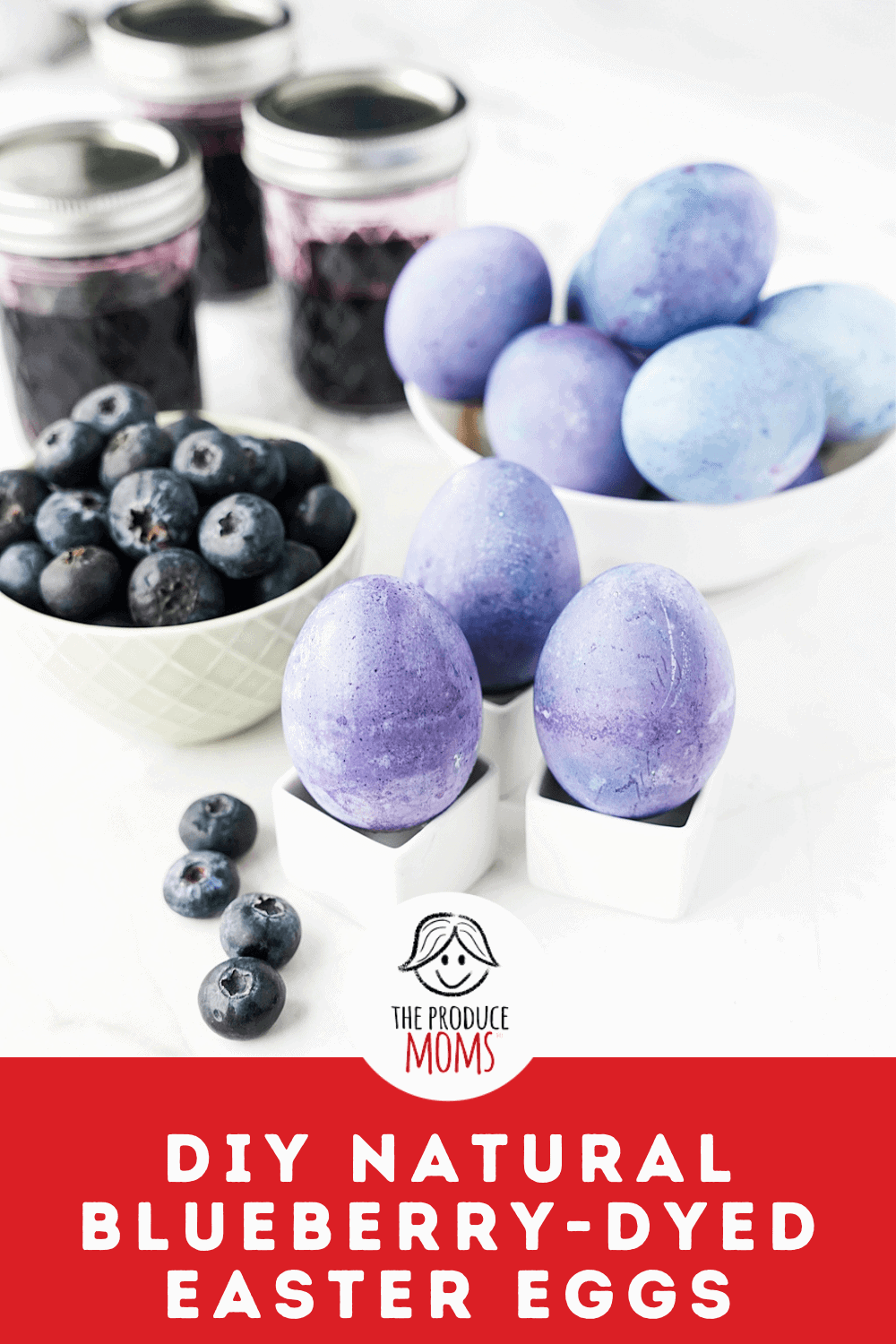
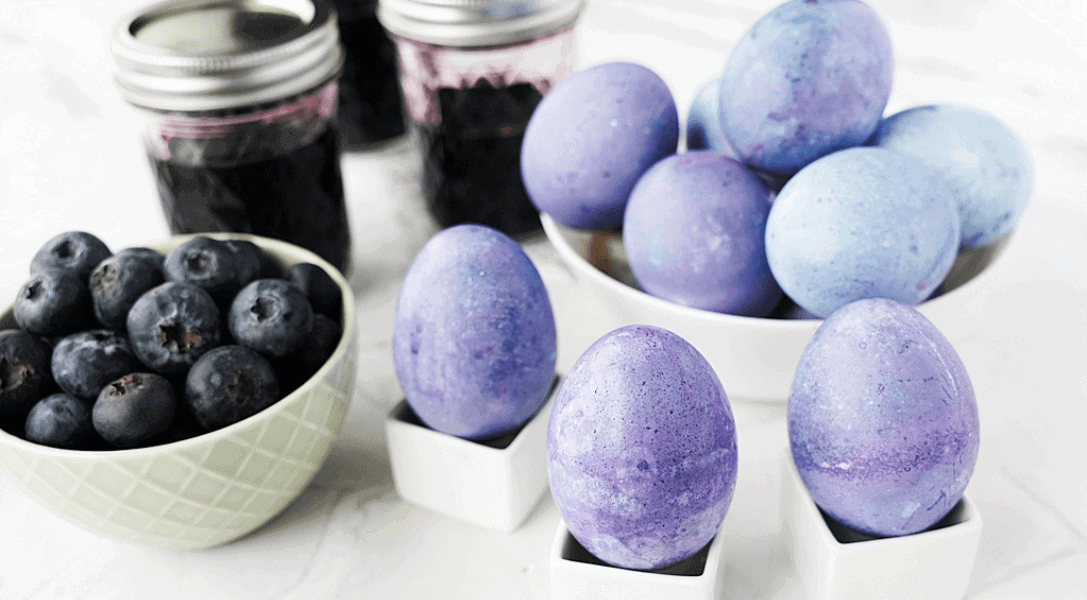
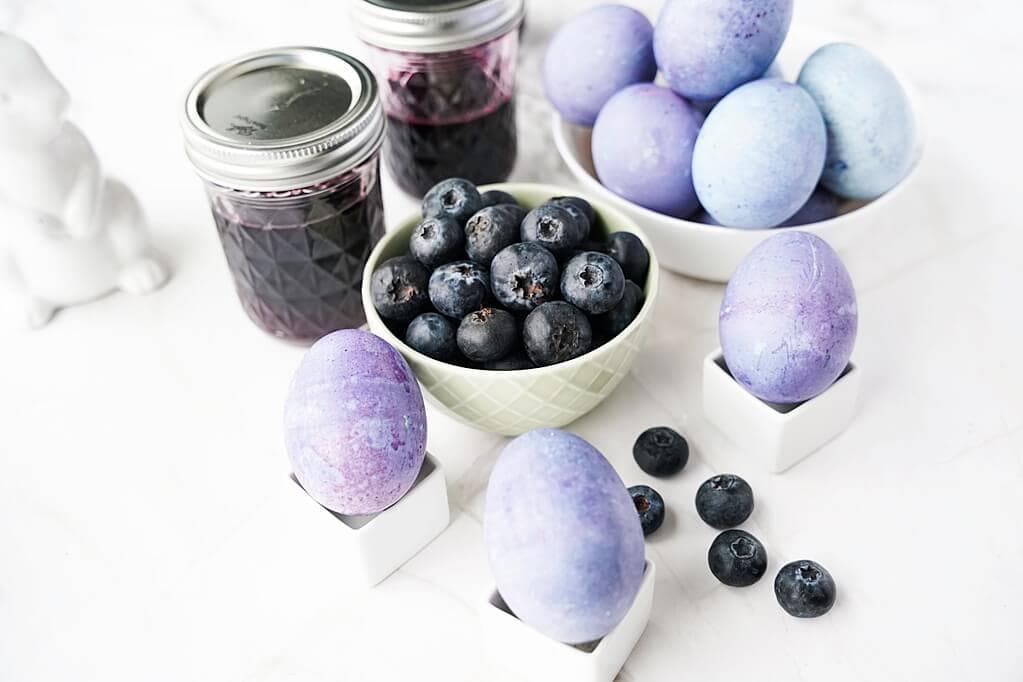
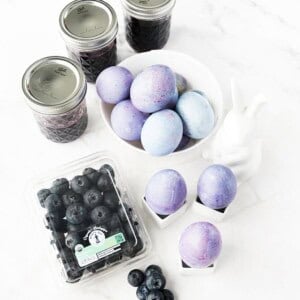
If you’re looking to ditch the neon vinegar tablets this year in favor of something a bit more “enchanted forest,” your refrigerator has the answer. Blueberries aren’t just for muffins; they are one of nature’s most effective dyes, turning plain white eggs into stunning shades of dusty denim and deep indigo.
Using natural dyes is a bit like a science experiment and an art project rolled into one. The result is a matte, sophisticated finish that looks like it was plucked straight from a high-end boutique—or a bird’s nest.
Related: How To Dye Hard Boiled Eggs with Beet Juice
Why Blueberries?
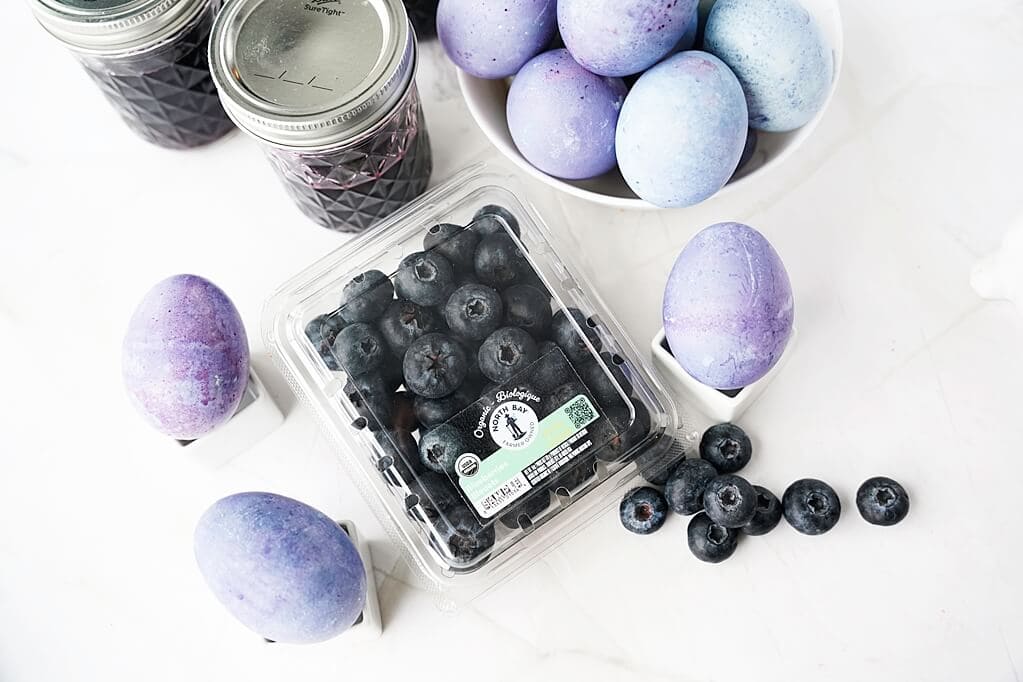
This post is sponsored by North Bay Produce.
It’s a bit of a magic trick: even though the skins are purple, the chemical reaction with the eggshell produces a beautiful blue. Because this recipe uses real fruit, you’ll often get natural marbling and tiny speckles that make each egg completely unique.
Why Moms are Obsessed with Blueberry-Dyed Eggs
If you’re a mom looking to upgrade your Easter traditions, this method is about to become your new favorite “secret weapon.” Here’s why this blueberry hack is winning the Pinterest-mom game this year:
- 100% Non-Toxic & Edible
- The “Galaxy” Aesthetic
- No “Vinegar Smell” Takeover
- A Built-In Science Lesson
- Budget-Friendly
- Stress-Free “Perfect” Results
Frequently Asked Questions
Do I have to use frozen blueberries?
Not at all! Fresh or frozen, both work beautifully.
Why did my eggs turn gray instead of blue?
Natural dyeing is a bit of a chemistry experiment. If your eggs look more gray than blue, try increasing the soaking time. Also, ensure you aren’t skipping the distilled white vinegar. That tiny teaspoon acts as a “mordant,” which helps the dye molecules chemically bond to the calcium carbonate of the eggshell.
Can I eat the eggs after dyeing them?
Yes! Since you are using food-grade ingredients (water, blueberries, and vinegar), these eggs are perfectly safe to eat. Just be sure to keep them refrigerated if you aren’t displaying them immediately. The whites of the eggs might take on a slight blue tint if there were any tiny cracks in the shells, but they’ll still taste great.
How do I get a darker, deeper indigo color?
The recipe suggests 3–5 minutes for a lovely dusty blue, but for a deep navy, patience is key. You can leave the eggs in the dye for 30 minutes or even overnight in the refrigerator. The longer they soak, the more saturated the color becomes.
My eggs have spots on them—did I do something wrong?
Actually, those spots are the best part! Natural dyes often settle unevenly, creating a speckled or marbled effect that looks like a star-filled galaxy or a real bird’s egg. If you want a perfectly smooth color, make sure your dye is strained very well through a coffee filter to remove every bit of fruit sediment.
Will the blue color rub off on my hands?
Once the eggs are completely dry, the color is quite stable. However, natural dyes sit on the surface of the shell. Avoid scrubbing the eggs or getting them wet after they’ve dried, as moisture can cause the pigment to lift or streak.
Ingredients for Natural Blueberry Dyed Easter Eggs
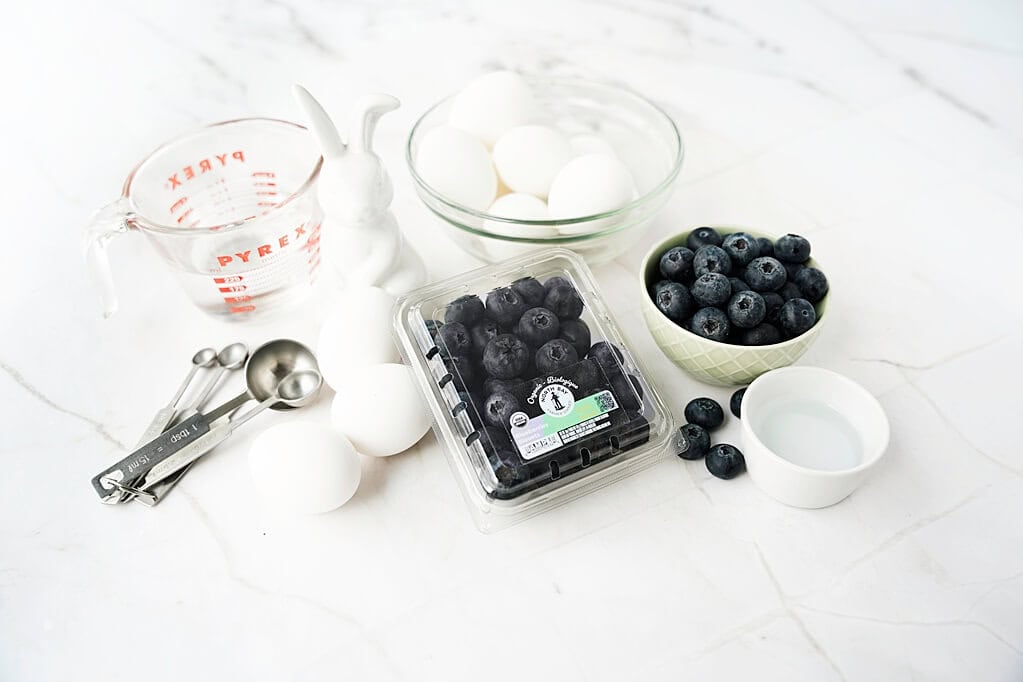
- 1 dozen eggs
- 2 cups North Bay blueberries
- 2 cups water
- 1 teaspoon distilled white vinegar
Directions
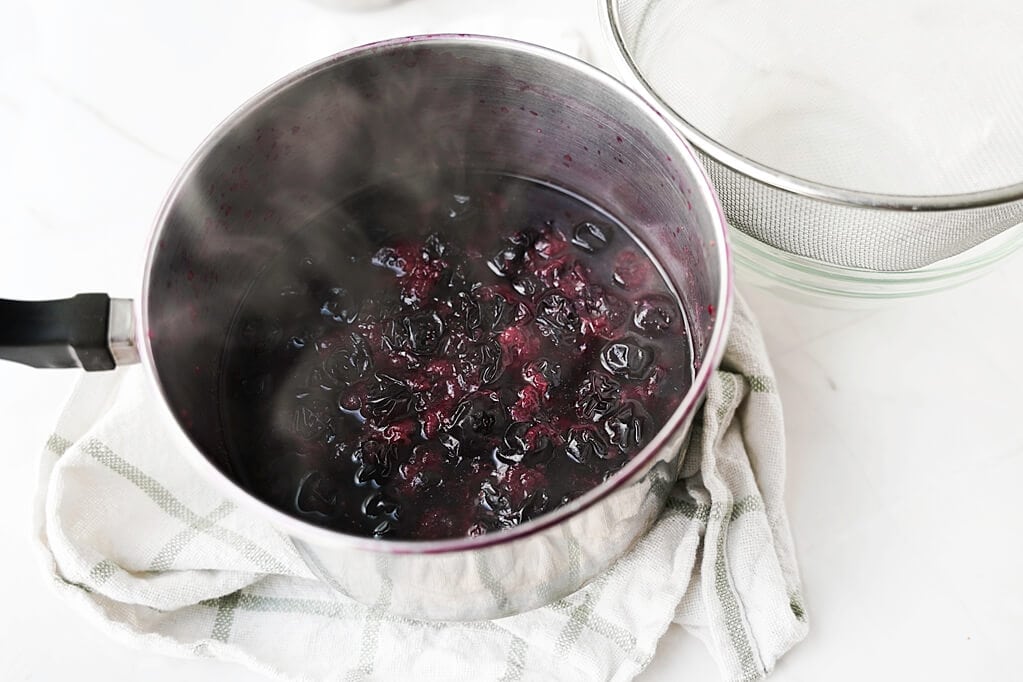
Brew the Dye: In a medium saucepan, bring 2 cups of water to a rolling boil. Once boiling, add your 2 cups of blueberries. Cover the pan, reduce the heat, and let them simmer for about 10–12 minutes. This gives the berries time to release all that deep pigment.
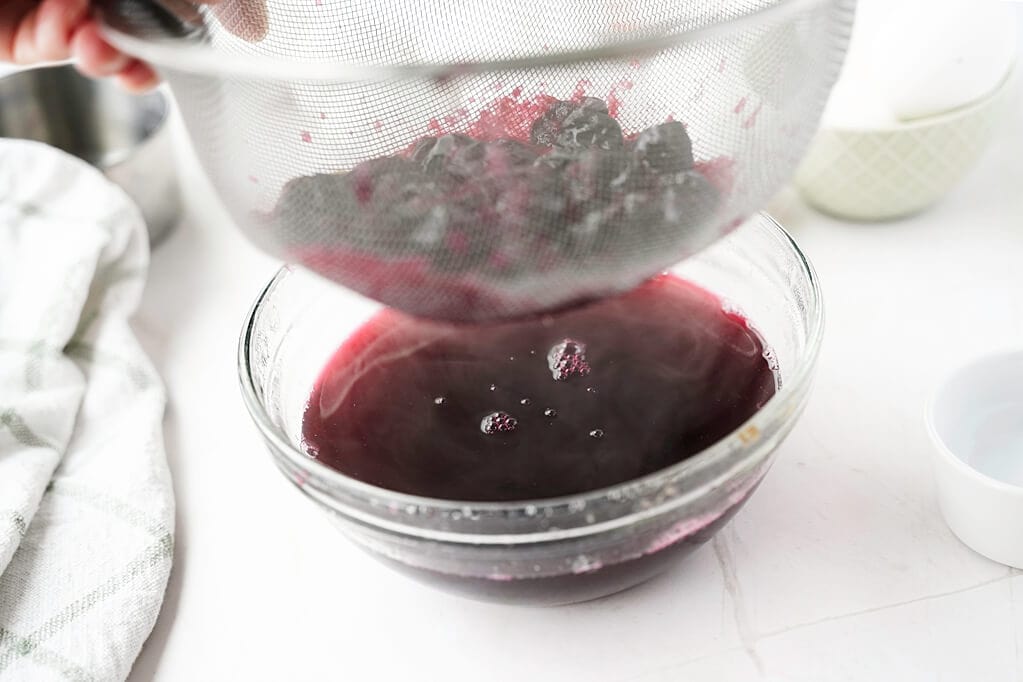
Strain and Prep: Remove the pan from the heat. Using a fine-mesh strainer, pour the liquid into a heat-safe glass jar, discarding the blueberry waste. Stir in 1 teaspoon of distilled white vinegar. Now, the hard part: patience. Let the dye sit until it reaches room temperature.
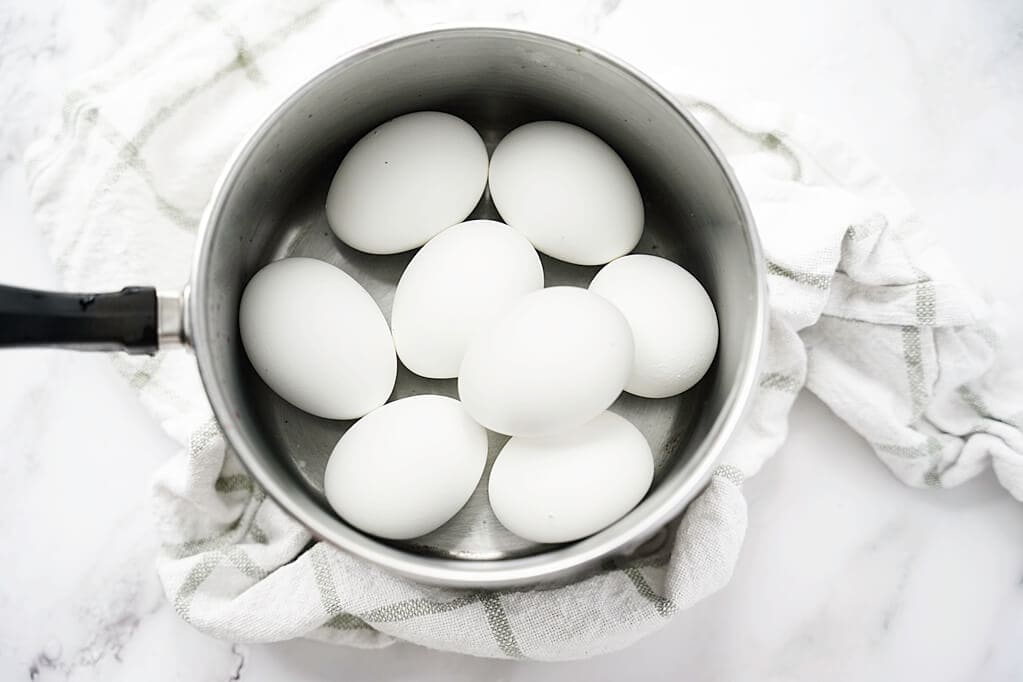
Prep the Eggs: While your dye is cooling, hard-boil your dozen eggs. Make sure they are fully cooled before you begin the dyeing process. A cold egg takes the dye much more evenly than a warm one!
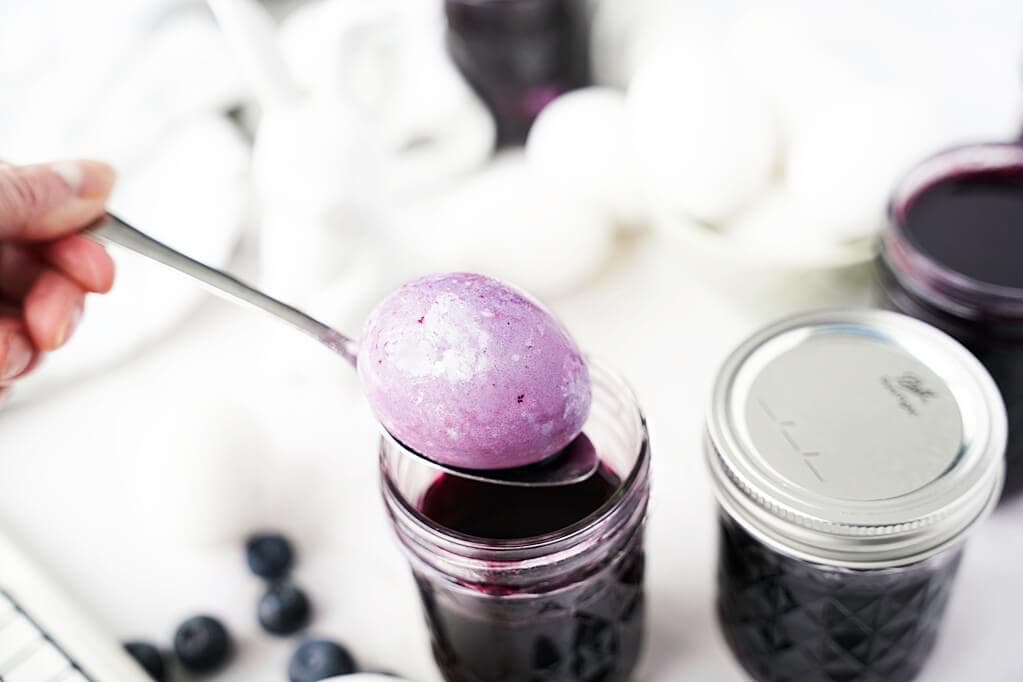
The Dyeing Process: Gently lower the eggs into the blueberry mixture. Let each egg soak for at least 3–5 minutes. Use a spoon to turn them occasionally to ensure the dye reaches every spot.
The Produce Moms Tip
If you want a deeper, darker blue, you can leave them in longer—even up to an hour—but for a classic “Blueberry Blue,” 5 minutes does the trick.
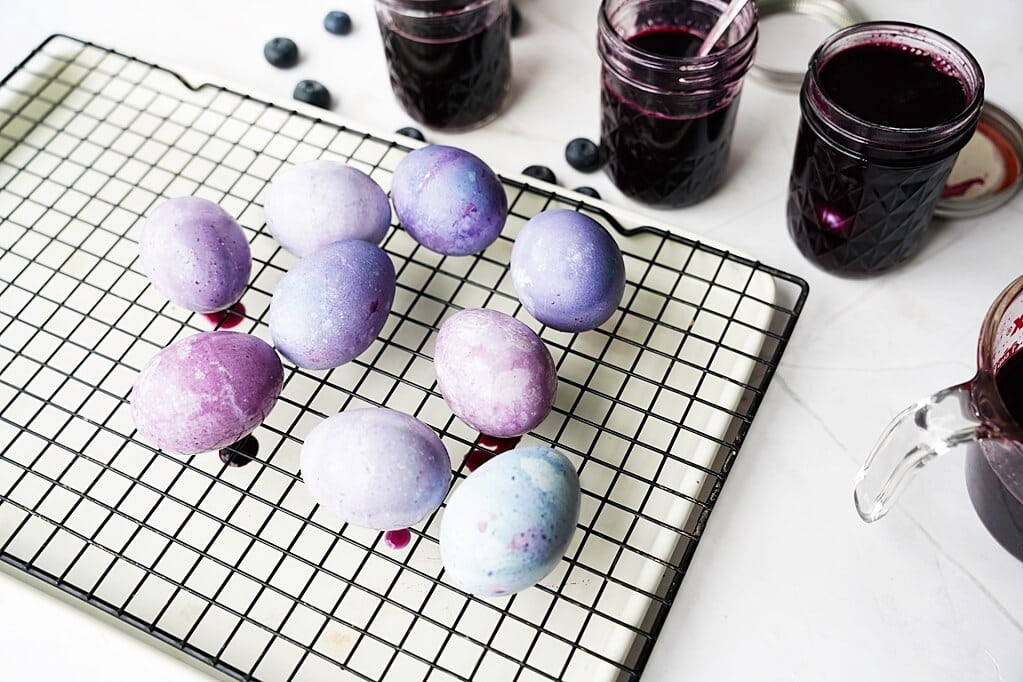
The Dry Out: Carefully lift the eggs out with a spoon and place them on a wire rack or back in the egg carton. Resist the urge to pat them dry with a paper towel! Letting them drip dry naturally ensures the color stays solid and doesn’t smudge.\
Quick Tips for Success
- White vs. Brown: This recipe works best on white eggs for a true blue. If you use brown eggs, they will turn a gorgeous, dark “mossy” slate color.
- The Shine Factor: Once the eggs are 100% dry, you can rub a tiny drop of vegetable oil on the shells to give them a soft, satin glow.
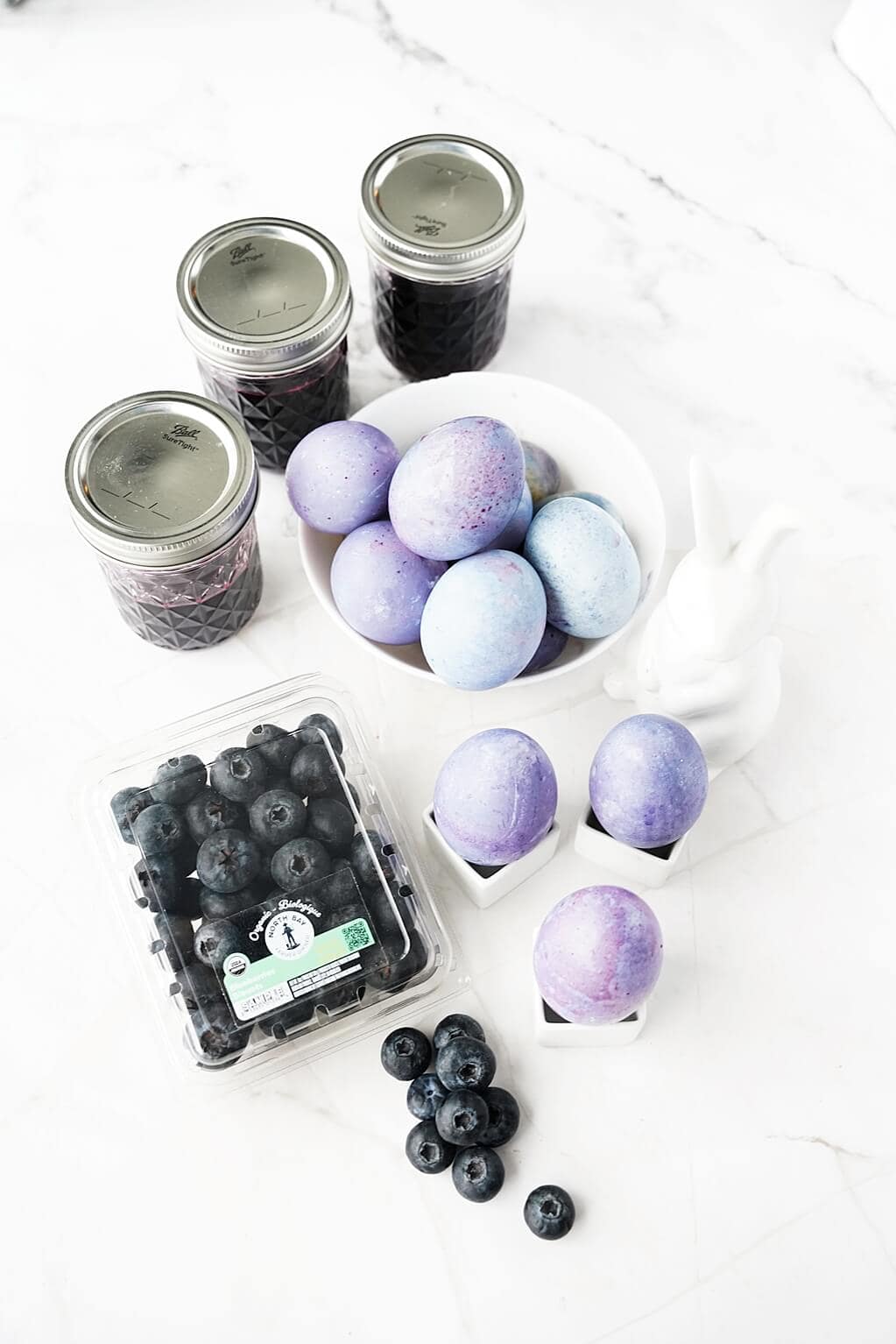
Whether you’re looking to start a new eco-friendly tradition or simply want an Easter basket that looks like a work of art, these blueberry-dyed eggs are the perfect solution. There is something deeply satisfying about watching a simple pot of berries transform plain white shells into a spectrum of blue.
It’s a gentle reminder that some of the most beautiful colors don’t come from a box…they’re already waiting in your kitchen. So, grab a carton of eggs, clear off the counter, and get ready to create some holiday magic that’s as natural as it is stunning. Happy dyeing!
More Great Easter Inspiration
- Hard Boiled Chicks
- Bunny-Inspired Spinach Artichoke Bread Bowl
- Easter Bunny Strawberry Parfait
- Chocolate-Dipped Strawberry Carrots
- Easter Peeps and Apple Skewers
- Blueberry & Pomegranate Tart
- Easter Veggie Basket
Why We Love North Bay Produce
Did you know North Bay Produce works with growers to bring you and your family blueberries bursting with sweet juicy flavor all year long? They carefully follow strict safety regulations so that your blueberries always show up at your local grocery store with the highest quality and flavor.
Did You Know that North Bay Produce just underwent a rebrand in order to put their farmers and families, like yours, at the heart of the story. Their new interactive labels and a refreshed logo make it easier to understand where your produce comes from and feel good about what you feed your family. Learn more here.
More North Bay Produce Blueberry Recipes
- Blueberry Bourbon Smash
- Fresh Blueberry Galette
- Blueberry Ice Cream Bread
- Homemade Blueberry BBQ
- Blueberry Goat Cheese Log
DIY Natural Blueberry-Dyed Easter Eggs
Ingredients
- 12 Hard boiled eggs
- 2 cups North Bay Produce blueberries
- 2 cups Water
- 1 tsp Distilled white vinegar
Instructions
- Brew the Dye: In a medium saucepan, bring 2 cups of water to a rolling boil. Once boiling, add your 2 cups of blueberries. Cover the pan, reduce the heat, and let them simmer for about 10–12 minutes. This gives the berries time to release all that deep pigment.
- Strain and Prep: Remove the pan from the heat. Using a fine-mesh strainer, pour the liquid into a heat-safe glass jar, discarding the blueberry waste. Stir in 1 teaspoon of distilled white vinegar. Now, the hard part: patience. Let the dye sit until it reaches room temperature.
- Prep the Eggs: While your dye is cooling, hard-boil your dozen eggs. Make sure they are fully cooled before you begin the dyeing process. A cold egg takes the dye much more evenly than a warm one!
- The Dyeing Process: Gently lower the eggs into the blueberry mixture. Let each egg soak for at least 3–5 minutes. Use a spoon to turn them occasionally to ensure the dye reaches every spot.
- The Dry Out: Carefully lift the eggs out with a spoon and place them on a wire rack or back in the egg carton. Resist the urge to pat them dry with a paper towel! Letting them drip dry naturally ensures the color stays solid and doesn't smudge.
Nutrition
Nutrition information is automatically calculated, so should only be used as an approximation.