Fruits and Veggies for Dogs: What’s Safe and What’s Not

Mar 12, 2015, Updated Dec 19, 2023
This post may contain affiliate links. Please read our disclosure policy.
We are MAJOR dog lovers around here! If you’re anything like us, you often feel sorry for your cute pooch when you see him eating the exact same meal, day after day.
How can they possibly live their whole life content with the same old dog food without experiencing the unlimited and delicious natural fruits and veggies that life has to offer?
Many fruits and vegetables are safe for dogs and can even provide nutritional benefits when included as part of a balanced diet. However, it’s essential to be aware of which ones are safe and in what quantities, as some can be harmful.
To help you out, we looked into which fruits and vegetables are safe for dogs. There are many that are safe, even healthy, for dogs to eat in small quantities.
Related: DIY Minty Fresh Dog Treats
Safe Fruits and Vegetables for Dogs
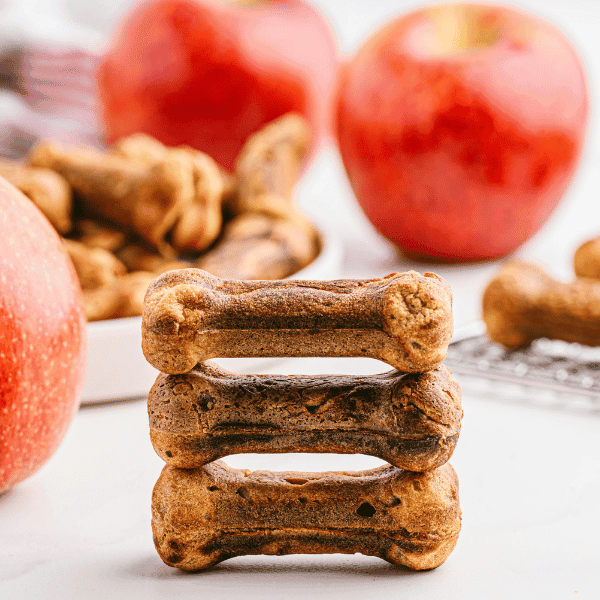
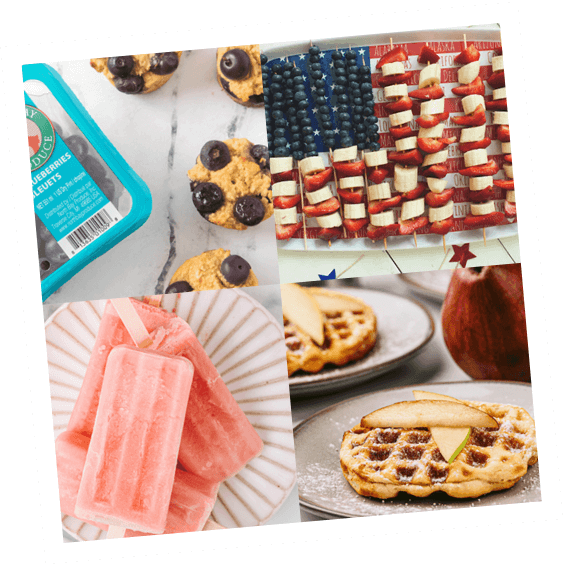
Apples: Apple slices in small amounts are a safe option. Be sure to remove all seeds before feeding it to the dog. Dogs love these homemade apple and pumpkin dog treats.
Bananas: Small pieces of banana are safe to feed your dog. Be sure they do not ingest the banana peel, however. Try making these banana and pumpkin dog treats for your pup.
Blackberries: Blackberries offer safe nutritional benefits to your dog, such as antioxidants, fiber, and vitamins!
Related: Gluten-Free Blackberry and Almond Flour Dog Treats
Blueberries: Just as blueberries are a “superfood” to humans, they also provide nutritional benefits to dogs. Your pup will go wild for these blueberry and banana pupsicles.
Broccoli: Broccoli is safe for dogs in very small amounts. It is not recommended to feed them broccoli regularly, as it can lead to intestinal issues in some rare cases.
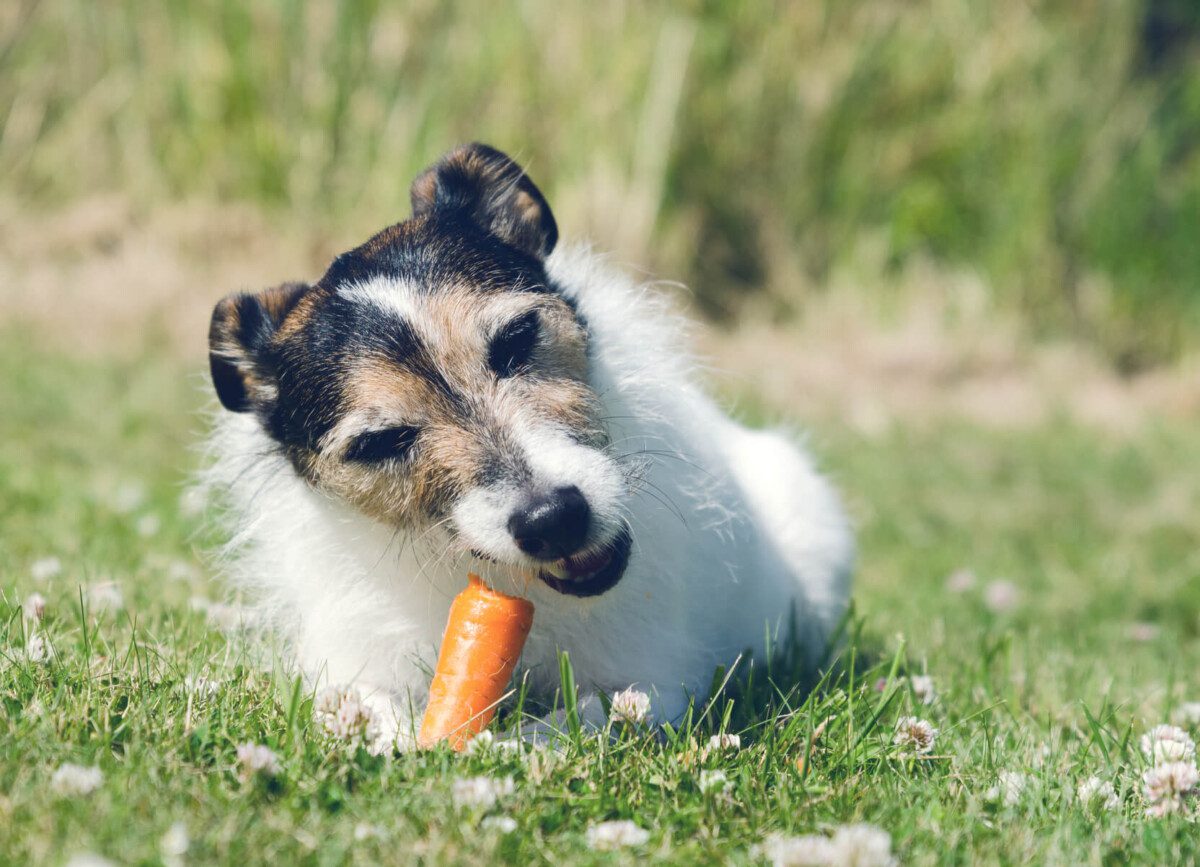
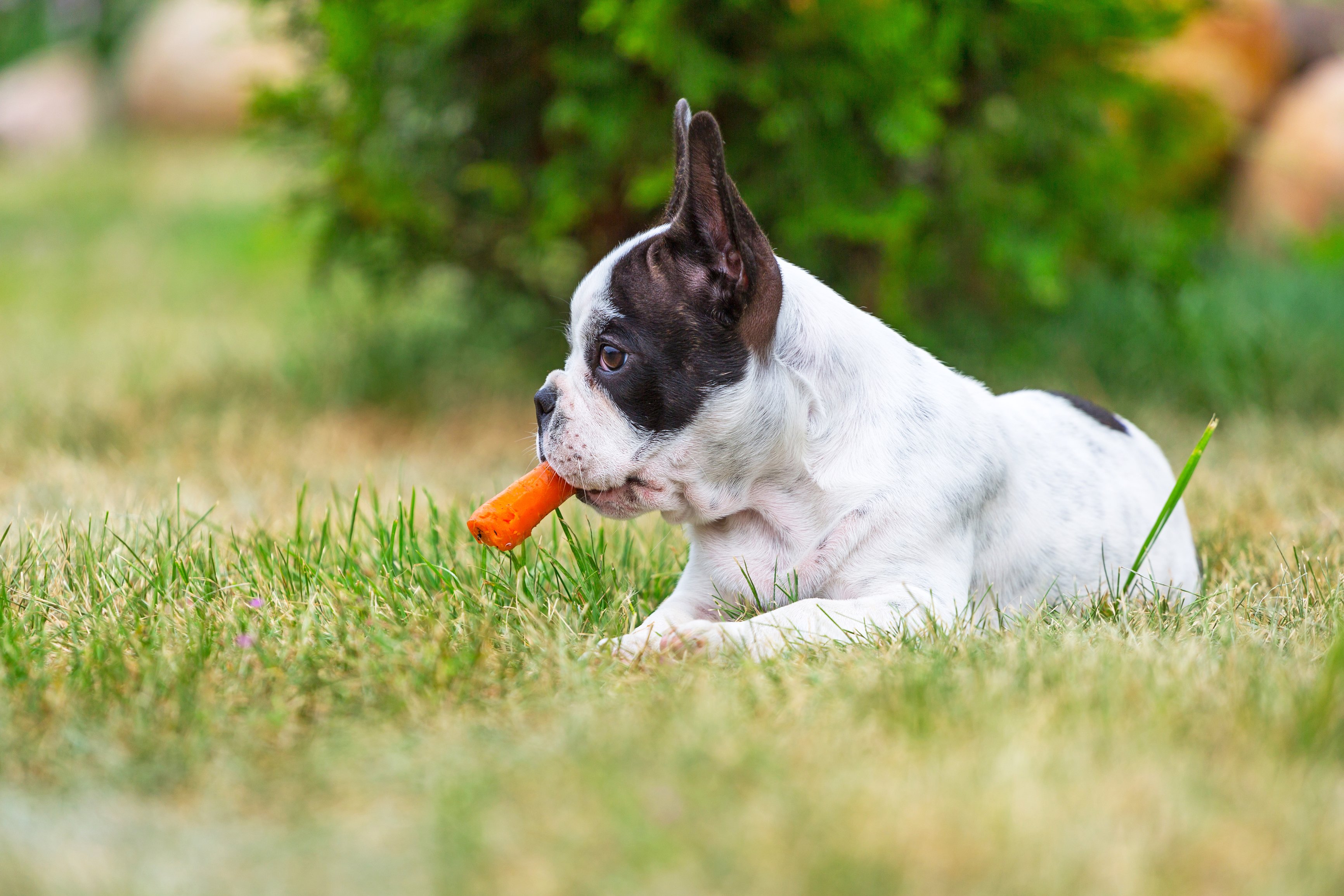
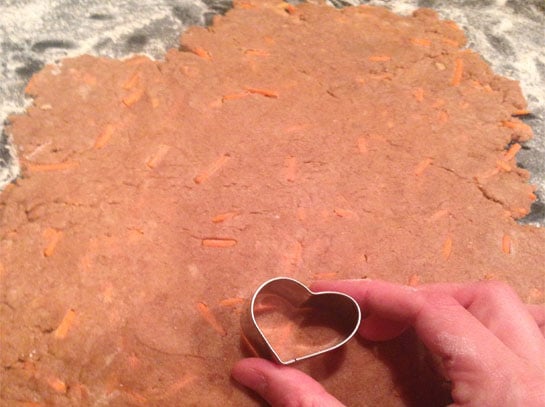
Carrots: Carrot sticks and baby carrots are safe for dogs, as long as the green leaves are removed. These grain-free carrot and spinach dog treats are a great option for your treat-loving dog.
Cauliflower: Cauliflower is safe to feed your dog in small amounts. Feeding your dog cauliflower on a regular basis is not recommended, however.
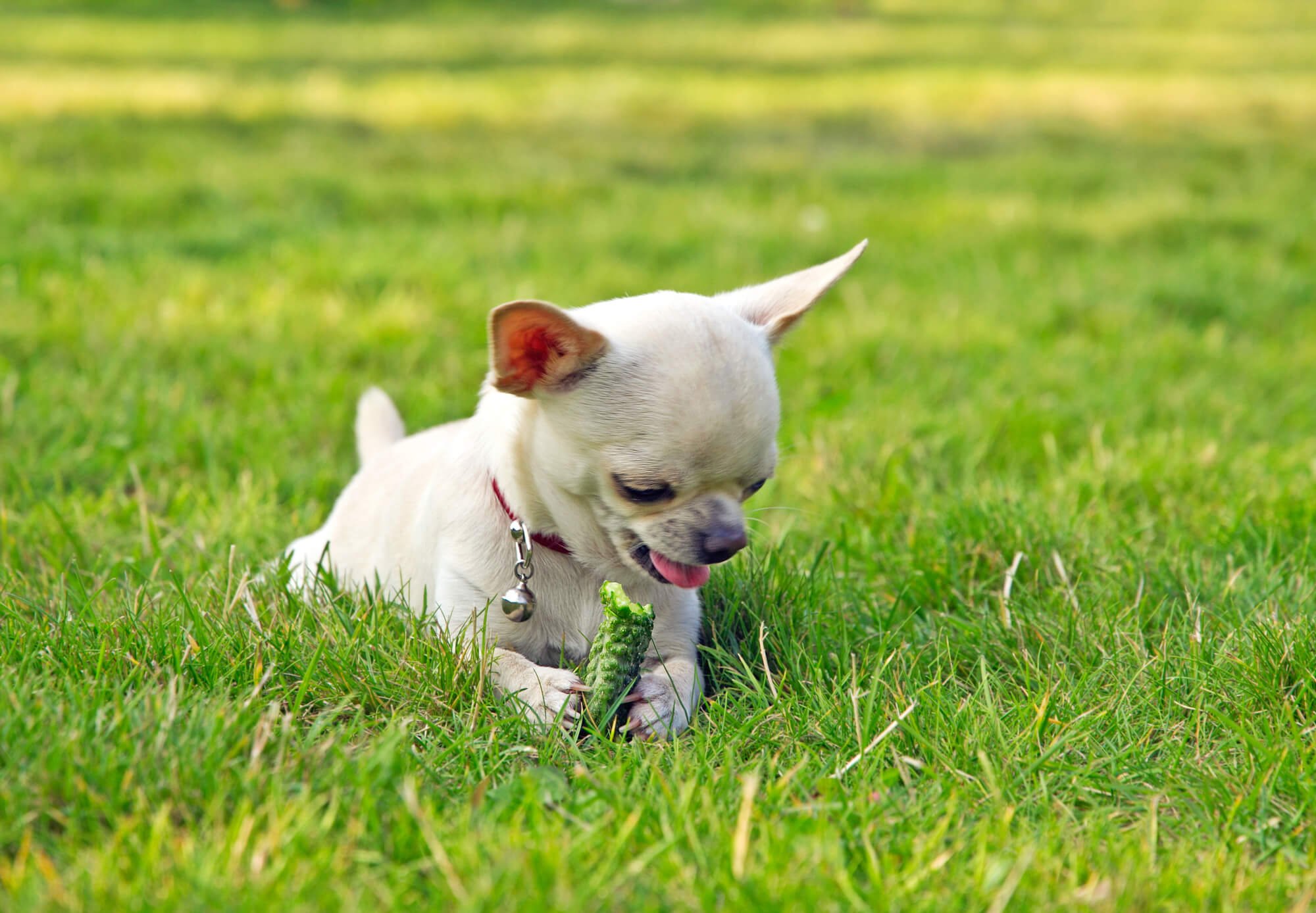
Cucumber: Cucumber slices or chunks are safe for dogs, but try to limit the amount of cucumber skin/peel they ingest.
Green Beans: Green beans are safe for dogs, as long as they have been washed and are not eaten straight from the garden in the backyard!
Oranges: Oranges are safe for a dog as long as the peel and seeds have been removed.
Peas: Peas are jam packed with nutritional value for humans, and offer small amounts of value to dogs. It is not recommended to regularly feed your dog peas, but it is safe in small amounts.
Potatoes: Small amounts of baked potato are safe for dogs. Make sure the potato is cooked in some fashion, not fed to them raw.
Strawberries: Strawberries contain safe antioxidants and Vitamin C for your dog, as well as an enzyme that helps whiten their teeth!
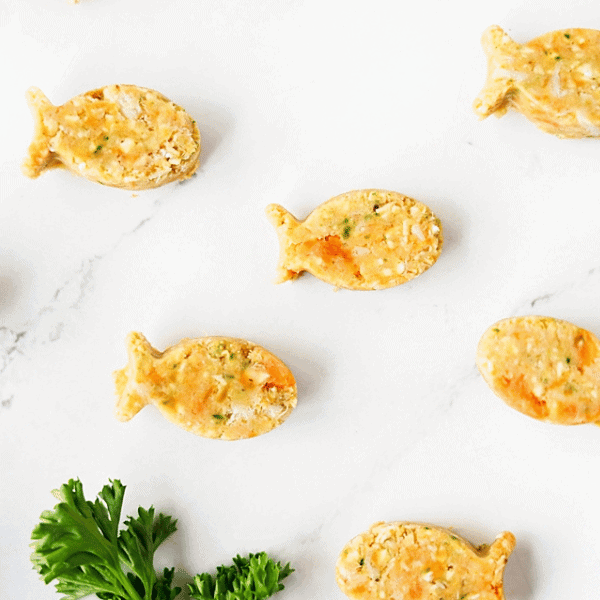
Sweet Potatoes: Sweet potatoes are safe for dogs and are a common ingredient found in dog food. Try making these sweet potato treats for your pooch:
Watermelon: Seedless watermelon is safe for dogs in small amounts. Both the white and black seeds are not easily digested, so be sure to remove all seeds. Do not allow the dog to eat the watermelon rind, either. Here are 4 simple watermelon dog treats you can give your furry friend.
Zucchini: Small amounts of zucchini slices or chunks are perfectly safe for your pooch. However, try to limit the intake of zucchini skin/peel.
Dangerous or Toxic for Dogs
Avocados: Avocados contain a substance called persin. Persin is harmless to humans who aren’t allergic but may be toxic to dogs in large amounts.
Garlic: Garlic is extremely dangerous to dogs, in all forms – cooked, raw, or powdered. It can destroy a dog’s red blood cells, leading to anemia. Symptoms of anemia include weakness, vomiting, little interest in food and trouble breathing.
Grapes: Grapes (and raisins) can cause kidney failure in dogs, even in small amounts. You should notice signs within one day, including repeated vomiting, or becoming lethargic and depressed.
Onions: Onions are very dangerous to dogs, in all forms – cooked, raw, powdered, or dehydrated. It can destroy a dog’s red blood cells, leading to anemia. Symptoms of anemia include weakness, vomiting, little interest in food and trouble breathing.
Peaches and Plums: The main danger in peaches and plums is the pit of the fruit. The pit contains cyanide, which is poisonous to both dogs and humans. Pits can also cause obstruction in the intestines if swallowed.
Raisins: see “Grapes”
Macadamia Nuts: Macadamia nuts are one of the worst things your dog could consume. Eating as little as six nuts can lead to muscle tremors, weakness or paralysis of the hindquarters, vomiting, elevated body temperature, and a rapid heart rate, which can turn fatal. Get your dog to a veterinarian immediately if they consume macadamia nuts.
* Please note that even if a fruit or vegetable is safe for dogs to eat, moderation is key. Only feed them safe ones in small amounts. Dog food was invented for a reason!
It is also recommended that you speak to your veterinarian before introducing any new foods into your dog’s diet.
For more information on dog health and wellness, visit http://pets.webmd.com/dogs/

‘Dog food was invented for a reason, you know!’
Yes ! For companies to make a profit! Dogs never used to walk into a store and buy a tin of food for dinner.
LOL. Humans either.
If garlic is so dangerous, why do they make garlic tablets to control fleas?
I feed my dogs fresh garlic daily for flea and tick control. The information on garlic is outdated and should be removed
I agree. I feed not every day but just pin size few time/wk
Hi,
A great list of foods which we can share with our pooch. Also, the specific toxic list has shocked me. I am very sad that I can’t share the nuts, avocado with my pooch. But, pride that it saves his life!
http://www.dogsora.com/can-dogs-eat-apples/
I feed my dogs Avoderm dog food. It is an excellent limited ingredient food and one of the ingredients is Avocado (hence the name Avoderm). My dog does well on this food. Beautiful coat, healthy and was recommended by my vet. I wonder why it is manufactured as an ingredient in dog food if it is on the do not feed list?
What about pears? I have an 8 month old maltepoo and she seems to love everything and anything but I barely started looking into what produce I can treat her with.
From what I have found, pears can be given to dogs as long as the seeds, stem and pit are removed. It is also important to wash the pear well before giving it to an animal to make sure you remove any chemicals. Here is a good website that goes into more details on giving pears to dogs: http://ultimatehomelife.com/can-dogs-eat-pears/
Very helpful. I am going to offer some mashed cauliflower.
Great read! I have just one question. I’ve never encountered a watermelon with a core. Am I shopping @ the wrong markets?
I think they mean rind…
Pretty sure they meant to rind
I believe they were referring to the watermelon rind
My two dogs love carrot and cucumber. When I’m making my sandwiches they’re always loitering around waiting for their daily treat of them!
If garlic “is extremely dangerous to dogs, in all forms – cooked, raw, or powdered” then why is it in Brewer’s yeast, a widely used and recommended supplement for dogs?
My thoughts exactly. Brewers claims it is good for the coat, etc., and all that. I have been waiting for an answer to that one also.
My Afghan hound ate 13 avocados I left on the kitchen table (naughty) a couple of years ago but nothing happened, well, except one day stomach issues as you might expect. So I’m not sure if avocado was actually that bad for him. He even had good manners, I only found all 13 bones and its peels very clean, no idea how he managed that! 🙂
It was really good info,thank you a lot…
Good things to know i gave my dog an apple and my mom said no and researched it and it was fine and gave him just a little
Thank you for this information. I would not want to feed my little chihuahua Peppi anything that may harm him.