Mississippi Agriculture

Sep 08, 2026

This post may contain affiliate links. Please read our disclosure policy.
For most of its history, agriculture in Mississippi was defined by a single crop: cotton. Starting in the early 1800s, the rich, fertile soils of the Mississippi Delta turned the state into an agricultural powerhouse. By the 1830s, Mississippi had become one of the top cotton producers in the nation. As many know, this boom was built on the back of enslaved labor working vast plantations.
Following the Civil War, the state’s agricultural landscape shifted to sharecropping and tenant farming. This kept cotton at the center of the economy for decades. However, heavy reliance on a single crop exposed farmers to severe soil depletion, crop infestations like the boll weevil, and dramatic market swings. This laid the groundwork for a much-needed push toward diversification.
In the mid-to-late 20th century, a major modern farming movement swept across the state. It reshaped how Mississippi cultivated its land. Farmers began rotating crops, adopting advanced technology, and expanding into new markets to protect their soil and income. Cotton, while still iconic, gradually made room for crops like soybeans and corn.
At the same time, Mississippi pioneered a completely new industry: commercial aquaculture. In the late 1960s, landowners in the Delta began converting cropland into managed water ponds. This turned the state into the farm-raised catfish capital of the world. Livestock production also exploded, particularly poultry, transforming Mississippi’s rural economy into a multi-billion-dollar, multi-commodity industry.
Today, agriculture remains Mississippi’s largest single industry. It employs roughly 30% of the state’s workforce across more than 31,000 family-owned and commercial farms. Modern farming generates billions of dollars in economic value annually.
Though traditional fields look quite different today with precision GPS tractors, automated irrigation, and eco-friendly conservation techniques, agriculture remains the deeply rooted beating heart of Mississippi’s culture and daily life.
About the Mississippi Department of Agriculture & Commerce
Established by the Mississippi Legislature in 1906, the Mississippi Department of Agriculture and Commerce (MDAC) is the primary state agency tasked with supporting, safeguarding, and expanding the state’s largest economic driver. Its core mission is twofold: to maintain fair and effective regulation across agricultural businesses and to aggressively market and promote Mississippi-made products across domestic and international markets.
It is led by an elected Commissioner of Agriculture and Commerce, MDAC balances its duty as a consumer watchdog with its role as a key advocate for local farmers, ranchers, and agribusinesses.
In practice, the agency carries out a wide array of day-to-day services that touch nearly every aspect of life in Mississippi. On the regulatory side, MDAC oversees consumer safety and fair trade through meat and food safety inspections, fuel pump calibrations, seed and pesticide testing, and agricultural theft investigations. On the marketing side, it manages initiatives like the “Genuine MS” brand program, operates the Mississippi Farmers Market, oversees agricultural trade missions, and hosts major livestock shows and state fairs.
By bridging essential consumer protections with business development, the department ensures the integrity of local markets while driving growth for Mississippi’s multi-billion-dollar farming sector.
Learn more at https://www.mdac.ms.gov/.
Top 5 Agricultural Commodities in Mississippi
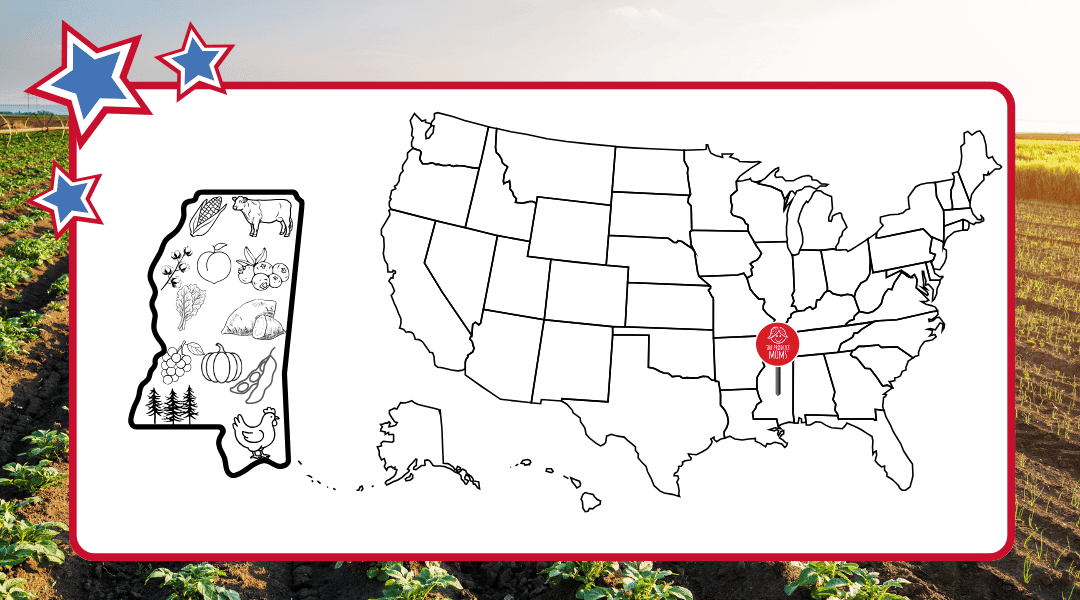
While cotton historically defined the region, modern Mississippi agriculture is an economic powerhouse driven by a diverse lineup of crops, livestock, and timber. Agriculture generates nearly $10 billion in total agricultural production annually. The state feeds, clothes, and supplies materials to consumers across the globe. The top five agricultural commodities in Mississippi collectively showcase how traditional row-crop farming, forestry management, and high-volume poultry operations work together to anchor the state’s modern economy.
Poultry (Broilers & Eggs)
Poultry holds the crown as Mississippi’s most valuable agricultural commodity by a wide margin. It consistently generates more than $3 billion to $3.7 billion annually in total market value. Mississippi produces over 700 million broilers every year. They outnumber the state’s human population of under 3 million. Mississippi ranks as one of the top broiler-producing states in the entire nation, exporting chicken meat across North America and Asia.
Forestry & Timber
It covers roughly 19.2 million acres, which is nearly 65% of the state’s total land area. Timber is vital to Mississippi’s landscape and rural job market. It accounts for $1.4 billion to $1.5 billion in annual harvest value. Forestry drives rural economies by supporting sawmills, paper mills, and wood pellet producers, generating over 80,000 jobs statewide. Nationally, Mississippi is a top supplier of pine lumber and paper products used in home construction and packaging across North America.
Soybeans
Soybeans reign supreme among row crops in Mississippi, bringing in $1 billion to $1.2 billion each year. Mississippi farmers plant nearly 2 million acres of soybeans annually, particularly in the rich, flat soils of the Delta region.The state plays a significant role in global supply chains, shipping massive volumes of raw soybeans and soybean meal through ports on the Mississippi River for international feed, oil, and biofuel production.
Corn (Grain)
Mississippi corn production has surged over recent decades. It generates between $370 million and $650 million annually, depending on market shifts and weather conditions. Mississippi farmers harvest hundreds of thousands of acres of corn, which produces up to 150+ million bushels per year. Much of this grain stays right inside the state. It serves as the essential dietary fuel for Mississippi’s massive broiler chicken and livestock industries.
Cattle & Calves
The cattle and calves industry is one of the most foundational, wide-reaching sectors of Mississippi agriculture. It generates $500 million to over $600 million in annual production value. Beef cattle operations are spread across all 82 counties in Mississippi. It spans more than 2.6 million acres of pastureland and forage production. The state’s mild climate allows for extended, near year-round grazing, making livestock a natural fit for rolling, un-tillable terrain
Bonus Commodity: Cotton
Although it no longer holds the absolute top spot in overall revenue, cotton remains an essential fixture of Mississippi culture and economy. It routinely generates $400 million to $500 million annually. Mississippi consistently ranks among the top 5 cotton-producing states in the U.S. The long-staple Upland cotton grown in the Delta is highly prized by textiles manufacturers around the globe for its strength and soft texture.
Related: Cotton vs. Plastic
While aquaculture like farm-raised catfish generates smaller overall dollar totals than high-acreage crops, Mississippi ranks #1 in the nation for farm-raised catfish production, producing over half of all catfish consumed in the United States!
Fruits and Vegetables from Mississippi
Known formally as “specialty crops,” Mississippi’s top fruits and vegetables generate tens of millions of dollars in direct farm gate value, support thousands of local jobs, and supply fresh produce to regional and national supply chains. From the acidic soils of the southern pine belt to the sandy loam fields of north-central Mississippi, local growers leverage the state’s long growing season to produce high-value food crops that reach far beyond local farmers’ markets.
Top Fruits
- Blueberries: Blueberries are Mississippi’s #1 commercial fruit crop, generating $8 million to $10 million annually across roughly 1,000 to 2,000 acres of commercial production.
- Peaches: Peaches play an exceptionally vital role in the state’s direct-to-consumer specialty crop market. Commercial peach production in Mississippi spans roughly 200 to 500 acres, concentrated heavily in the central and southern regions of the state.
- Muscadine Grapes: Muscadines are a thick-skinned grape variety native to the American South. They are the premier commercial tree/vine fruit in the state, occupying several hundred acres. They are highly resistant to hot, humid climates and pests. Muscadines are grown for fresh eating, jellies, and a booming local farm-winery industry. They are celebrated locally for their rich flavor and exceptional antioxidant levels.
Top Vegetables
- Sweet Potatoes: Sweet potatoes are Mississippi’s undisputed heavy hitter in vegetable production. It consistently generates around $100 million to $120 million in annual crop value. Mississippi typically ranks #3 in the nation for sweet potato production, behind only North Carolina and California.
- Greens (Collard, Turnip & Mustard): Culturally and economically, greens are an essential staple of Mississippi’s local food infrastructure and agricultural heritage. They are cultivated on thousands of acres across the state. It is grown predominantly during the cool fall, winter, and early spring months. This allows Mississippi farmers to keep their land productive nearly year-round.
- Squash & Pumpkins: These crops serve as high-value specialty produce. Mississippi’s long growing season and warm temperatures allow farmers to produce summer squash, winter squash, and pumpkins, providing steady income for small-to-midsize commercial farms and roadside markets across the state.
Visit our Produce Directory and learn how to Select, Store and Serve these fruits & vegetables.
About 50 States of Agriculture
In celebration of 250 years of the United States, The Produce Moms is proud to present 50 States of Agriculture. This is an educational and free resource that celebrates the bounty of America. We utilized USDA and State Department of Agriculture data (Mississippi) for the content in this series.
Agriculture is the foundation of freedom. Food security is national security. This content series is a celebration of United States culture and the hard-working farmers who feed, fuel & clothe our nation and the world.
Visit another state from our 50 States of Agriculture.