Texas Agriculture

Nov 12, 2026

This post may contain affiliate links. Please read our disclosure policy.
Texas was built on agriculture. Indigenous communities were the original stewards of the land. They cultivated staple crops like corn, beans, and squash along rich river basins. When Spanish missionaries arrived, they introduced horses, sheep, and longhorn cattle. This began the early blueprint for Texas ranching.
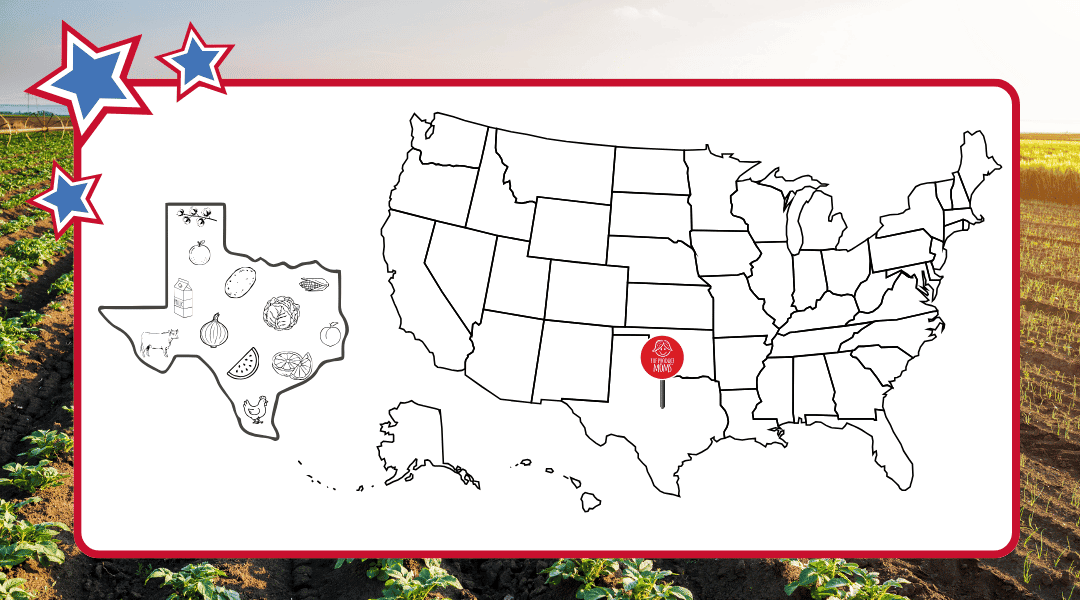
By the 19th century, waves of Anglo-American settlers and European immigrants carved out farmsteads across the state. Early commercial agriculture quickly grew around a slave-based cotton economy in the east and south. Then, massive post-Civil War cattle drives pushed herds along iconic trails north to out-of-state markets. This cemented the enduring image of the Texas cowboy.
As the 20th century unfolded, Texas transformed its frontier farming into a modern agricultural powerhouse. Landmarks shifted. Plus, the creation of land-grant institutions like Texas A&M University brought advanced scientific research into soil health, pest eradication, and crop resilience.
The harnessing of major rivers and deep aquifers brought irrigation to arid regions. This unlocked vast stretches of land for citrus, corn, sorghum, and wheat. Meanwhile, expanding railroad networks connected isolated rural farms to major global markets. This allowed Texas to move from basic self-sufficiency to leading the nation in agricultural output.
Today, agriculture remains a foundational pillar of the Lone Star State’s economy. It generates tens of billions of dollars in annual market value. Texas easily leads the United States in total number of farms and ranches. It boasts nearly 247,000 operations that span roughly 126 million acres, around 97% of which remain family-owned. By continually blending deep-seated heritage with modern practices like precision technology and water conservation, Texas agriculture feeds and clothes millions across the globe every day.
About the Texas Department of Agriculture
The Texas Department of Agriculture (TDA) acts as a vital state agency dedicated to supporting, regulating, and advancing the Lone Star State’s massive agricultural sector. Its core mission focuses on collaborating with residents across the state. They want to position Texas as a national leader in agriculture, strengthen the economy, uplift rural regions, encourage healthy habits, and foster growth for urban, suburban, and rural communities alike through high-standard public service.
The TDA is overseen by an elected Commissioner who leads with a handful of senior staffers.. To fulfill this mission, the agency centers its daily efforts around several primary objectives:
- Promoting production agriculture
- Protecting consumers
- Driving economic development
- Encouraging healthy living.
Functionally, the TDA manages a wide range of responsibilities that impact everyday life. This includes safeguarding valuable crops like cotton and citrus from destructive pests and plant diseases, facilitating local and international trade for Texas commodities, and administering key nutrition programs such as school lunch initiatives.
Additionally, the department runs economic programs like GO TEXAN to market locally grown and made products. They also regulate weights and measures to ensure fair commercial transactions across the state.
Learn more at https://texasagriculture.gov/.
Top 5 Agricultural Commodities in Texas
Texas is an agricultural titan. It generates tens of billions of dollars in economic output and feeds and cloths millions of people worldwide. Blessed with expansive geography, varied regional climates, and rich soils, the state leads the nation in total land devoted to farming and ranching. It spans roughly 126 million acres across nearly 247,000 operations. While Texas produces dozens of agricultural products, its economy is heavily anchored by five flagship commodities. Together, these powerhouses fuel local rural communities, sustain massive processing industries, and dominate U.S. and global supply chains.
Beef Cattle
Beef cattle represent the single largest market share of Texas agriculture. It frequently generates upwards of $8 billion to $12 billion annually in cash receipts. Texas leads the nation by a wide margin. They have roughly 12.5 million head of cattle. Locally, cattle production forms the financial bedrock for rural communities. It also supports local feedlots, auction barns, and meatpackers. Nationally, Texas supplies around 20% of the entire country’s beef.
Cotton
Cotton is Texas’s most valuable crop. It contributes over $2 billion in annual cash receipts and establishes the state as the unquestioned cotton capital of America. Texas grows roughly 35% to 40% of all U.S. cotton. Locally, cotton supports a massive infrastructure of gins, oil mills, and transport hubs. Nationally, it drives the domestic textile and seed oil industries while serving as one of the state’s top agricultural exports to markets worldwide
Related: Benefits of a Cotton Household
Broilers (Chickens)
Broiler production is the leading sector of the Texas poultry industry. It generates over $2 billion to $2.9 billion in annual cash receipts. Broiler farming directly supports local processing plants and feed suppliers. Nationally, Texas consistently ranks among the top six broiler-producing states. It ships millions of pounds of chicken per week across the U.S. and into foreign export markets.
Milk & Dairy Products
Dairy has seen explosive growth in Texas over the last two decades. It has become a top-five commodity that brings in over $2 billion annually. It is driven by large, state-of-the-art dairies. Texas ranks among the top dairy-producing states in the U.S. Locally, this surge has attracted major milk-processing and cheese-manufacturing facilities. It also spurs regional economic growth. Nationally, Texas milk feeds domestic consumer markets and supplies milk powder and cheese for international export.
Grain Corn
Corn is a crucial grain crop for Texas. It generates over $1 billion annually. Corn plays a dual local role: it feeds the state’s massive cattle feedlots and poultry farms while supplying raw inputs for food processors and ethanol production facilities. Nationally, Texas corn feeds into the broader U.S. grain distribution web. It supports both human food products and livestock feeds nationwide.
Fruits and Vegetables from Texas
Texas isn’t just famous for beef and cotton! The Lone Star State’s warm climate, expansive regions, and diverse soils create ideal conditions for growing a vast selection of specialty produce. From the frost-free subtropical climate of the Lower Rio Grande Valley to the rich soils of the Winter Garden region and East Texas, fruit and vegetable farming plays a crucial role in powering local economies, supplying regional packing houses, and stocking grocery shelves nationwide.Though horticultural crops occupy a smaller percentage of overall acreage compared to vast cattle pastures or row crops, Texas specialty crops generate hundreds of millions of dollars in economic value each year.
Top Fruits
- Watermelon: While botanically classified as a fruit, watermelons are classified horticulturally as a vegetable and stand as the single largest fresh produce crop in Texas. Texas consistently ranks near the top nationally in watermelon production, devoting over 55,000 acres. Watermelons generate tens of millions of dollars in cash receipts annually.
- Grapefruit: Grapefruit is the premier fruit crop produced in Texas. It is dominated by the famous Rio Red variety grown in the Lower Rio Grande Valley. Citrus orchards account for around 22,000 harvested acres in the state, with grapefruit making up approximately 60% of total Texas citrus production. Texas consistently ranks among the top three grapefruit-producing states in the country alongside Florida and California.
- Peaches: Peaches represent the leading tree-fruit crop. They cover roughly 4,000 acres of land, Texas peaches are grown primarily for fresh local consumption, direct-to-consumer roadside stands, and agritourism.
- Oranges: Rounding out the citrus powerhouse in the Rio Grande Valley, oranges account for roughly 30% of the state’s citrus harvest. With over 6,000 acres under cultivation, Texas produces both early-season sweet oranges and late-season Valencias. Texas oranges supply both fresh fruit markets across the U.S. and regional juicing operations.
Top Vegetables
- Onions: Onions are the most valuable commercial vegetable crop grown in Texas. They cover around 16,700 acres. The state is world-famous for developing the sweet “Texas 1015” onion (named after its ideal planting date of October 15th), which was bred at Texas A&M University.
- Potatoes: Potatoes are a massive specialty crop in Texas. There are around 22,000 acres under cultivation. Texas produces both fresh table-stock potatoes (red and russet varieties) and chipping potatoes. The state’s large chipping potato harvest supplies major national snack food manufacturers, connecting Texas growers directly to commercial food processing plants across the country.
- Cabbage: Cabbage is one of the most consistently produced fresh-market vegetables in Texas. It covers roughly 7,000 to 9,000 acres annually. Texas ranks among the top states in the nation for fresh market cabbage. The harvest supports both fresh retail markets across the U.S. and large-scale commercial processors making coleslaw,sauerkraut, and pre-packaged salad mixes.
Visit our Produce Directory and learn how to Select, Store and Serve these fruits & vegetables.
About 50 States of Agriculture
In celebration of 250 years of the United States, The Produce Moms is proud to present 50 States of Agriculture. This is an educational and free resource that celebrates the bounty of America. We utilized USDA and State Department of Agriculture data (Texas) for the content in this series.
Agriculture is the foundation of freedom. Food security is national security. This content series is a celebration of United States culture and the hard-working farmers who feed, fuel & clothe our nation and the world.
Visit another state from our 50 States of Agriculture.