South Dakota Agriculture

Nov 06, 2026

This post may contain affiliate links. Please read our disclosure policy.
South Dakota’s rich agricultural story began long before statehood. It is rooted in the fertile prairie soils and expansive grasslands. Early Native American tribes cultivated native crops like corn, beans, and squash along river basins while relying on the vast bison herds roaming the plains.
In the late 19th century, homesteaders flooded into the region during the “Dakota Boom.” It transformed from the open range into structured farmland. The introduction of barbed wire in the 1870s brought an end to open-range cattle grazing. It established defined ranches and set the stage for organized crop production.
As farming expanded through the 20th century, South Dakota producers learned to adapt to unpredictable Great Plains weather patterns. The devastating Dust Bowl of the 1930s sparked major conservation movements across the state. It prompted farmers to adopt shelterbelts, contour plowing, and crop rotation to protect precious topsoil.
Over the following decades, irrigation projects along the Missouri River further boosted productivity. These conservation efforts laid the groundwork for today’s widespread adoption of precision technology and no-till farming. This keeps the soil healthy while maximizing crop yields.
Today, agriculture remains South Dakota’s top economic engine. Local producers manage roughly 28,000 farms and ranches across more than 42 million acres. The state consistently stands as a powerhouse in livestock and crop production.
South Dakota farmers harvest millions of acres of corn and soybeans every year, generating billions of dollars in market value while maintaining top national ranks in crops like sunflowers, hay, and winter wheat. From historic open pastures to modern bio-fuel processing and sustainable ranching, the state continues to feed and fuel millions of people around the world.
About the South Dakota Department of Agriculture and Natural Resources
The South Dakota Department of Agriculture and Natural Resources (DANR) plays a vital role in balancing economic growth with environmental and agricultural stewardship in the state. Its core mission is to protect and preserve South Dakota’s agriculture, environment, and natural resources through effective regulatory services, natural resource conservation, and financial and technical assistance.
The agency works toward a vision of a prosperous economy complemented by clean air, clean water, diverse agricultural opportunities, and healthy families. It is led by an appointed Department Secretary.
To execute this mission, the agency operates through several key divisions. They handle everything from environmental protection to industry promotion. Main functions include managing water rights and quality, overseeing agricultural and environmental regulations, implementing conservation programs for soil and forestry, and providing financial backing for community infrastructure projects like drinking water and wastewater systems.
Plus, DANR supports the state’s vibrant rural economy by managing the South Dakota State Fair and promoting local producers. They ensure that traditional farming roots and environmental safeguards advance hand in hand.
Learn more at https://danr.sd.gov/.
Top 5 Agricultural Commodities in South Dakota
Agriculture serves as South Dakota’s primary economic driver. It contributes tens of billions of dollars annually. Plus, it utilizes over 80% of its land area across roughly 28,000 farms and ranches. From feeding global supply chains to fueling domestic energy needs, South Dakota consistently ranks among the top states nationwide for several key agricultural products. Understanding its top commodities highlights both local economic vitality and national food security.
Corn
Corn is South Dakota’s highest-value crop. It generates billions in annual revenue. Beyond grain sales, the state’s corn industry fuels a massive local bio-economy. There are 16 ethanol processing plants that produce over 1.5 billion gallons of renewable fuel each year while supplying high-protein distillers grains to local livestock producers. South Dakota routinely ranks among the top six corn-producing states in the U.S. Its harvest supports national livestock feed systems, biofuel blending standards, and global grain export markets.
Cattle & Calves
Cattle ranching dominates the western and central plains of South Dakota. It anchor of rural economies. It generates billions in cash receipts for local ranching families and supports regional auction barns, processing plants, and veterinary services. South Dakota consistently ranks 5th in the nation for total beef cattle inventory. High-quality South Dakota beef is shipped across the country and exported globally. It supplies top-tier beef to grocers and restaurants nationwide.
Soybeans
Soybeans serve as a critical rotational crop alongside corn. It helps maintain soil health while offering high market returns. Local processing facilities crush millions of bushels into soybean meal for animal feed and soybean oil for food products and biodiesel. South Dakota ranks among the top 8 to 9 soybean-producing states nationally. A substantial portion of the state’s harvest is transported via rail to Pacific Northwest ports. South Dakota a key supplier for international markets in Asia. South Dakota’s soybean crop regularly generates over $2 billion in annual market value. Modern soybeans from the state are increasingly utilized in bio-based industrial products, including environmentally friendly asphalt rejuvenators, tires, and motor oils.
Wheat (Spring & Winter)
Wheat has deep historical roots in South Dakota. And it remains vital to grain farmers across the central and western regions. Growing both Hard Red Winter wheat and Hard Red Spring wheat gives local growers planting flexibility and steady farm income throughout varied growing seasons. South Dakota consistently ranks in the top 10 states for overall wheat production. Its high-protein wheat is heavily sought after by national flour millers to produce bread, commercial baked goods, and pasta.
Hogs & Pigs
Pork production provides significant value-added economic growth in South Dakota. By converting locally grown corn and soybeans into high-value protein, pork operations keep feed grain markets strong locally while supporting modern processing infrastructure in cities like Sioux Falls. South Dakota ranks among the top 10 hog-producing states in the country. The state’s pork sector contributes significantly to the national meat supply.
Fruits and Vegetables from South Dakota
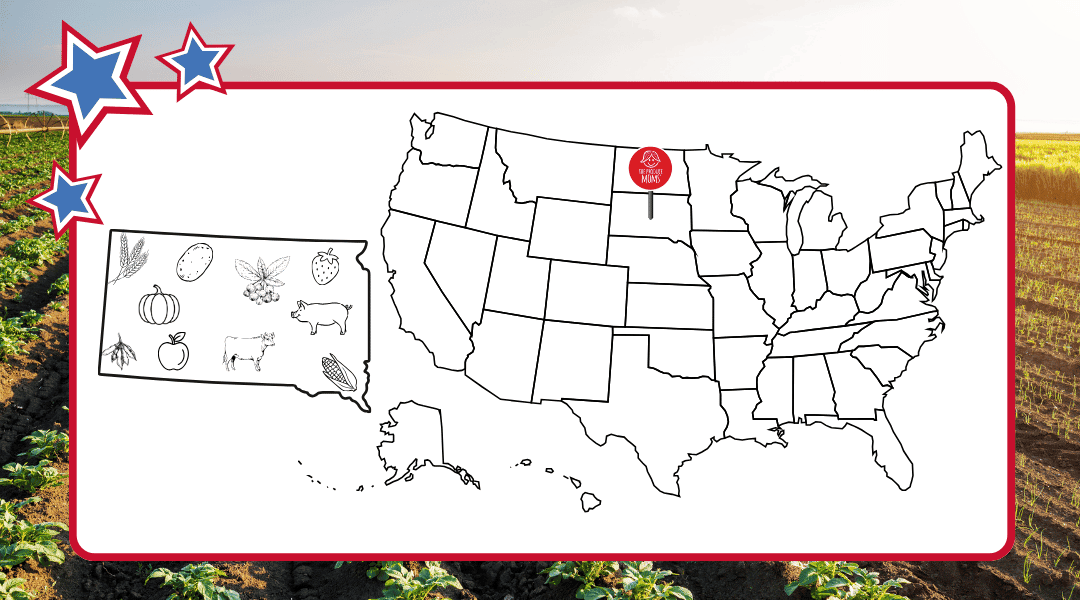
While South Dakota’s agricultural landscape is heavily dominated by massive field crops like corn, soybeans, and wheat, the state also supports a thriving sector of specialty fruit and vegetable production. Cultivated across localized farm stands, community markets, and regional orchards, these crops add unique nutritional value and horticultural diversity to the state’s agricultural economy. Commercial vegetable and fruit production occupies a smaller footprint compared to row crops. However, hardy varieties thrive in South Dakota’s distinct microclimates, particularly in the fertile southeastern river corridors and the unique growing conditions of the Black Hills.
Top Fruits
- Apples: Apples are the leading tree fruit grown across South Dakota. Orchards flourish particularly in southeastern counties and the Black Hills region. The cool autumn nights help intensify fruit color and crisp flavor. Local growers supply community farmers’ markets, roadside stands, and agritourism apple-picking operations.
- Chokecherries: It is a native prairie fruit deeply woven into the state’s history. The chokecherry holds official cultural significance as the state fruit of South DakotaWild-foraged and cultivated alike, these tart fruits are harvested extensively to create regional jams, jellies, syrups, and artisan wines.
- Strawberries: Strawberries rank among the most popular and successfully cultivated perennial berries in South Dakota gardens and small-scale truck farms. Growers utilize matted-row systems or protective high tunnels to shield delicate spring blossoms from late-season frost.
Top Vegetables
- Potatoes: Potatoes are a foundational root vegetable grown successfully throughout South Dakota’s loamy glacial soils. Both commercial scale and garden producers benefit from the state’s cool spring conditions, which favor tuber development.
- Sweet Corn: While field corn dominates acreage for livestock feed and ethanol, sweet corn is cultivated extensively across South Dakota for direct human consumption. Grown across thousands of acres dedicated to fresh market produce, it is a staple of mid-summer farm stands and local grocery displays.
- Pumpkins & Winter Squash: Pumpkins and winter squashes thrive during South Dakota’s warm summer months. They capitalize on the long daylight hours of the northern plains. Vine crops cover significant acreage among specialty crop producers. Beyond food consumption, pumpkins drive a massive wave of fall agritourism. Local pumpkin patches and farm mazes contribute heavily to autumn rural tourism economies across the state.
Visit our Produce Directory and learn how to Select, Store and Serve these fruits & vegetables.
About 50 States of Agriculture
In celebration of 250 years of the United States, The Produce Moms is proud to present 50 States of Agriculture. This is an educational and free resource that celebrates the bounty of America. We utilized USDA and State Department of Agriculture data (South Dakota) for the content in this series.
Agriculture is the foundation of freedom. Food security is national security. This content series is a celebration of United States culture and the hard-working farmers who feed, fuel & clothe our nation and the world.
Visit another state from our 50 States of Agriculture.