Can You Peel Potatoes Ahead of Time?

Oct 13, 2026
This post may contain affiliate links. Please read our disclosure policy.
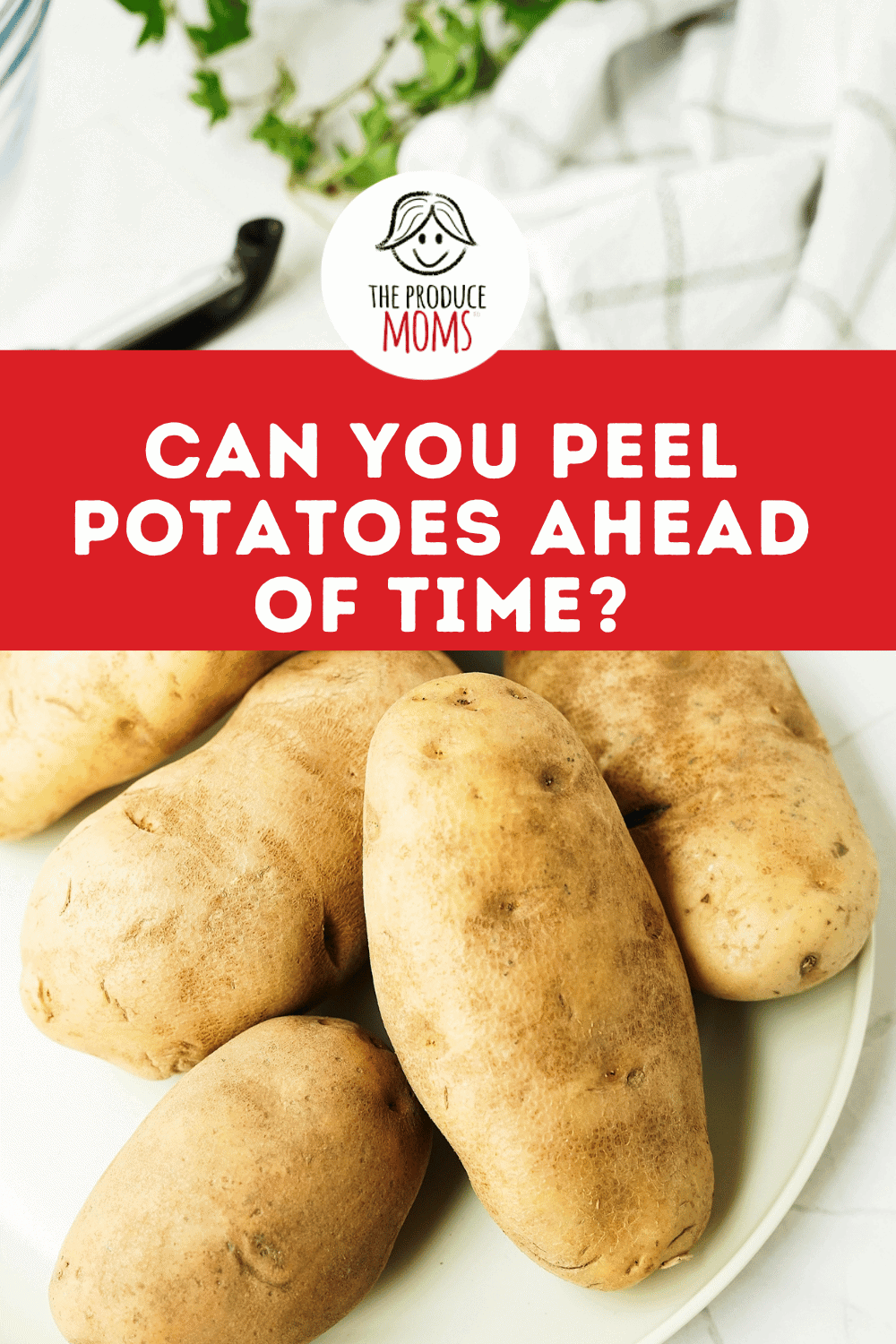
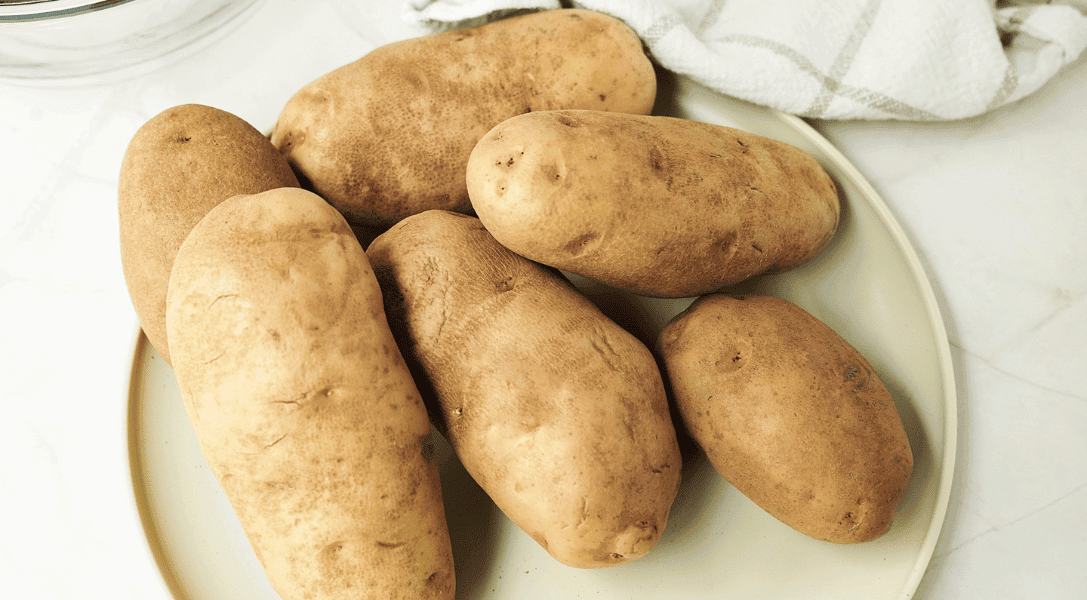
When you’re prepping for a big holiday feast, Sunday dinner, or simply trying to streamline your weeknight meal prep, every minute counts! Here at The Produce Moms, one of the questions we get asked most often by home cooks looking to save time in the kitchen is: “Can you peel potatoes ahead of time?” The short answer is a resounding yes!
Prepping your spuds in advance can be a total game-changer. However, if you leave freshly peeled potatoes sitting out on your counter exposed to the air, you will quickly find them turning an unappealing shade of brown or gray.
Fortunately, with a few simple tricks, you can keep your prep work fresh, bright, and ready to go whenever you are ready to cook!
Related: How To Store Potatoes
How to Soak Peeled Potatoes
Soaking your peeled potatoes in cold water is the key secret to keeping them fresh when prepping ahead. Water acts as a natural protective barrier against oxidation. It stops the air from coming into direct contact with the potato flesh.
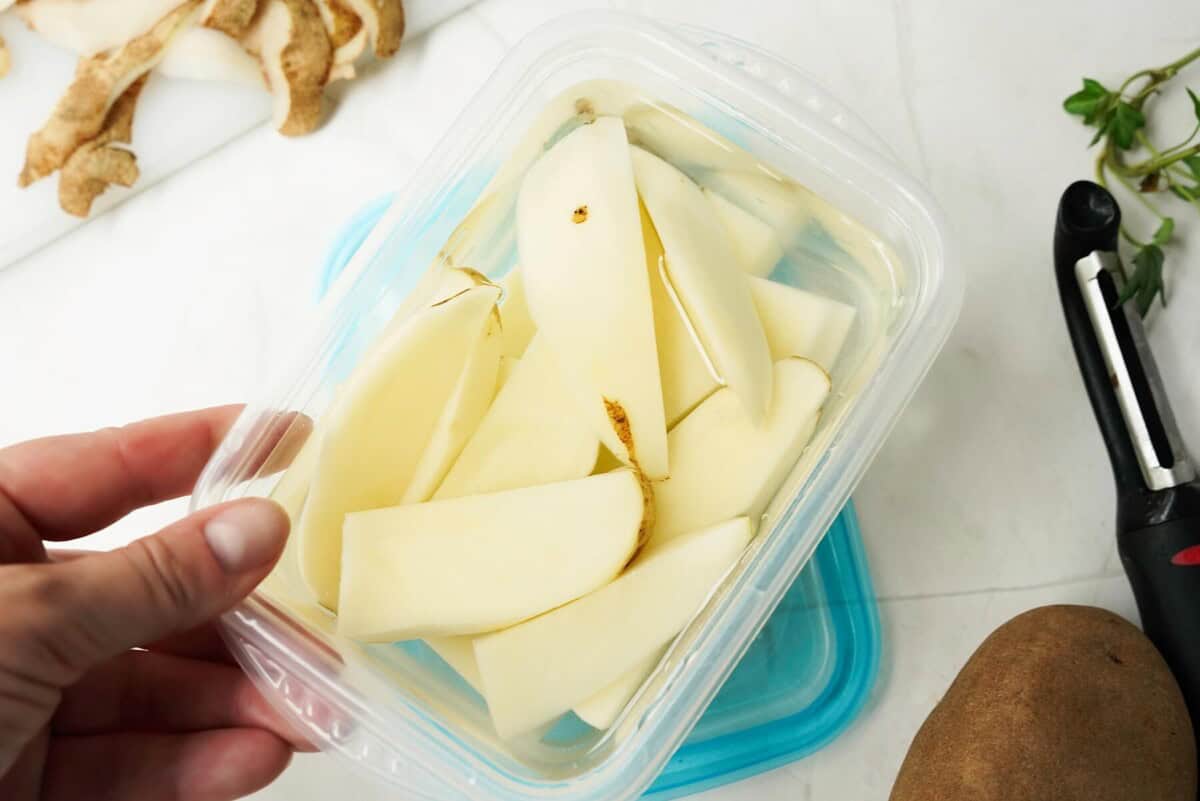
Here is how to soak them properly:
- Submerge Completely: Place your peeled (and cut) potatoes into a large bowl or container and cover them completely with cold tap water. Make sure every single potato piece is submerged by at least an inch or two of water.
- Add an Acid Boost (Optional): To keep them extra crisp and bright, add a splash of lemon juice or a teaspoon of white vinegar to the water bath.
- Refrigerate: Never leave your bowl of soaking potatoes on the counter at room temperature. Cover the bowl with plastic wrap or a lid, and store it directly in the refrigerator. Soaked potatoes will stay fresh in the fridge for up to 24 hours!
How to Prevent Potatoes from Becoming Brown
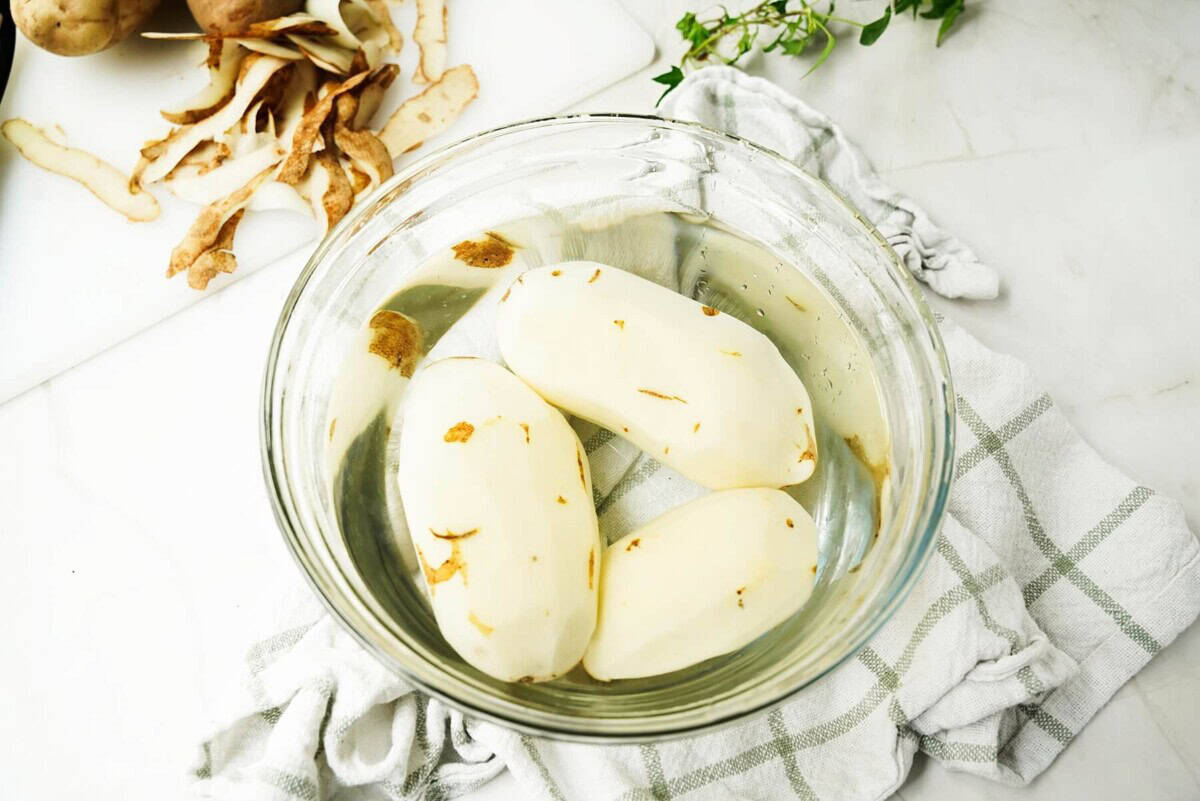
Why do potatoes turn brown or dark in the first place? When a potato is cut or peeled, an enzyme called polyphenol oxidase reacts with oxygen in the air. This process, often called enzymatic browning, is completely harmless. However, it can affect the appearance and texture of your dish. Which we know is important when we are trying to get kids (and some adults) to eat their veggies!
To keep your potatoes from browning:
- Use Cold Water: Always use chilled or cold water when soaking. Warm or hot water softens the cell walls, which cause the potatoes to absorb water too quickly and lose their starchy integrity.
- Keep Air Out: Ensure the potatoes remain entirely under water. Any potato piece poking out above the water line will oxidize and turn brown.
- Add Acid: As mentioned above, lowering the pH of the water with lemon juice, lime juice, or vinegar neutralizes the enzymes responsible for browning without altering the flavor of your cooked spuds.
When Not to Peel, Cut, and Soak Potatoes
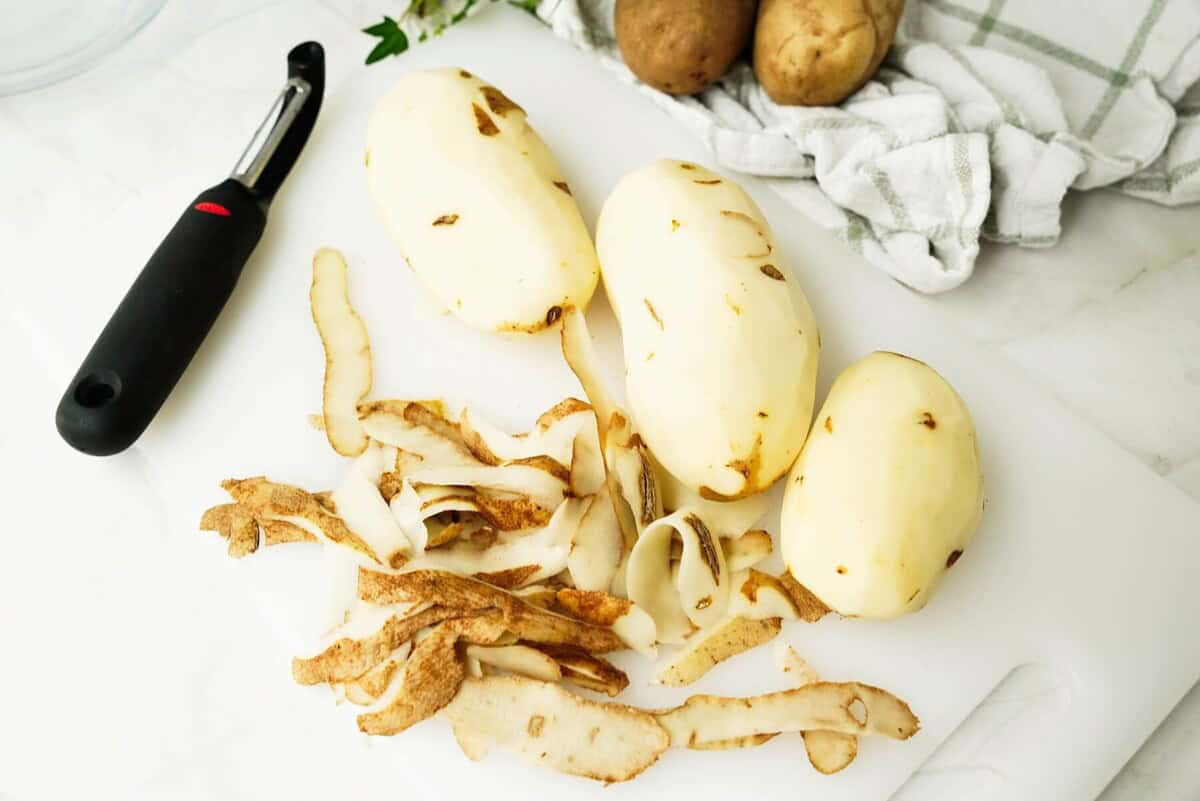
While prepping ahead is a fantastic kitchen hack, there are a few scenarios where peeling, cutting, and soaking in advance isn’t ideal:
- When Making Crispy Roasted Potatoes or Homemade Fries: Soaking potatoes removes surface starch. While removing some starch is great for fluffiness, soaking them too long can make them absorb excess water. Waterlogged potatoes steam rather than crisp up in the oven or deep fryer.
- Beyond 24 Hours: Leaving potatoes submerged in water for more than 24 hours causes them to absorb too much moisture, destroying their natural texture and washing away essential nutrients and flavor.
- Potato Salad (Sometimes): If you prefer a firm potato texture for your cold potato salads, peeling and boiling immediately before cooling yields a much better texture than long-soaked potatoes.
Related: 15 Potato Recipes We Can’t Get Enough Of
How to Prepare Peeled and Cut Potatoes for Cooking
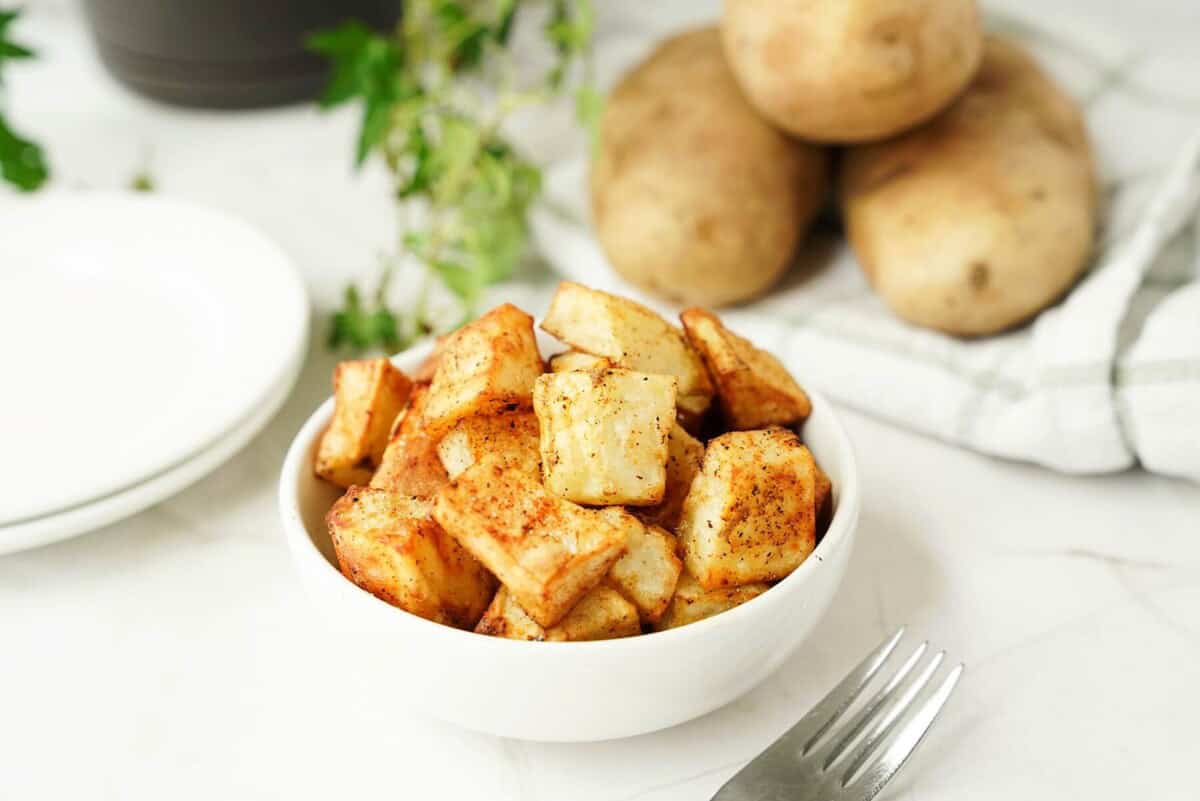
Once you’re ready to get cooking, going straight from the water bath to the heat source is a recipe for soggy dishes or dangerous oil splatters. Follow these easy steps to get your prepped potatoes ready for any cooking method:
- Drain and Rinse: Pour your potatoes into a colander to drain away the soaking water and flush out excess surface starch.
- Dry Thoroughly: Moisture is the enemy of browning and crispiness! Dump your drained potatoes onto a clean kitchen towel or a layer of paper towels and pat them completely dry.
- Tailor to Your Cooking Method:
- For Roasting: Toss dry potato cubes in olive oil or melted butter, season generously, and roast at high heat (400°F) on a preheated baking sheet for maximum crispness.
- For Frying: Ensure your potatoes are 100% dry before adding them to hot oil to prevent dangerous splattering.
- For Boiling / Mashed Potatoes: You can transfer your pre-soaked potatoes straight to a pot, cover with fresh cold salted water, and bring to a boil until fork-tender.
Related: How To Roast Potatoes 4 Ways
Some of Our Favorite Potato Recipes
- Mashed Potatoes
- Greek Potatoes
- Parmesan Oven Roasted Potatoes
- Authentic German Potato Salad
- Loaded Potato Soup
- Potato Candy
Meal prep should make your life easier, not more stressful! By mastering the art of soaking and storing your potatoes ahead of time, you can pull off stress-free weeknight dinners and seamless holiday feasts.
Looking for more inspiration? Check us out on Pinterest or Instagram, and join our community of Produce Moms!