What Are Shallots?

Sep 22, 2026
This post may contain affiliate links. Please read our disclosure policy.
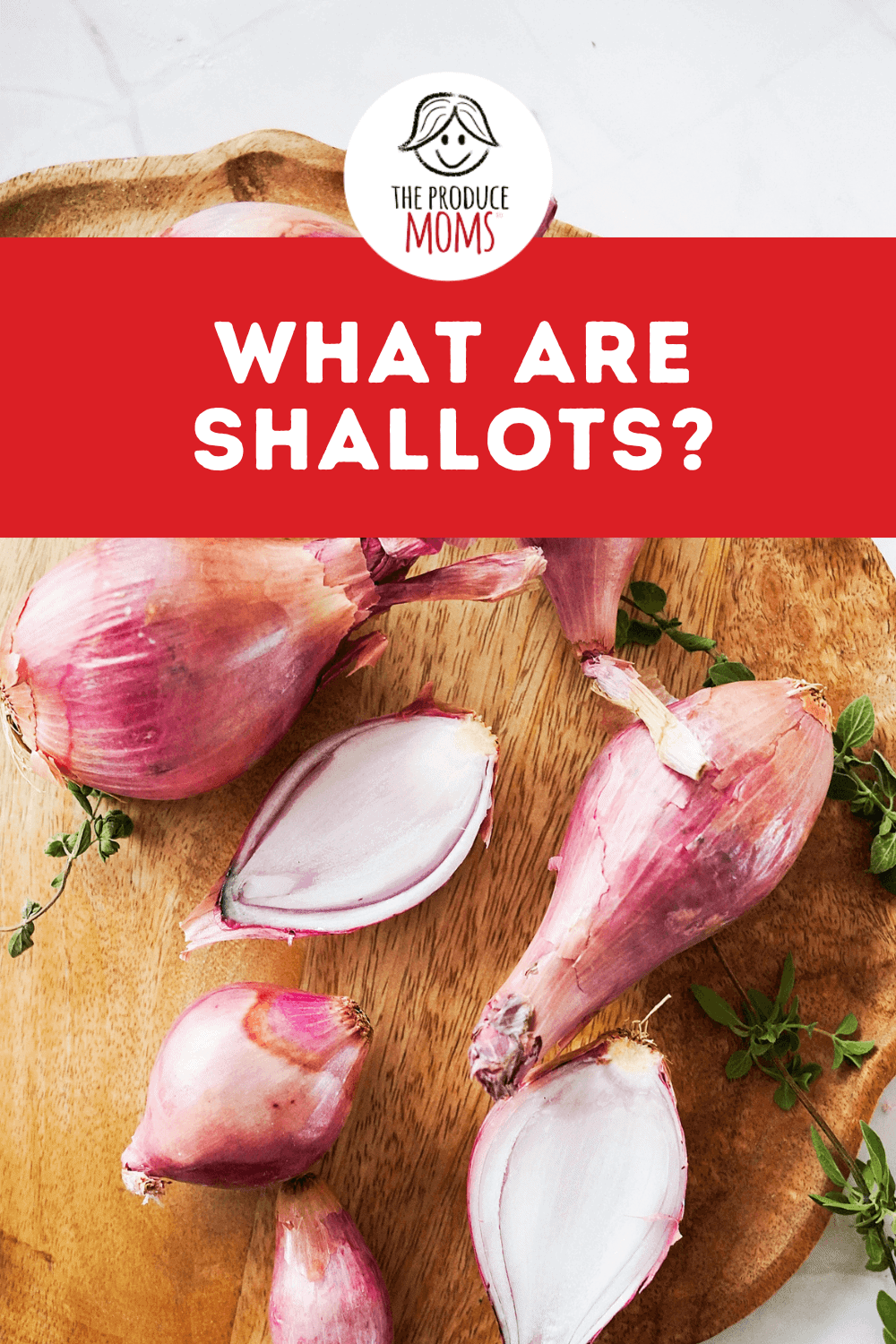
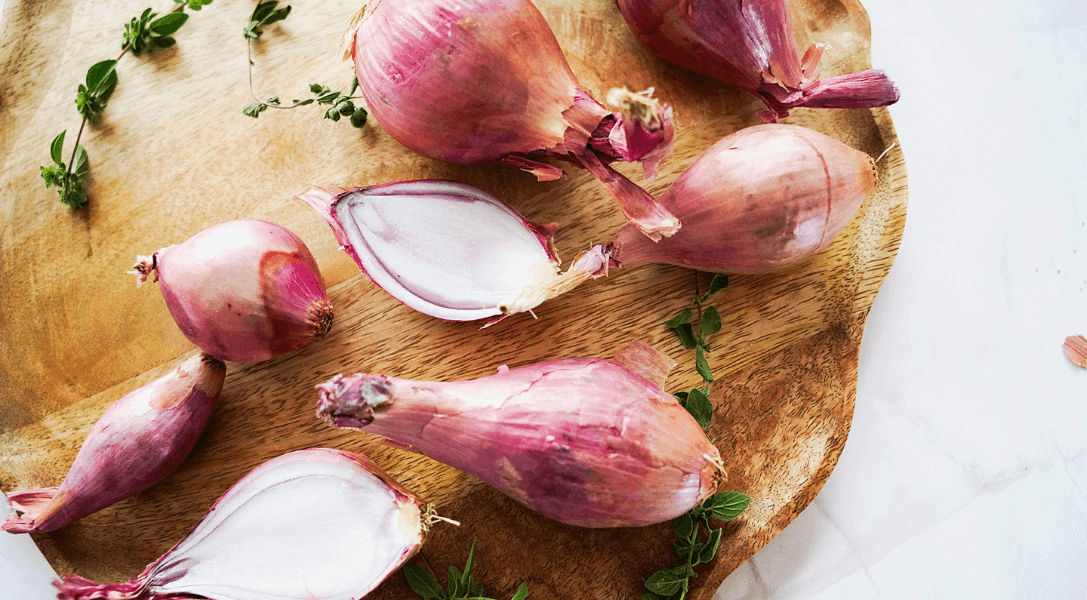
If you’ve ever followed a French bistro recipe or watched a professional chef build a quick pan sauce, you’ve likely seen shallots on the ingredients list. While they look like miniature, oblong onions wrapped in papery copper skins, these humble alliums bring a refined, complex flavor to everyday cooking.
Here is everything you need to know about selecting, storing, prepping, and cooking with shallots to elevate your kitchen game.
What Are Shallots?
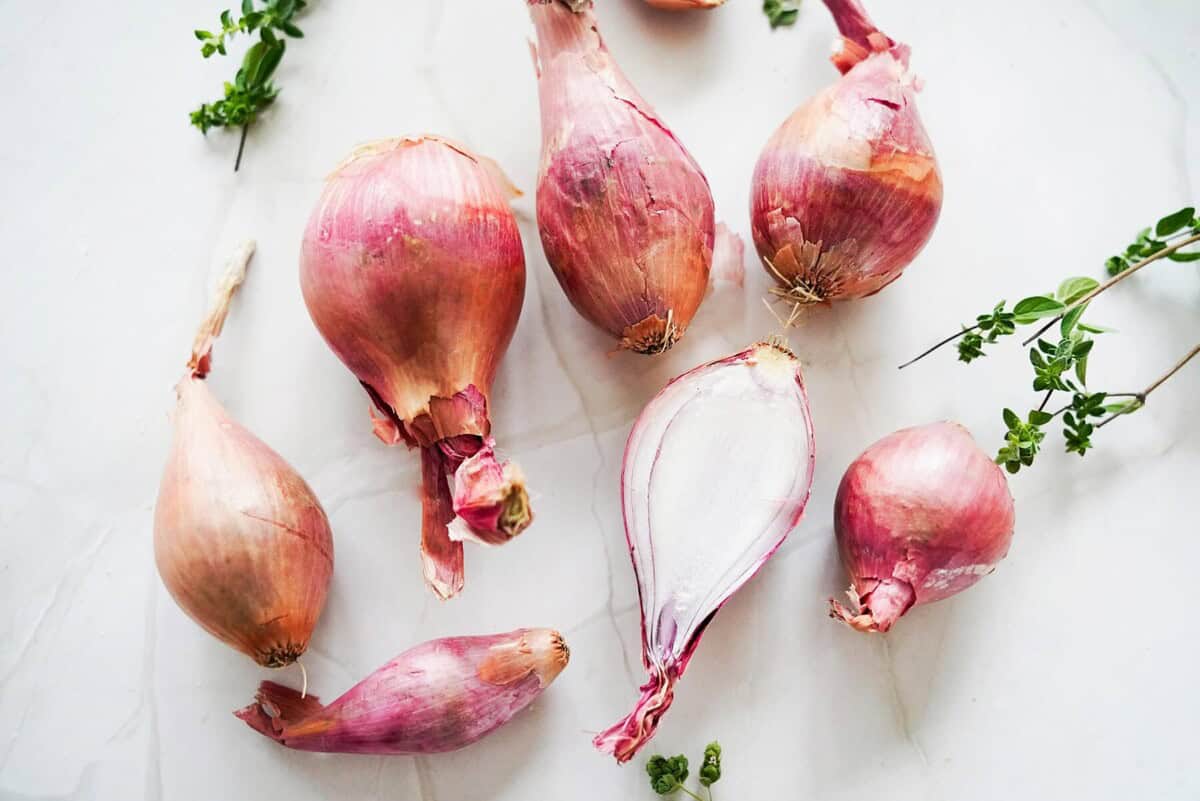
Shallots belong to the allium family. This makes them close botanical relatives of garlic, onions, chives, and leeks. Originally classified as a distinct species , they are now grouped as a botanical variety of the standard onion.
Unlike common yellow or red onions that grow as a single large bulb, shallots grow in clusters attached at the base. It is similar to garlic head cloves. Underneath their thin, copper-pink paper skin, you’ll usually find two to three individual cloves with off-white flesh tinged with light purple or magenta.
Difference Between Shallots and Onions
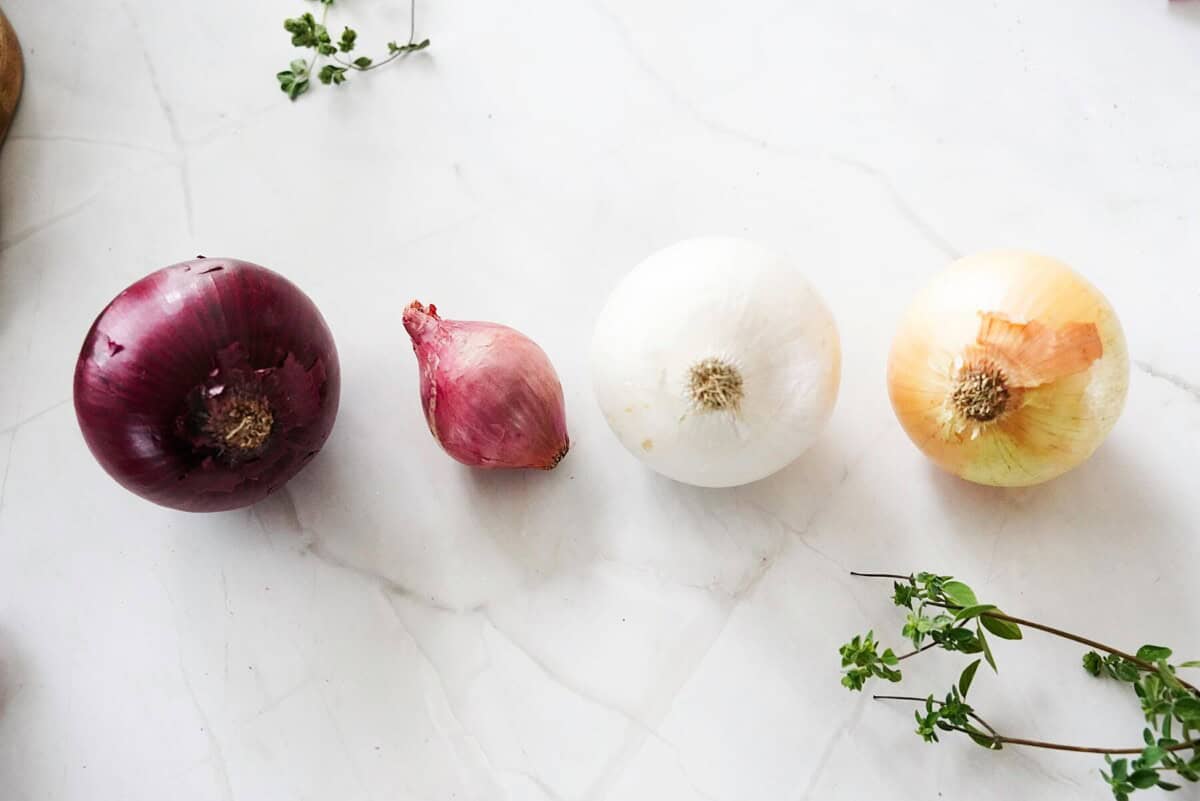
While you can often swap them in a pinch, shallots and onions differ significantly in flavor, texture, and structural growth.
Shallots are noticeably milder, sweeter, and far less pungent than standard yellow or red onions. When eaten raw, an onion delivers a sharp, crisp bite that can easily overpower other ingredients. And eating a raw shallot offers a delicate balance of gentle sweetness with a subtle garlic finish. This difference in intensity stems from their chemical makeup. Shallots contain lower levels of the sulfur compounds responsible for the stinging bite and lingering aftertaste typical of common onions.
In structure and growth, the two alliums develop quite differently. Common onions grow as large, single, uniform bulbs composed of thick, water-dense rings. Shallots grow in clusters of smaller, elongated cloves wrapped together under a thin, papery copper skin. Their individual layers are significantly finer and thinner than onion rings. This allows minced shallots to break down smoothly and practically melt into warm butter, pan reductions, or cold vinaigrettes without leaving behind large, crunchy chunks.
Because of these distinct traits, chefs use them in different culinary roles. Onions provide a robust, pungent base for hearty dishes like long-simmered soups, stews, and chili. Onions also serve as a crunchy, sharp topping for burgers and tacos. Shallots shine where subtle elegance is key. Find them finely minced into salad dressings and sauces, sautéed into quick French bistro pan sauces, or roasted whole until sticky, caramelized, and meltingly tender.
How to Pick and Store Shallots
Select shallots that feel heavy for their size and firm to the touch. Avoid bulbs with soft spots, dark blemishes, or sprouts. Look for clean, smooth, dry paper skins.
Store unpeeled shallots in a cool, dry, dark, and well-ventilated area (such as a open mesh bag in your pantry). Avoid storing them in plastic bags or the refrigerator. Excess moisture causes them to sprout or rot. Stored properly, they last 1 to 2 months. Once peeled or chopped, store leftover shallots in an airtight container in the refrigerator and use them within 3 to 5 days.
How To Cut Shallots
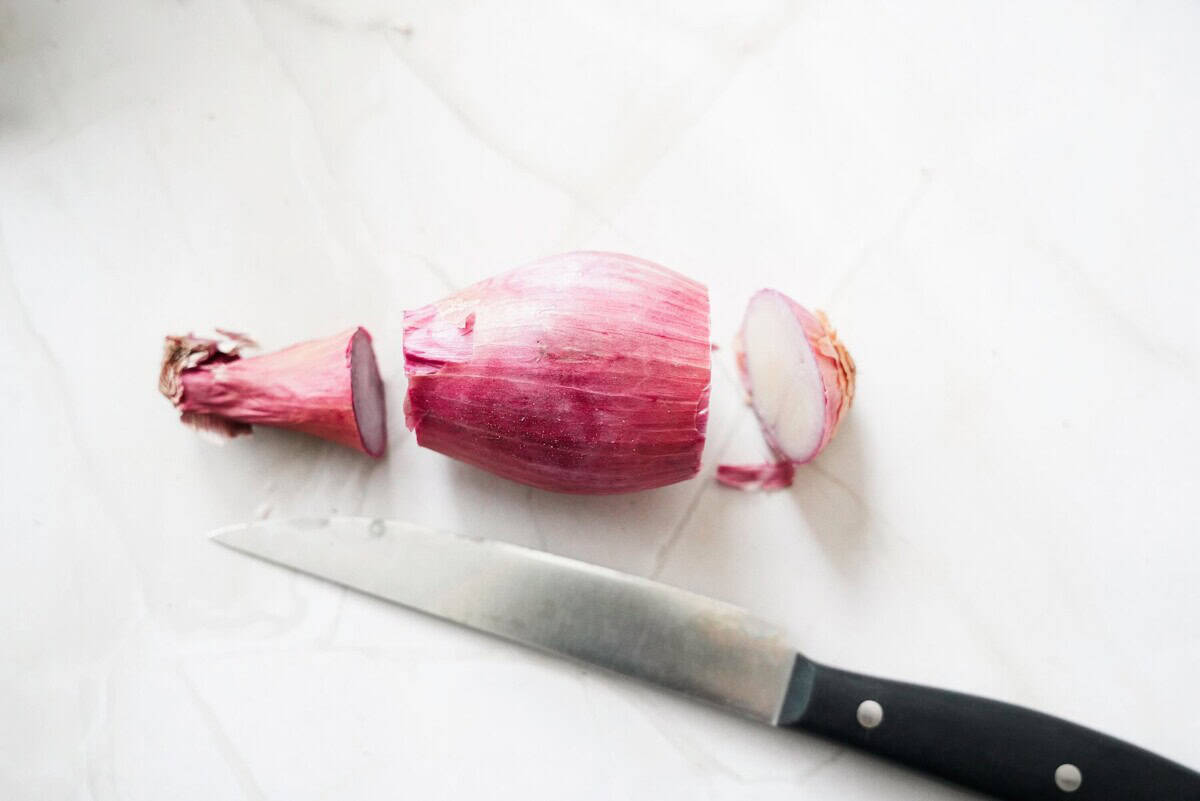
Because shallots have tiny layers and grow as connected cloves, prepping them is straightforward with a sharp chef’s knife.
First, trim and halve the shallot. Place the shallot flat on your cutting board. Slice off the top stem. Then, slice the shallot completely in half lengthwise from root to tip.
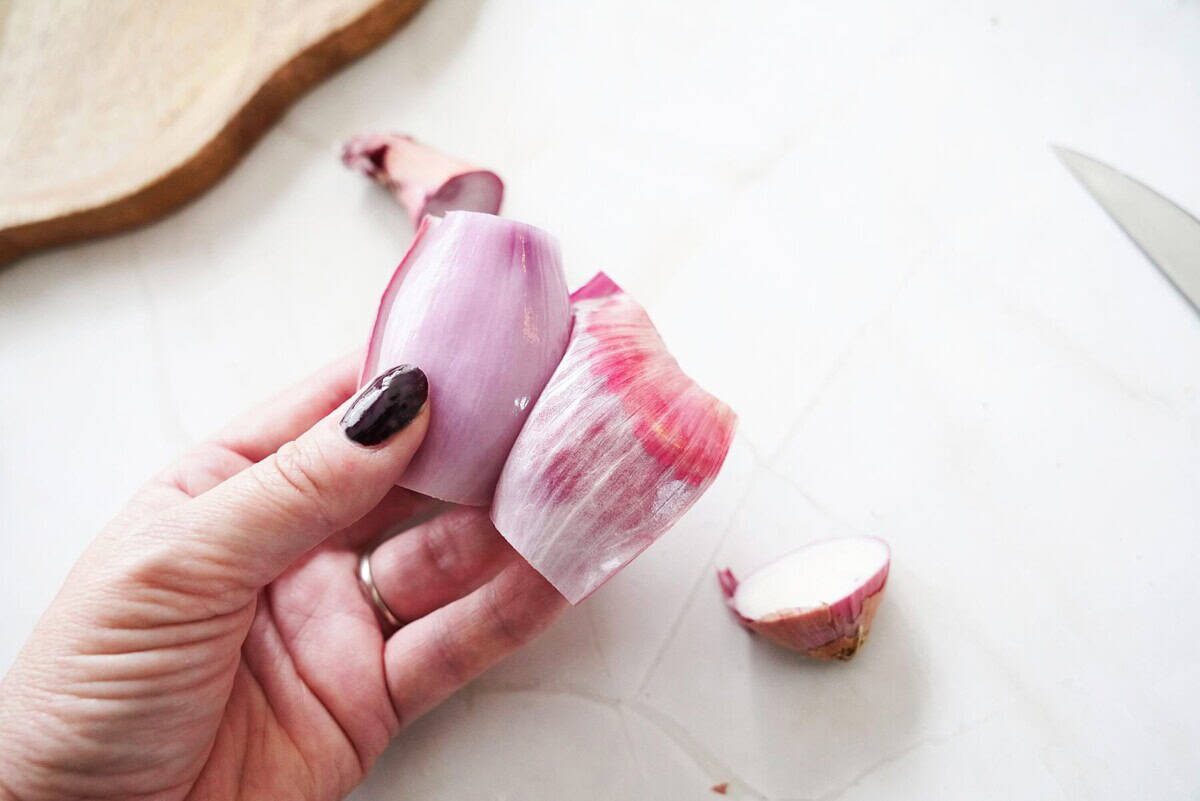
Next, peel the skin. Peel away the papery outer skin and any tough outer layers. Separate the individual inner cloves if the skin encases more than one.
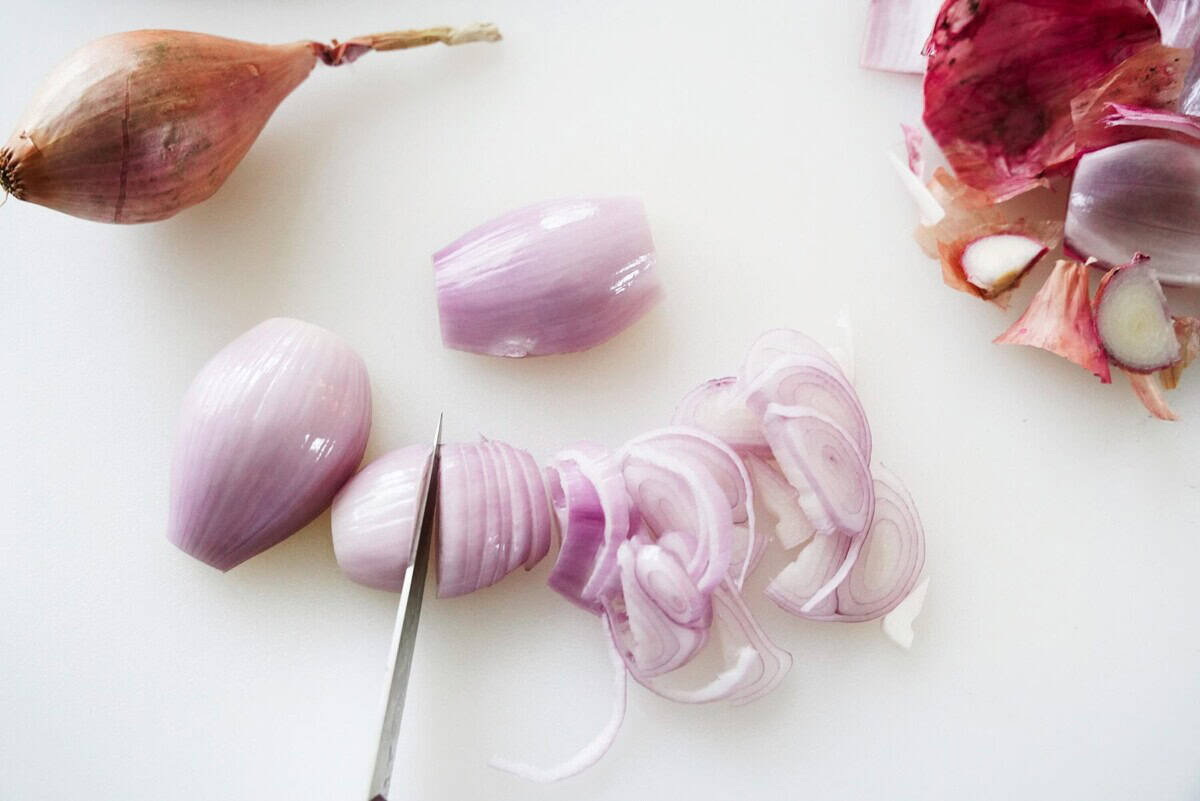
Next, peel the skin. Peel away the papery outer skin and any tough outer layers. Separate the individual inner cloves if the skin encases more than one.
Substitutes for Shallots
If a recipe calls for shallots and you don’t have any, try these quick alternatives:
- Yellow or Red Onion + Garlic: Combine fine-diced yellow or red onion with a tiny pinch of minced fresh garlic. Ratio: 1 medium shallot ≈ 2 tablespoons finely chopped onion + 1/4 teaspoon minced garlic.
- Scallions (Green Onions): Use the white and light green bottoms of scallions for a mild, raw crunch in salads or dips.
- Leeks: Finely chopped leek whites offer a delicate, sweet flavor that works well in cooked soups and sautés.
Cooking with Shallots
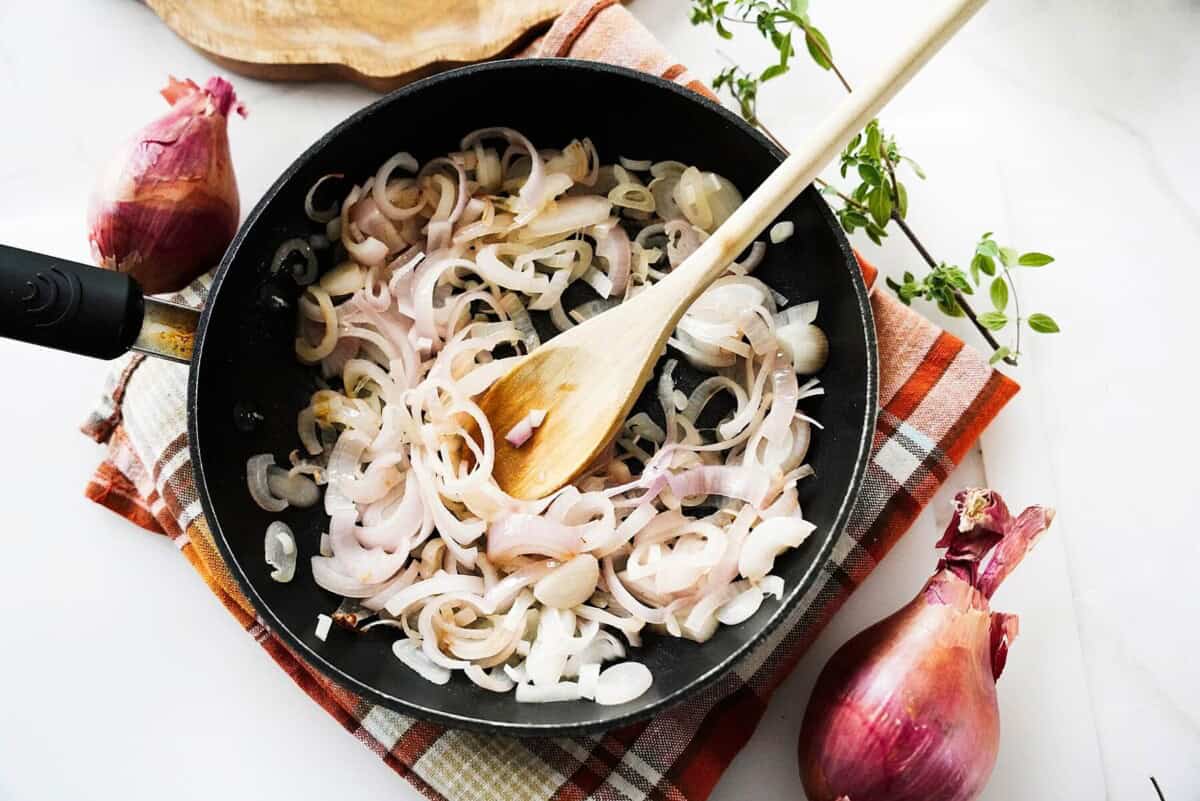
Shallots are exceptionally versatile in both raw and hot applications:
- Raw Vinaigrettes & Salads: Finely minced shallots dissolve gently into red wine vinegar or lemon juice, creating a velvety base for salad dressings and mignonette sauce for oysters.
- Pan Sauces & Reduction: Sautéed finely in butter, shallots provide the aromatic foundation for steak pan sauces, pan-seared chicken, and white wine reductions.
- Crispy Toppings: Thinly sliced into rings and fried in neutral oil, crispy fried shallots add crunch and rich, nutty flavor to Asian noodle dishes, roasted vegetables, and mashed potatoes.
- Roasting Whole: Toss peeled, whole shallots with olive oil, fresh thyme, salt, and pepper, then roast at 400°F until caramelized and meltingly tender.
Shallots are a simple yet impactful ingredient every home cook should keep stocked. Their sweet, delicate flavor bridges the gap between garlic and onions. They transform simple vinaigrettes, gravies, and skillet dinners into restaurant-quality meals. Next time you want subtle depth without overpowering sharp notes, reach for a couple of shallots. Your taste buds will thank you!
Looking for more inspiration? Check us out on Pinterest or Instagram, and join our community of Produce Moms!