Hawaii Agriculture

Jul 16, 2026

This post may contain affiliate links. Please read our disclosure policy.
Long before Hawaii became a global vacation destination, its valleys were a masterclass in sustainable farming. The ancient Hawaiians engineered a deeply respectful relationship with the land. They used a system called the ahupuaʻa, self-sustaining slices of land extending from the mountain peaks down to the coral reefs.
Within these zones, communities cultivated kalo (taro), sweet potatoes, and breadfruit. They used freshwater streams to feed loʻi (flooded taro patches), ensuring that water was shared fairly and filtered naturally before returning to the ocean. This traditional approach cared for the ecosystem as much as it fed the people.
The landscape shifted dramatically in the 19th and 20th centuries with the arrival of Western commerce. It ushered in the era of big plantations. Sugar cane and pineapples became the undisputed kings of Hawaii’s economy. Vast fields replaced diverse native forests, and workers arrived from countries like Japan, China, the Philippines, and Portugal. They tended the crops, creating the rich cultural melting pot Hawaii is famous for today. For decades, the islands exported millions of cans of pineapple and tons of raw sugar to the rest of the world. This put the quiet island state into an industrial agricultural powerhouse.
As global markets evolved, massive plantations became too expensive to run. The final sugar mill closed its doors in 2016. Today, Hawaii’s farming community is experiencing a beautiful renaissance centered around diversity and local food security.
Instead of focusing on a single crop for export, modern local farmers are revitalizing ancient taro patches. They are building boutique farms. Today’s islands are famous for high-quality, flavorful treasures like rich Kona coffee, buttery macadamia nuts, cacao for artisan chocolates. Plus the growing of tropical fruits like papaya and lychee.
The modern movement focuses on sustainability. It weaves traditional Hawaiian wisdom with modern technology. It ensures the islands can feed both locals and visitors for generations to come.
About Hawaii’s Department of Agriculture & Biosecurity
Because Hawaii is an island ecosystem, it is uniquely vulnerable to outside threats. This is where the Hawaii Department of Agriculture & Biosecurity (DAB) steps in. Acting as a gentle yet watchful guardian of the islands. The department’s dedicated team works behind the scenes to support and protect local farming and aquaculture. They balance two very important goals: helping local farmers and ranchers grow and share their unique products with the world, while also ensuring that the state’s natural resources are preserved. From managing agricultural land leases and irrigation networks to helping small businesses secure loans, they provide the steady foundation local growers need to thrive. Learn more about their current Chairperson.
At the same time, the department serves as the islands’ front line of defense against invasive species and diseases. Whether it is carefully screening incoming pets through the animal quarantine program, checking imported plants at the airport, or tracking threats like the coconut rhinoceros beetle,
DAB works quietly to keep the environment safe. By weaving together support for local food production with strict environmental protection, the Department of Agriculture & Biosecurity helps ensure that Hawaii remains healthy, vibrant, and beautiful for everyone who calls it home.
Learn more at https://dab.hawaii.gov/.
Top 5 Agricultural Commodities in Hawaii
Hawaii’s rich volcanic soil, abundant sunshine, and gentle trade winds create a year-round paradise for farming. While the historic eras of endless sugar cane and pineapple fields have passed, they have made room for a dynamic world of specialty crops.
The top five agricultural commodities driving Hawaii’s local economy and delighting palates around the globe reflect this vibrant diversity.
Coffee
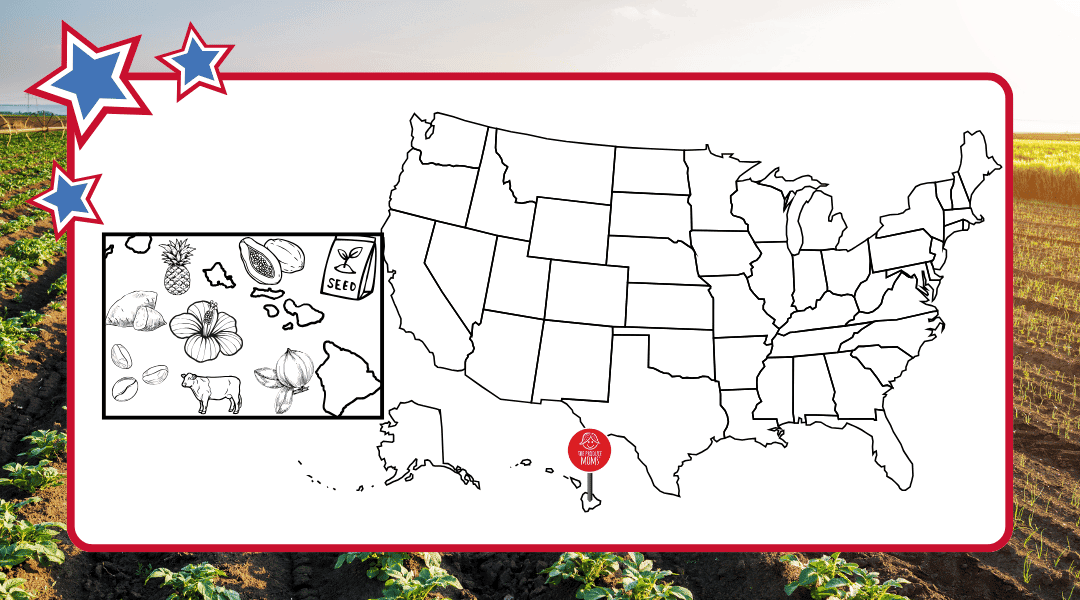
Hawaii is famously the only U.S. state that commercially grows coffee. It is the crown jewel of local agriculture. The crop brings in roughly $46 million annually. Most of this production takes place in the prestigious Kona region on the Big Island. It is also showing emerging productivity on Maui, Kauai, and Oahu. Coffee plants are remarkably resilient, but they require a gentle touch. A significant portion must still be picked entirely by hand.
Macadamia Nuts
Originally native to Australia, macadamia trees found their true calling when introduced to Hawaii in the late 19th century. Generating over $31 million in value, Hawaii remains a global leader in high-quality macadamia production. Macadamia trees are over nearly 16,000 acres across the islands.
Nursery, Greenhouse, and Floriculture Plants
The local climate allows tropical flowers and ornamental plants to thrive. Valued at over $119 million collectively, this sector includes vibrant items like orchids, anthuriums, ti leaves, and landscaping shrubs. These gorgeous plants do more than beautify local resorts. They are exported to florists and garden centers across the world.
Seed Crops (Corn and Soybeans)
While it might surprise everyday consumers, seed research is a massive driver of Hawaii’s agricultural revenue. It brings in tens of millions of dollars. Because Hawaii has a year-round growing season, international agricultural companies use the islands to breed and test new generations of parent seeds, which are then shipped globally to help farmers grow hearty crops. Because scientists can grow three separate generations of a crop in a single year (compared to just one on the U.S. mainland), Hawaii essentially acts as a fast-forward button for global agricultural innovation.
Cattle and Calves
Ranching has a massive footprint in Hawaii. It utilizes over 700,000 acres of pastureland and generates roughly $42 to $97 million annually, depending on market shifts. While many young calves are shipped to the mainland to finish growing, there is a strong modern movement to expand local, grass-fed beef production right on the islands.
Fruits and Vegetables from Hawaii
Hawaii’s local fruit and vegetable production plays a massive role in moving the islands away from importing food and toward true food self-sufficiency. Because importing goods across the Pacific is incredibly expensive, every pound of locally grown produce actively keeps money circulating within the islands’ economy.
The top three fruits and top three vegetables grown in Hawaii highlight how farmers are feeding both the community and a thriving culinary scene.
Top Fruits
- Papayas: With the decline of industrial pineapple plantations, the papaya has risen to become Hawaii’s top fresh fruit crop by value, bringing in over $11 million annually. Mostly grown in the nutrient-dense volcanic soil of the Puna district on the Big Island, Hawaii’s papayas are a vital export product.
- Bananas: Mainly grown for local consumption rather than export, Hawaii produces millions of pounds of bananas each year. Because bananas are a daily staple for residents, local production reduces dependency on imported fruit from Central America, keeping grocery costs more stable for local families.
- Pineapples: While Hawaii no longer exports mass-market canned pineapples to the world, the fruit remains a vital cultural and agricultural commodity. Modern farmers have pivoted away from canning to focus entirely on high-value, premium fresh varieties.
Top Vegetables
- Sweet Potatoes: Sweet potatoes are Hawaii’s top volume-producing vegetable crop, with millions of pounds harvested annually. Grown heavily along the Hamakua Coast of the Big Island, these sweet potatoes have a high market value (generating over $4 million annually) and are highly sought after both locally and by specialty markets on the US West Coast.
- Lettuce & Salad Greens: Driven by local demand for fresh, crisp produce, leaf lettuce, romaine, and specialty salad mixes have a combined farm value of over $6 million, making lettuce one of the state’s most lucrative individual vegetable categories. Hawaii’s unique climate allows for highly successful hydroponic farming operations. Because leafy greens wilt quickly when shipped across the ocean, local lettuce farmers command a premium price. They often deliver fresh produce to local supermarkets and restaurants within 24 hours of harvest.
- Tomatoes: From large beefsteak varieties grown in the high-elevation fields of Waimea to greenhouse cherry tomatoes on Oahu, tomatoes consistently rank as a heavy hitter in Hawaii’s vegetable economy. Tomatoes are a primary ingredient in local cuisine, and the steady local supply provides a multi-million dollar shield against the volatile shipping costs of importing heavy, fragile produce from the mainland.
Visit our Produce Directory and learn how to Select, Store and Serve these fruits & vegetables.
About 50 States of Agriculture
In celebration of 250 years of the United States, The Produce Moms is proud to present 50 States of Agriculture. This is an educational and free resource that celebrates the bounty of America. We utilized USDA and State Department of Agriculture data (Hawaii) for the content in this series.
Agriculture is the foundation of freedom. Food security is national security. This content series is a celebration of United States culture and the hard-working farmers who feed, fuel & clothe our nation and the world.
Visit another state from our 50 States of Agriculture.