Georgia Agriculture

Jul 10, 2026

This post may contain affiliate links. Please read our disclosure policy.
The story of Georgia’s agriculture is, in many ways, the story of the state itself. Long before it earned its famous nicknames, the region’s rich, red clay soils and warm, humid climate made it a natural haven for farming.
For centuries, Indigenous communities cultivated crops like corn, beans, and squash here. By the 1800s, Georgia became an economic powerhouse. It was fueled heavily by cotton, a crop that deeply shaped the state’s early history and communities. However, relying on just one main crop proved risky. This was proven when the destructive boll weevil beetle swept through the fields in the early 1900s. It forced farmers to rethink what their land could do.
That turning point sparked a beautiful era of diversification. Georgia farmers shifted their focus to a variety of crops that blossomed into cultural icons. The state’s unique climate and soil composition turned out to be absolutely perfect for growing sweet, juicy peaches, crunchy pecans, and incredibly flavorful Vidalia onions. Peanuts also took center stage, quickly becoming a staple crop that filled pantries across the country.
Today, walking through a modern Georgia farm looks quite different than it did a century ago. However, the heart of the work remains the same. Georgia has evolved into a global agricultural leader. It is often called the “Poultry Capital of the World.” Modern-day farming here is a fascinating blend of heritage and high-tech innovation. To protect the land for future generations, everyday growers now use smart tractors guided by GPS, automated irrigation systems that conserve water, and advanced data tracking to keep their soil healthy.
Georgia’s agriculture is a vibrant, multi-billion-dollar industry. It bridges a historic past with a sustainable future.
About Georgia Department of Agriculture
Established in 1874, the Georgia Department of Agriculture (GDA) holds the distinction of being the oldest state department of agriculture in the United States. It has a rich history of cultivating the land.
At its core, the GDA is dedicated to three vital missions: supporting local farmers and producers, protecting consumers and the state’s food supply, and proudly marketing Georgia-grown products to the world.
The GDA is dedicated to keep Georgia’s farming industry vibrant and to protect the consumer. By combining state-of-the-art technology with a dedicated, professional workforce, the mission is to provide excellence in everything they do.
Because agriculture touches almost every part of your daily life, the department works diligently behind the scenes to regulate, monitor, and assist in an incredible variety of areas. They are there ensuring quality and safety in:
- Neighborhood Stores: Inspecting grocery stores, convenience stores, food warehouses, and bottling or processing plants.
- Everyday Essentials: Checking gasoline quality, pump calibration, weights and measures, antifreeze, and bottled water.
- Farming & Nature: Monitoring pesticides, fertilizer, potting soil, seed quality, plant diseases, nurseries, garden centers, and even keeping honeybees safe through our apiary programs.
- Animal Care: Overseeing animal health, pet dealers and breeders, and upholding the Humane Care for Equines Act.
- Georgia Specialties: Supporting meat processing plants, state farmers markets, boll weevil eradication, and protecting the famous Vidalia onion.
From the farm to your family’s table, the Department works behind the scenes to regulate animals, food, fuel, plants, soil, and pesticides produced or sold within the state, ensuring everything you buy is safe, reliable, and high-quality.
Learn more at https://agr.georgia.gov/.
Top 5 Agricultural Commodities in Georgia
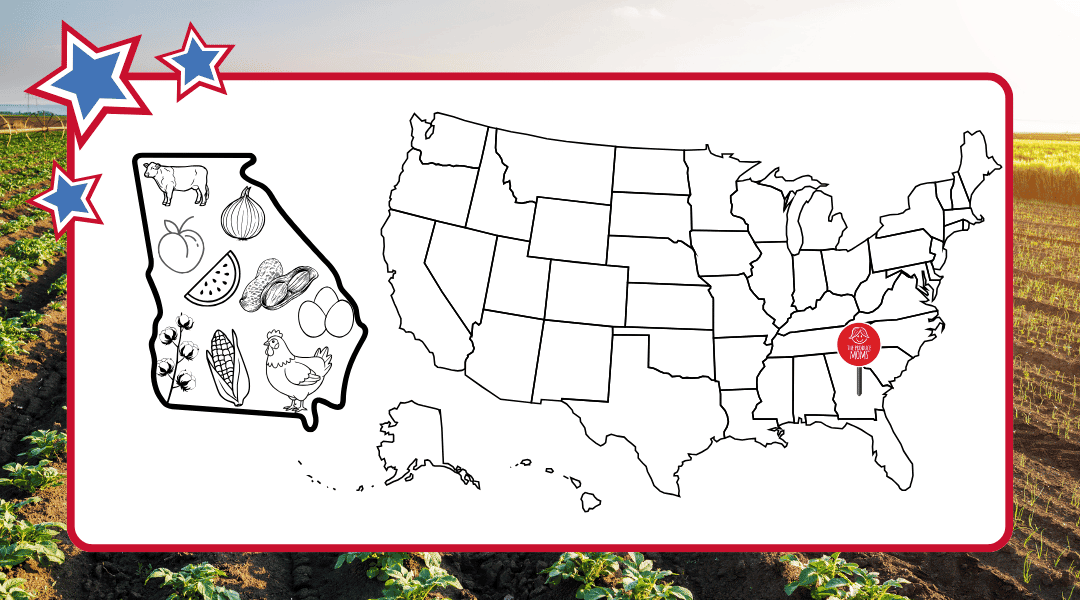
The food and fiber industry contributes over $18 billion directly to Georgia’s economy. When factoring in processing, manufacturing, and related supply chain businesses, agriculture stands as Georgia’s single largest economic sector, contributing a staggering $100.4 billion to the state’s economy and supporting over 370,000 jobs. While peaches and Vidalia onions win all the fame, poultry and row crops dominate the top five individual agricultural commodities driving the state’s economy.
Broilers (Meat Chickens)
Broiler chickens are undisputed royalty in Georgia agriculture, bringing in a massive $5.8 billion to $6.1 billion annually.This single industry accounts for roughly one-third of the state’s entire agricultural value. Georgia is the No. 1 producer of broilers in the United States. Poultry farming is so deeply woven into the local fabric that nearly 75% of Georgia’s 159 counties are home to active poultry operations.
Eggs
Complementing the broiler industry, egg production stands as the second most valuable individual commodity, generating around $1 billion annually. Georgia ranks among the top states nationally for egg production, churning out well over 5 billion eggs every year. Combined with chickens, the total poultry sector pulls in over $7.2 billion annually.
Beef Cattle
Beef cattle production holds a strong position as the top livestock sector behind poultry, bringing in roughly $980 million to $1.2 billion annually. Unlike specific crops that only grow in certain climates, farmers raise beef cattle across the entire state. The sector plays a vital role in local economies by utilizing millions of acres of forage and pasture land that might otherwise be un-farmable.
Cotton
Georgia ranks No. 2 in the United States for cotton production, trailing only Texas. Cotton continues to be a massive economic powerhouse, generating between $770 million and $940 million a year depending on market prices and weather conditions. It provides a huge chunk of the raw fiber used across America and exported globally for textiles and clothing.
Peanuts
Georgia is the absolute peanut capital of America, producing about half of the entire nation’s peanut supply. If you are eating peanut butter anywhere in the United States, there is a 50/50 chance the peanuts were grown in Georgia’s warm, sandy soils. Peanuts generate roughly $870 million to $915 million annually for the state.
Fruits and Vegetables from Georgia
Georgia’s specialty crops bring vibrant flavors and colors to grocery stores nationwide. The state’s unique geography allows farmers to produce over 30 different vegetable and fruit crops on a commercial scale, netting billions of dollars annually in total market value.
Top Fruits
- Blueberries: Georgia is consistently a top-three producer of blueberries in the nation. Because of Georgia’s mild spring weather, these berries ripen early, allowing local farmers to flood U.S. grocery stores with fresh berries weeks before northern states can harvest theirs. They account for nearly 40% of the state’s entire fruit and nut revenue.
- Watermelon: Georgia usually ranks 2nd or 3rd in the United States for watermelon production. The town of Cordele, Georgia, proudly claims the title “Watermelon Capital of the World” because its long, blazing-hot summer days create the ideal environment for packing these melons full of natural sugars. They generate around $141.4 million annually.
- Peaches: Georgia ranks No. 3 in the U.S. for peach production (behind California and South Carolina), but it remains the undisputed “Peach State” in culture. Peaches bring in roughly $30 million to $35 million annually.
Top Vegetables
- Sweet Corn: Sweet corn sits right at the top of Georgia’s vegetable ladder, bringing in $144.6 million in direct farm gate value. Unlike field corn used for animal feed, Georgia farmers harvest sweet corn by hand in the early morning hours to lock in its natural sweetness before it hits dining tables, especially across the East Coast.
- Vidalia® Onions: Federal law mandates that farmers can only grow the official “Vidalia” onion in a specific 20-county region of South Georgia. The local sandy soil has an incredibly low sulfur content. Because sulfur is what gives standard onions their sharp, tear-inducing bite, Georgia’s unique dirt produces an onion so naturally sweet and mild you can eat it raw. These world-famous sweet onions bring in roughly $140 million to $160 million annually, making them a cornerstone of the state’s agricultural economy.
- Bell Peppers: Georgia ranks No. 3 in the United States for bell pepper production. Local farmers utilize high-tech, plastic-covered growing beds and drip irrigation to produce massive yields of crisp, perfectly shaped peppers that supply major restaurant chains and grocery stores nationwide. They are a highly valuable cash crop for South Georgia, consistently generating over $130 million annually.
Visit our Produce Directory and learn how to Select, Store and Serve these fruits & vegetables.
About 50 States of Agriculture
In celebration of 250 years of the United States, The Produce Moms is proud to present 50 States of Agriculture. This is an educational and free resource that celebrates the bounty of America. We utilized USDA and State Department of Agriculture data (Georgia) for the content in this series.
Agriculture is the foundation of freedom. Food security is national security. This content series is a celebration of United States culture and the hard-working farmers who feed, fuel & clothe our nation and the world.
Visit another state from our 50 States of Agriculture.