Florida Agriculture

Jul 06, 2026, Updated Jul 16, 2026

This post may contain affiliate links. Please read our disclosure policy.
Florida’s agricultural journey is a story of resilience, sunshine, and transformation. Long before it became a bustling hub for tourism, the Sunshine State’s identity was deeply rooted in its rich soil and unique climate. In the 1800s, early pioneers and Native American communities recognized the potential of Florida’s vast, subtropical landscape.
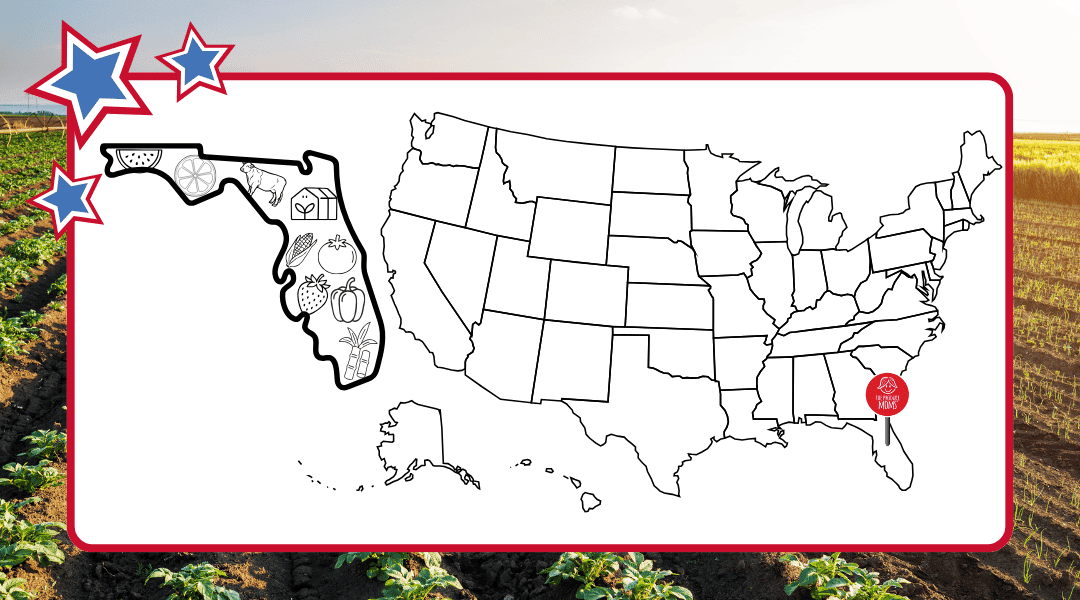
The arrival of the railroad in the late 19th century completely changed the game. It allowed farmers to ship perishable goods to the icy North during the winter. It wasn’t long before Florida established itself as America’s winter breadbasket. It’s famous for its sprawling cattle ranches in the heartland and the sweet, fragrant citrus groves that came to define the state’s identity.
Today, Florida agriculture has evolved into a powerhouse of modern innovation, blending time-honored traditions with cutting-edge technology. While citrus remains an iconic symbol, today’s Florida farmers grow an incredibly diverse bounty. It ranges from juicy sweet corn and tomatoes to strawberries, sugarcane, and a massive indoor foliage and tropical plant industry.
To protect the state’s delicate ecosystems, like the Everglades, modern growers utilize smart agricultural practices. They use precise drip-irrigation systems to conserve water, deploy helpful insects for natural pest control, and use data-driven farming to grow more food with fewer resources.
Florida is a true agricultural powerhouse. It is home to more than 44,000 commercial farmers. And it ranks 9th in the nation for total farm market value. When winter chills the rest of the country from January through March, Florida steps up as America’s garden. It provides a staggering 80% of the nation’s fresh vegetables, a production volume second only to California.
Of course, you can’t talk about the Sunshine State without mentioning its world-famous citrus. Florida proudly leads the entire country in growing oranges, grapefruits, and tangerines. It accounts for an impressive 82% of the nation’s annual citrus harvest. But the state’s bounty doesn’t stop at the shoreline. Thanks to its vast coasts, Florida ranks among the top 12 states for fresh seafood production. It serves up consistently high-quality catches, including the famous local delicacy, Stone Crab.
Agriculture remains one of the primary pillars of Florida’s economy. It supports hundreds of thousands of jobs. And it ensures that fresh, wholesome food is available on tables across the country, even in the dead of winter. It is a living heritage that continues to sustainably feed and beautify the nation.
About Florida Department of Agriculture and Consumer Services
The Florida Department of Agriculture and Consumer Services (FDACS) plays a vital role in everyday life. It is dedicated to supporting local agriculture, protecting the environment, safeguarding consumers, and ensuring the safety of the food we eat.
Because its programs are so varied and extensive, the department touches the lives of nearly every Floridian. At the foundational level, FDACS works tirelessly to protect the state’s agricultural roots by shielding livestock, honeybees, and crops from devastating pests and diseases, while actively promoting Florida’s 300 unique agricultural commodities to markets across America and around the world.
Environmental stewardship is also a major focus; the department helps farmers implement best management practices to conserve water and prevent pollution, guides businesses and residents in the safe use of pesticides, manages over a million acres of state forest land for wildlife and recreation, and actively fights wildfires to protect local lives and property.
Beyond the fields and forests, the department acts as a powerful shield for everyday citizens and consumers. Through strict regulation and active mediation, FDACS safeguards the public from unlawful or deceptive business practices, operating a dedicated consumer call center to answer questions and help resolve complaints.
The department assists local schools in serving more than a million nutritious meals each day to help students succeed, and routinely inspects grocery and convenience stores for cleanliness. As the state’s lead agency for food safety, its scientists analyze more than 15,000 food samples each year (meticulously testing for everything from toxins and allergens to chemical contaminants and pesticide residues), ensuring that the food on your family’s table is always safe and wholesome. You can read more from the Florida Ag Commissioner.
Learn more at https://www.fdacs.gov/.
Top 5 Agricultural Commodities in Florida
Florida is an agricultural powerhouse. It produces more than 300 different commodities thanks to its year-round warmth and unique subtropical environment. While it generates billions of dollars for the local economy, Florida’s harvest has a massive footprint beyond state lines. Especially during the winter months, Florida helps keep North America (and beyond) supplied with fresh food.
Greenhouse, Nursery, and Floriculture Products
While many associate Florida strictly with food, its top agricultural earner is actually the nursery and floriculture industry. This incldues indoor houseplants, shrubs, ferns, and landscape flowers. Florida ranks #1 in the nation for floriculture and indoor foliage production. Centered heavily in Central and South Florida, this massive industry supplies landscape plants and indoor greenery across the United States.
Sugarcane
Florida’s unique, muck-rich soils just south of Lake Okeechobee provide the perfect environment for growing sugarcane. It is a dominant force in American sugar production. Locally, the sugarcane industry is a vital economic engine for rural counties like Palm Beach, Hendry, and Glades. It supports thousands of stable jobs. Nationally, Florida is the #1 producer of sugarcane in the United States. It supplies roughly half of the nation’s domestic cane sugar. Sugarcane is actually a giant tropical grass that can grow up to 20 feet tall!
Oranges and Citrus
Though it faces challenges from pests and urban development, citrus remains the ultimate flagship symbol of Florida agriculture. The citrus industry injects billions into Florida’s economy, supporting tens of thousands of jobs in growing, processing, and shipping. On a broader scale, Florida grows the vast majority of the country’s juicing oranges. When Americans pour a glass of 100% orange juice at breakfast, they are directly supporting Florida growers. About 90% of Florida’s total orange crop is squeezed to make orange juice rather than being sold as fresh fruit.
Fresh Tomatoes
When winter hits the rest of the country, Florida steps up as the primary source of America’s fresh produce, and tomatoes lead the pack. Florida ranks #1 in the U.S. for fresh-market tomato production. This commodity requires intense local labor for harvesting and packing, boosting seasonal economies. Botanically a fruit but legally classified as a vegetable, the tomato is so crucial to the state that the “Tomato” was designated as Florida’s official state soil (technically called Myakka fine sand). The annual production value of Florida’s fresh tomatoes consistently ranges between $400 million and $530 million, feeding directly back into the state’s economy.
Cattles and Calves
Florida has one of the oldest and most extensive cattle industries in the United States, with vast ranches sprawling across the state’s interior heartland. Florida’s cattle ranches act as massive, vital conservation buffers, protecting open green spaces, tracking water flow, and preserving wildlife habitats from urban sprawl. Because of Florida’s lush, year-round pastures, local ranchers specialize in “cow-calf” operations, raising young calves that are later shipped to western states for finishing. Florida is home to some of the largest cow-calf ranches in the entire country, including the Deseret Ranches, which span over 290,000 acres.
Fruits and Vegetables from Florida
Thanks to Florida’s unique, year-round growing season and subtropical climate, it serves as a critical food source for the entire nation. When looking specifically at edible produce, certain fruits and vegetables stand out as the state’s heavy hitters based on their economic value and market dominance.
Top Fruits
- Oranges: They are the undisputed leader in the Florida fruit industry, serving as the ultimate symbol of the Sunshine State. Florida grows the vast majority of the country’s juicing oranges, accounting for over 80% of America’s domestic citrus production. The industry generates billions in economic activity and supports tens of thousands of local jobs in growing, processing, and packaging.
- Strawberries: Florida’s strawberry industry is a financial powerhouse that dominates the winter market. Florida ranks #2 in the nation for strawberry production (trailing only California), but it holds a near-monopoly on the winter harvest. The annual value of Florida’s strawberries consistently tops $500 million to $700 million.
- Watermelons: Watermelons thrive in Florida’s sandy soils and abundant sunshine, making them a major seasonal success story. Florida consistently ranks #1 in the United States for watermelon production, generating nearly $200 million annually.The crop spans tens of thousands of acres across the state, heavily boosting local rural economies during the spring harvest.
Top Vegetables
- Fresh Tomatoes: As the state’s highest-value vegetable crop, fresh-market tomatoes are an absolute cornerstone of Florida agriculture. Florida is the nation’s leader in fresh-market, field-grown tomatoes. The crop brings in $400 million to $530 million annually. The majority of Florida’s round tomatoes are sold to the commercial food service industry.
- Bell Peppers: They are another warm-season crop that thrives in Florida’s winter warmth, particularly in the southern regions of the peninsula. Florida grows roughly 45% of the total U.S. value for fresh-market bell peppers, keeping grocery store produce aisles vibrant and colorful during the coldest months of the year.Florida ranks #2 nationally for bell pepper production, bringing in upwards of $130 million to $260 million a year.They are a massive driver for seasonal agricultural labor and local packaging facilities.
- Sweet Corn: Florida ranks #1 in the nation for fresh-market sweet corn production, with annual values reaching nearly $140 million to $180 million. The industry utilizes highly mechanized, fast-paced harvesting technology to get the corn from the field to a refrigerated truck within hours
Visit our Produce Directory and learn how to Select, Store and Serve these fruits & vegetables.
About 50 States of Agriculture
In celebration of 250 years of the United States, The Produce Moms is proud to present 50 States of Agriculture. This is an educational and free resource that celebrates the bounty of America. We utilized USDA and State Department of Agriculture data (Florida) for the content in this series.
Agriculture is the foundation of freedom. Food security is national security. This content series is a celebration of United States culture and the hard-working farmers who feed, fuel & clothe our nation and the world.
Visit another state from our 50 States of Agriculture.