Connecticut Agriculture

Jun 24, 2026, Updated Jul 16, 2026

This post may contain affiliate links. Please read our disclosure policy.
When you think of Connecticut, your mind might jump to historic coastal towns or bustling commuter suburbs. But if you dig just a little deeper into the rocky, rich soil of the Connecticut River Valley, you find a deeply rooted farming history that shaped the entire state.
Long before it was an industrial hub, Connecticut was a landscape of small, diversified family farms. Early colonial settlers learned to navigate the notoriously stony earth. They cleared fields to grow corn, rye, and vegetables, while raising livestock to feed their local communities.
As the centuries rolled on, Connecticut agriculture found its footprint in specialty crops. In the 1800s and 1900s, the state became world-famous for producing “shade tobacco.” It’s a premium, delicate tobacco leaf grown under giant tents of white gauze cloth to mimic tropical shade. It was used to wrap the world’s finest cigars. Alongside tobacco, dairy farming became the backbone of rural Connecticut life.
Today, Connecticut’s agricultural scene has beautifully adapted to the modern world. While traditional dairy and tobacco farms still exist, the state has seen a massive boom in greenhouse and nursery production.
Connecticut citizens have also passionately embraced the “farm-to-table” movement. The state is dotted with vibrant farmers’ markets, pick-your-own orchards, farm-stands, and a growing number of craft farm-wineries and breweries. Modern Connecticut agriculture isn’t just about large-scale production anymore. It’s about connecting everyday consumers with fresh, local flavors right in their own backyards.
About the Connecticut Department of Agriculture
The Connecticut Department of Agriculture (DoAg) serves as the primary advocate and regulatory body dedicated to fostering a healthy economic, environmental, and social climate for farming across the state.
Led by their Commissioner, the department takes a multi-faceted approach to sustaining the state’s rich agricultural heritage. Their work spans developing and regulating local farm businesses, protecting valuable land and water resources. This includes the state’s vital aquaculture sector.
For the everyday consumer, the department acts as a bridge that keeps local agriculture thriving and accessible. Through its various bureaus, public resources, and grant programs, the DoAg actively promotes the diversity and cultural heritage of Connecticut farming.
By supporting local farmers’ markets, agritourism, and food security initiatives, the department ensures that residents can easily connect with and support the homegrown businesses that form the backbone of Connecticut’s rural economy.
Learn more at https://portal.ct.gov/doag?language=en_US.
Top 5 Agricultural Commodities in Connecticut
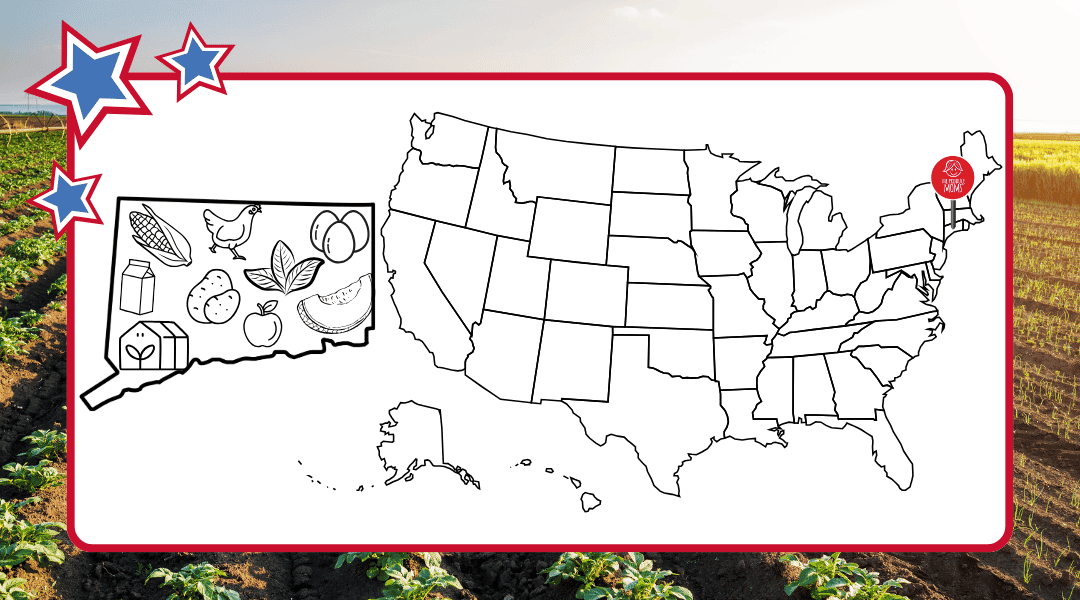
Despite its compact size, Connecticut has a strong agricultural presence. The state is home to over 5,500 bustling farm operations. They collectively weave across more than 12 percent of Connecticut’s beautiful landscape.
Greenhouse & Nursery Products
Accounting for over half of Connecticut’s total agricultural sales, the greenhouse and nursery industry is the financial powerhouse of the state’s farming economy. Locally, it generates thousands of jobs and supplies neighborhood garden centers with vibrant plants, landscaping turf, and beautiful flowers. In the bigger picture, Connecticut’s high-tech operations anchor a critical regional supply chain that provides lush, climate-resilient greenery to major urban spaces all along the Northeast corridor. In fact, flower sales account for nearly a quarter of Connecticut’s entire agricultural revenue. It is the second-highest share of flower-driven farm sales in the entire country. Beyond the millions of dollars generated by local greenhouses each year, this thriving sector supports thousands of jobs, drives eco-friendly research in water and energy conservation, and directly boosts community well-being.
Milk & Dairy Products
Dairy farming serves as the historic backbone of Connecticut’s rural landscape, generating nearly $100 million in annual market value. Locally, these historic farms keep vast swaths of open land beautiful, green, and protected from suburban overdevelopment. Connecticut is home to over 18,000 dairy cattle. They produce over 420 million pounds of 18,885 dairy cattle and produce around 425 million pounds of milk each year.
Vegetables (and Melons)
Connecticut farmers cultivate over 6,000 acres of vegetables & melons. Connecticut’s vegetable growers feed the state directly by stocking over 100 neighborhood farmers’ markets and nourishing the local “farm-to-table” restaurant scene. This hyper-local production keeps food miles incredibly low, reducing transport emissions and providing healthier, fresher meals to consumers. For the broader region, it acts as a shining model for how intensive, small-scale farming can thrive alongside highly populated urban areas.
Poultry & Eggs
Generating close to $50 million annually, poultry and egg farms provide a reliable and affordable source of high-quality protein right in Connecticut’s backyard. The high density of these operations means that local grocery stores and school lunch programs never have to rely solely on shipping eggs across the country.
Fruits, Tree Nuts & Berries
Connecticut’s rolling orchards and berry patches are the crown jewels of the state’s agritourism industry, inviting families out for classic pick-your-own apple and pumpkin days. These farms boost local municipal economies through seasonal tourism and preserve vital biodiversity. Across New England, the state’s fruit producers are celebrated for providing premium, specialized crops.
Both tobacco and aquaculture are not far behind. According to the most recent USDA Census of Agriculture, Connecticut ranks fifth nationally for tobacco production. Connecticut has close to 60 aquaculture operations that harvest a wide array of commodities, including oysters, clams and kelp.
Fruits and Vegetables from Connecticut
When it comes to feeding the community and driving agritourism, a few standout crops define Connecticut’s seasonal landscape.
Top Fruits
- Apples: They reign supreme as the state’s most widely grown fruit, with hundreds of historic orchards covering thousands of acres. They serve as the foundational backbone of the state’s autumn agritourism boom, drawing hundreds of thousands of visitors to historic orchards for apple picking, fresh cider, and seasonal events that heavily boost rural economies. Furthermore, Connecticut’s apple growers excel at preserving biodiversity, maintaining everything from classic heirloom varieties to crisp modern favorites
- Peaches: They serve as a vital mid-summer anchor for Connecticut’s fruit industry, bridging the gap between the spring berry harvest and the busy autumn apple season. Because they are highly delicate and ripen beautifully on the tree, local growers can offer tree-ripened, flavorful peaches. They are a massive draw for profitable pick-your-own agritourism, bringing thousands of families directly into local orchards each July and August.
- Berries: They act as the essential kickoff to Connecticut’s annual harvest season, with local strawberries and blueberries drawing eager crowds to farms as early as June. Because these delicate fruits have an incredibly short shelf life, Connecticut’s berry patches rely heavily on highly profitable pick-your-own operations and neighborhood farm stands. This instant summer foot traffic provides local farmers with crucial, early-season cash flow that helps sustain their operations for the rest of the year.
Top Vegetables
- Sweet Corn: It takes the crown as a massive agricultural staple, with hundreds of local farms dedicating thousands of acres. Its mid-to-late summer harvest creates a highly anticipated seasonal rush, packing local farm stands and driving substantial direct-to-consumer revenue that keeps family farms profitable. Because sweet corn begins converting its natural sugars into starch the very moment it is picked, Connecticut growers often harvest their fields at the crack of dawn so consumers can buy it at peak, sugary sweetness that same afternoon.
- Potatoes: While potatoes don’t occupy thousands of acres like sweet corn, they represent a highly valued specialty niche within Connecticut’s diverse vegetable sector. According to the USDA Census of Agriculture, potato production is bundled with the state’s vibrant vegetable category, which spans nearly 7,000 acres across roughly 900 local farms. These locally grown spuds heavily impact regional food security by directly supplying nearby grocery stores, neighborhood farm stands, and farm-to-table restaurants.
- Cucumbers: The local cucumber season runs from mid-June through the end of September. A major reason they are so popular among “CT Grown” farmers is their intensive yield: recent USDA data shows that Connecticut cucumber fields can yield an impressive 800 to 900 pounds of fresh cucumbers per acre, allowing small-scale family farms to maximize their limited acreage and efficiently supply nearby communities.
Visit our Produce Directory and learn how to Select, Store and Serve these fruits & vegetables.
About 50 States of Agriculture
In celebration of 250 years of the United States, The Produce Moms is proud to present 50 States of Agriculture. This is an educational and free resource that celebrates the bounty of America. We utilized USDA and State Department of Agriculture data (Connecticut) for the content in this series.
Agriculture is the foundation of freedom. Food security is national security. This content series is a celebration of United States culture and the hard-working farmers who feed, fuel & clothe our nation and the world.
Visit another state from our 50 States of Agriculture.