Colorado Agriculture

Jun 24, 2026, Updated Sep 26, 2026

This post may contain affiliate links. Please read our disclosure policy.
Long before Colorado became a state, its agricultural roots were quietly taking hold in its high deserts and river valleys. Indigenous communities first cultivated the land using sustainable “companion planting” methods. They grew corn, beans, and squash together so the crops could naturally support one another.
Later, in the 1800s, Spanish-speaking settlers arrived in the southern valleys, bringing deep-rooted knowledge of community-shared irrigation. When the 1858 Gold Rush brought a wave of fortune-seekers to the mountains, many realized that the real, lasting wealth wasn’t hidden in the gold mines, but in the soil. These prospectors traded their pickaxes for plows, establishing farms and ranches to feed the rapidly growing mining towns.
As communities grew, early farmers faced a major hurdle: Colorado’s famously dry climate. Early explorers labeled Colorado as part of the “Great American Desert.” To survive, Colorado became a pioneer in water management. By pooling resources in the 1870s, agricultural colonies built massive, cooperative canal systems to route river water directly to their fields. This breakthrough completely reshaped the landscape. By the turn of the 20th century, Colorado actually led the nation in irrigated farmland. It transformed dusty plains into highly productive fields of wheat, sugar beets, and alfalfa, while massive cattle herds thrived on the wide-open grasslands.
Today, agriculture remains a powerhouse for the state. It generates around $47 billion in annual economic activity across roughly 30 million acres of land. Modern Colorado farming is a beautiful mix of scale and specialty.
Led primarily by multi-generational family farms, modern Colorado agriculture balances deep historical traditions with smart water conservation tech, ensuring that the state continues to feed both its neighbors and the world.
About Colorado Department of Agriculture
The Colorado Department of Agriculture (CDA) is dedicated to strengthening and advancing the state’s vital agricultural community while ensuring a safe, high-quality food supply for you and your family. By advocating for everyday consumers and practicing responsible stewardship of the shared environment and natural resources, the department works to protect both the people and the land of Colorado.
They envision a future where Colorado agriculture remains a powerful, vibrant driver of the state’s economy. One that is celebrated worldwide for its safe, abundant, and exceptional food products.
At the heart of this mission is a deep commitment to partnership, bringing people together and combining collective knowledge to continually achieve better, more sustainable results for everyone.
The CDA core values are:
- Partnership: We bring people together and use our collective knowledge to continually achieve better results.
- Service: We care about each other and our customers and strive for every interaction to be a positive one.
- Professionalism: We represent the Department proudly and hold ourselves and each other accountable
- Proactivity: We are forward-thinking in our work and take early action to address emerging needs.
- Respect: We recognize differences in people and communities touched by our work and treat all with dignity
Like many other states, the CDA is segmented into several divisions under the guidance and direction of the Commissioner.
Learn more at https://ag.colorado.gov/.
Top 5 Agricultural Commodities in Colorado
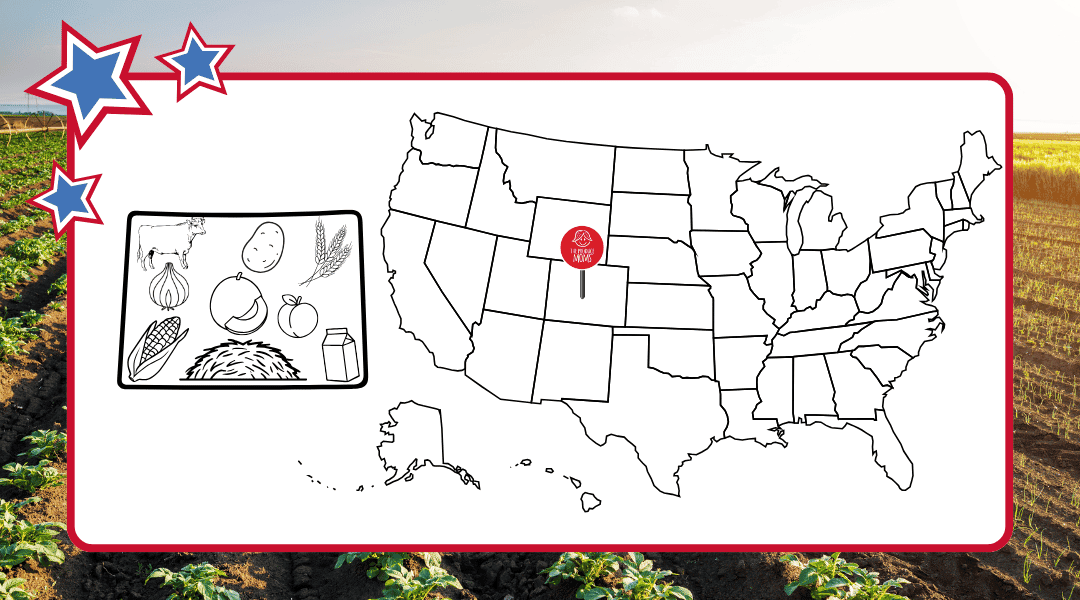
Colorado’s diverse geography stretches from flat, wind-swept eastern plains to high-altitude mountain valleys. It is a unique powerhouse for American agriculture. Five primary commodities anchor the state’s multi-billion-dollar agricultural sector.
Cattle and Calves
Beef is the undisputed king in Colorado, serving as the state’s number one agricultural commodity. Colorado routinely hosts roughly 2.5 million head of cattle, featuring massive ranching operations on the eastern plains and high-country pastures. It s the lifeblood of Colorado’s rural economies, utilizing millions of acres of grasslands that are otherwise unsuitable for growing crops.
Corn (Grain and Silage)
Corn is Colorado’s leading cash crop, with farmers dedicating well over one million acres of land to it each year. Because of the dry climate, much of this corn is grown using advanced, water-efficient irrigation systems. Producers harvest the vast majority as “field corn” or silage (the chopped-up green stalks), directly feeding the state’s massive cattle and dairy industries. By producing massive yields of feed-grade corn, Colorado helps stabilize the supply chain for American livestock.
Dairy Products and Milk
Colorado’s dairy industry has exploded over the last few decades. The state generates well over $1 billion annually in milk production alone, driven by highly modernized dairy farms primarily located in northern and eastern Colorado. Colorado boasts some of the most efficient dairy cows in the nation, ranking near the absolute top for the amount of milk produced per cow.
Wheat (Winter Wheat)
Winter wheat is a rugged, drought-resistant crop planted in the autumn that goes dormant during the freezing winter months before rapidly growing in the spring. The dry, harsh weather of Colorado’s eastern plains suits the crop perfectly. Wheat acts as a financial buffer for Colorado dryland farmers who don’t have access to river irrigation. It provides critical income in areas where rainfall is scarce and unreliable. Colorado consistently ranks in the top ten states for winter wheat production.
Hay and Alfalfa
Because you can’t have a massive livestock and dairy industry without a way to feed them through the winter, hay is Colorado’s quiet superstar. Alfalfa and grass hays flourish throughout the state, from the plains to high alpine meadows. Hay is a vital rotating crop that keeps Colorado’s agricultural soil healthy. Alfalfa naturally fixes nitrogen back into the dirt, acting as a living fertilizer for the next season’s crops while providing local ranchers with premium, nutrient-dense winter feed.
Fruits and Vegetables from Colorado
Cattle and grain dominate Colorado’s vast plains, but the state’s unique geography (specifically the high altitudes, sunny days, and dramatic temperature drops at night) yields the perfect environment to grow some of the nation’s sweetest, highest-quality fruits and vegetables.
Top Fruits
- Peaches: While Georgia and California produce larger quantities of peaches, Colorado peaches are renowned for being exceptionally large and extraordinarily sweet. This sweetness is a direct result of Colorado’s high altitude and hot summer days, which cause the fruit to generate plenty of natural sugars, paired with crisp, cool nights that lock those sugars in. The peach harvest injects millions of dollars into the Western Slope economy every August and supports a massive agritourism industry, drawing thousands of visitors to local orchards.
- Melons: Grown primarily in the Arkansas River Valley in southeastern Colorado, Rocky Ford Melons (both cantaloupes and watermelons) have been famous across the United States since the late 1800s.
- Apples: Although they trail peaches in popularity, apples stand as Colorado’s second-largest tree-fruit crop. Orchardists on the Western Slope cultivate them heavily throughout Delta, Mesa, and Montrose counties.
Top Vegetables
- Potatoes: They are Colorado’s absolute heavyweight in the produce section. The state ranks among the top five producers in the nation, harvesting over 2 billion pounds annually.
- Onions: Colorado is a top-ten national producer of storage onions, particularly yellow sweet onions, grown heavily in Weld County and across the eastern plains. “Storage onions,” which have a thicker skin and lower moisture content, can be shipped nationwide throughout the winter months to supply commercial kitchens and grocery stores long after the summer harvest ends.
- Sweet Corn: While “field corn” is grown for livestock, Sweet Corn is grown strictly for people to eat. Colorado ranks in the top ten states for sweet corn production.
Visit our Produce Directory and learn how to Select, Store and Serve these fruits & vegetables.
About 50 States of Agriculture
In celebration of 250 years of the United States, The Produce Moms is proud to present 50 States of Agriculture. This is an educational and free resource that celebrates the bounty of America. We utilized USDA and State Department of Agriculture data (Colorado) for the content in this series.
Agriculture is the foundation of freedom. Food security is national security. This content series is a celebration of United States culture and the hard-working farmers who feed, fuel & clothe our nation and the world.
Visit another state from our 50 States of Agriculture.