Arkansas Agriculture

Jun 24, 2026, Updated Jul 16, 2026

This post may contain affiliate links. Please read our disclosure policy.
In Arkansas, the story of the land began with small, self-sufficient “home farms” where early settlers grew just enough corn and vegetables to feed their families. By the mid-1800s, this shifted dramatically toward a cotton-heavy economy. It was particularly popular in the fertile soils of the Delta and Red River regions. For generations, “King Cotton” reigned supreme, though this era was also marked by the difficult history of plantation labor and, later, the sharecropping systems that dominated life until the mid-20th century.
Everything changed following World War II. At this time, machines replaced hand labor and horses, leading to a massive “agricultural revolution” in the state. Farmers began to diversify, realizing that the land was perfect for more than just cotton.
This period saw the rise of rice and soybeans as major powerhouse crops. And following closely was the birth of the modern poultry industry in Northwest Arkansas. Several large companies transformed the region into a global leader in food production, moving the state from a landscape of tiny family plots to a sophisticated, high-tech agricultural hub.
Today, “The Natural State” remains an agricultural powerhouse. It serves as a vital link in the global food supply chain. Arkansas proudly holds the title of the nation’s top rice-producing state, accounting for nearly half of all U.S. rice, while also ranking as a major hub for poultry, soybeans, and cotton.
Modern Arkansas farmers are true stewards of the land, utilizing precision technology to produce more food with fewer resources. This shift toward sustainability and efficiency helps local producers stay competitive despite the constant challenges of unpredictable weather and fluctuating global markets.
Looking toward the future, the state’s agricultural identity continues to evolve. While traditional row crops remain the foundation, the industry now thrives on a blend of deep-rooted heritage and cutting-edge innovation, supported by global companies headquartered right in the state. The resilience of Arkansas’s farming families ensures that the state remains a cornerstone of American agriculture for years to come.
About The Arkansas Department of Agriculture
The Mission is simple: The Arkansas Department of Agriculture is dedicated to the development and implementation of policies and programs for Arkansas agriculture, forestry, and natural resources to keep its farmers and ranchers competitive in national and international markets while conserving natural resources and ensuring safe food, fiber, and forest products for the citizens of the state and nation. It is the ultimate support system and safety shield for the state’s largest industry. Established to bring several specialized historical boards (i.e. forestry, livestock, and plant management) under one roof. This state agency works behind the scenes to keep local farmers and ranchers thriving.
From providing funding for rural water systems to supporting local farmers’ markets through their “Arkansas Grown” initiative, they focus heavily on keeping the state’s rural economies strong and vibrant. Learn about the Arkansas Commissioner and his role here.
On a practical, day-to-day level, the department touches the lives of everyday citizens in ways most people might not even realize. By balancing environmental conservation with practical business support, the department ensures that the food on your table, the lumber in your home, and the natural resources across the state are safe, sustainable, and reliable for generations to come
Learn more at https://agriculture.arkansas.gov/.
Top 5 Agricultural Commodities in Arkansas
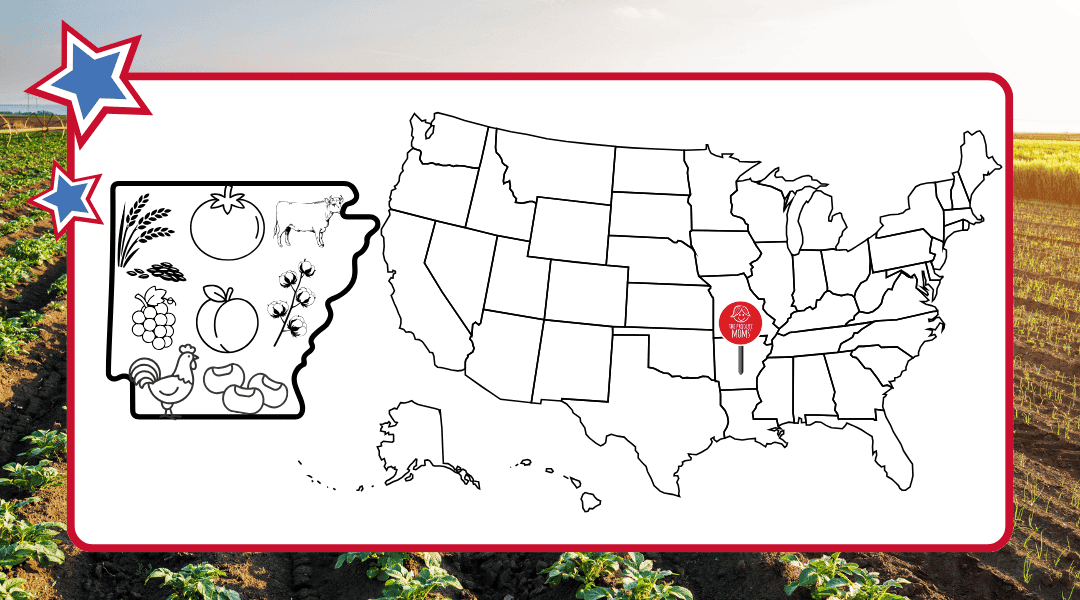
Thanks to its rich soils, long growing seasons, and plenty of rainfall, farmland covers about half of Arkansas, turning the state into a national powerhouse for cotton and soybeans. Beyond crops, it plays a vital role in livestock and poultry production, ranking as a country leader in commercial broilers (chickens raised for meat) while remaining a top producer of cattle, hogs, turkeys, and eggs.
Broilers
Arkansas is a top 3 producer of broilers in the U.S. Broilers consistently generate more than 40% of the state’s total farming revenue all on their own. This massive industry supports over 175,000 local jobs and firmly cements Arkansas as a top three producer of chicken in the nation.
Soybeans
Year after year there are nearly 2.5 – 3 million acres of soybeans planted. They are the state’s most valuable field crop. bringing a massive $2 billion economic impact to the state. As the number one producer of soybeans in the South and a top ten player nationally, Arkansas supplies a vital ingredient used everywhere from local livestock feed to global vegetable oils and biodiesel.
Rice
Arkansas single-handedly produces nearly half of the entire nation’s crop across more than a million acres of fertile soil. This massive harvest pumps more than $1 billion directly into the state’s economy each year and supports thousands of local jobs. From family tables to global exports, rice is a fundamental pillar of Arkansas’s agricultural identity and economic strength.
Cattle and Calves
Beef production is a major economic driver throughout the state, particularly in the river valleys and hilly regions. Arkansas has over one million head of cattle roaming across every single county in the state. This thriving industry ranks as Arkansas’s top livestock sector after poultry, generating hundreds of millions of dollars annually for rural economies. Because the vast majority of these operations are small, multi-generational family farms, cattle ranching remains a vital anchor for local communities and a proud heritage across the state.
Cotton
As a consistent top-five national producer, the state’s high-quality fiber feeds global textile mills and injects hundreds of millions of dollars into rural communities each year. Thanks to modern harvesting advancements and sustainable farming techniques, Arkansas cotton continues to be a vital, high-tech pillar of the state’s agricultural economy.
Fruits and Vegetables from Arkansas
While Arkansas is world-famous for its massive row crops like rice and soybeans, the state’s temperate climate and fertile soils also support a vibrant specialty fruit & veggie industry.
Top Fruits
- Peaches: Peaches are Arkansas’s premier tree fruit crop. The state has a long, storied history of peach production, particularly in the Crowley’s Ridge region and parts of the Arkansas River Valley.
- Grapes: They are a major agricultural staple in Arkansas, deeply rooted in both the state’s culture and economy. Northwest Arkansas is home to some of the oldest continuous wine-producing regions in the American South, originally established by Italian and Swiss immigrants in the late 1800s.
- Blackberries: When it comes to berries, blackberries take the crown in Arkansas. The University of Arkansas System’s fruit breeding program is globally recognized for developing breakthrough “thornless” blackberry cultivars that make harvesting a breeze. Thanks to these innovations, commercial blackberry acreage has climbed significantly, making it the state’s most prominent berry crop.
Top Vegetables
- Tomatoes: Tomatoes are officially designated as both the state fruit and the state vegetable of Arkansas. They are hands-down the state’s most popular and valuable vegetable crop. Arkansas growers produce millions of pounds of tomatoes annually.
- Sweet Potatoes: When it comes to national scale, sweet potatoes are one of Arkansas’s most successful vegetable exports. The state consistently ranks in the top ten producers in the United States. The loose, well-drained soils of the Arkansas Delta provide the perfect environment for these root vegetables to thrive.
- Spinach: Arkansas has a massive, deep-rooted connection to commercial spinach production. The Arkansas River Valley Was historically known as the “Spinach Capital of the World.” Today, the University of Arkansas runs a globally recognized spinach-breeding program that focuses on developing disease-resistant varieties. This keeps local growers highly competitive, supplying both the fresh-market salad industry and major commercial canning and freezing processors.
Visit our Produce Directory and learn how to Select, Store and Serve these fruits & vegetables.
About 50 States of Agriculture
In celebration of 250 years of the United States, The Produce Moms is proud to present 50 States of Agriculture. This is an educational and free resource that celebrates the bounty of America. We utilized USDA and State Department of Agriculture data (Arkansas) for the content in this series.
Agriculture is the foundation of freedom. Food security is national security. This content series is a celebration of United States culture and the hard-working farmers who feed, fuel & clothe our nation and the world.
Visit another state from our 50 States of Agriculture.