California Agriculture

Jun 24, 2026, Updated Jul 16, 2026

This post may contain affiliate links. Please read our disclosure policy.
The story of California agriculture is a remarkable journey of transformation. It’s a story about turning a vast, sun-drenched landscape into one of the most productive food baskets on Earth. Long before large-scale farming took root, Native American communities carefully managed the land. When Spanish missionaries arrived in the late 1700s, they introduced the first European farming methods, planting vineyards, olive groves, and raising cattle.
The Gold Rush of 1849 completely changed the game. Thousands of people flooded into the state, and the demand for food skyrocketed. This shifted California’s focus from gold mining to the sustainable wealth of farming wheat and citrus.
What truly unlocked California’s farming potential, however, was engineering water. The state is blessed with incredible sunshine and rich soil. However, its Mediterranean climate means summers are completely dry. Most rain falls in the north while the best farmland sits in the south. In the early to mid-2000s, massive engineering feats like the Central Valley Project and the State Water Project created an intricate network of canals and aqueducts. This allowed farmers to channel melted snow from the Sierra Nevada mountains directly to their fields. With reliable water, the Central Valley transformed into a lush paradise, allowing the state to move away from simple grains and specialize in high-value fruits, nuts, and vegetables.
Today, if you walk into almost any grocery store in America, you are tasting the fruits of California labor. The state produces nearly half of all US-grown fruits, nuts, and vegetables. This includes virtually 100% of our almonds, walnuts, pistachios, and pomegranates. It is a massive, high-tech operation where global favorites like avocados, grapes, and strawberries are grown side-by-side.
However, modern California farming is at a critical turning point. Faced with regular droughts, changing weather patterns, and stricter groundwater regulations, today’s farmers are leaning heavily into innovation to grow more food using far less water.
About California Department of Food and Agriculture
At its heart, the California Department of Food and Agriculture (CDFA) acts as the guardian of the state’s food supply and its massive agricultural economy. Think of it as the ultimate support system for both the farmers who grow our food and the everyday consumers who eat it.
The department is responsible for ensuring that the fruits, vegetables, dairy, and meat coming out of California are safe, wholesome, and accurately labeled. To do this, they handle everything from inspecting weights and measures at grocery store scales to preventing devastating pests and invasive species from hitching a ride into the state and destroying entire crops. By keeping the fields healthy, they protect the food on your plate. You can learn more from their Secretary of the CDFA here.
Beyond everyday safety, the CDFA plays a huge role in steering California agriculture toward a more sustainable future. Because farming is facing major challenges from climate change and water scarcity, the department awards grants directly to farmers to help them adopt eco-friendly practices. These funds help growers invest in high-tech, water-saving irrigation systems, improve their soil health so it holds more water naturally, and find ways to reduce greenhouse gas emissions. Ultimately, the CDFA works behind the scenes to balance the economic success of California’s hard-working farmers with the long-term health of our environment.
Learn more at https://www.cdfa.ca.gov/.
Top 5 Agricultural Commodities in California
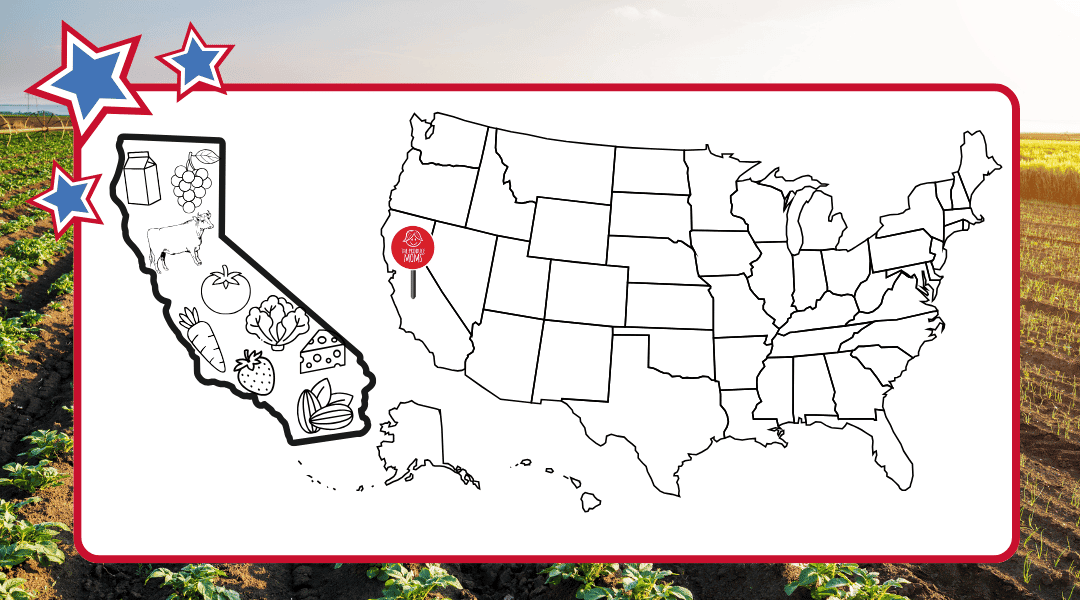
California’s farming industry is truly one of a kind. Thanks to a beautiful climate that allows for year-round harvesting, the state is an absolute powerhouse for fresh fruits and vegetables. While it is famous for being the world’s top producer of almonds, the bounty certainly doesn’t stop there. In fact, California farmers grow more than 400 different agricultural products. It is the fifth-largest supplier of food on the entire planet.
Across more than 70,000 distinct farming operations, the vibrant agricultural landscape is more than just the backbone of California’s economy. It is absolutely vital for keeping the entire nation’s produce aisles stocked with fresh, healthy food all year long.
Dairy Products
Dairy is actually California’s number one agricultural commodity, bringing in more revenue than any single crop in the state. It has more dairy cows than any other state in the nation. California produces roughly one-fifth of the entire U.S. milk supply. This massive industry drives the state’s economy. It supports thousands of local farming families and provides a steady source of milk, cheese, and butter to grocery stores across the globe.
Almonds
Almonds are California’s top agricultural export, with the state’s growers producing about 80% of the entire world’s almond supply. This booming industry generates billions of dollars in revenue each year. It also supports over 100,000 jobs, primarily in the Central Valley region.
Grapes
Grapes are a cornerstone of California’s agricultural wealth, driving a massive multi-billion dollar industry through fresh table grapes, raisins, and world-class wine. The state’s diverse microclimates make it an ideal home for vineyards, producing more than 90% of all wine grown in the United States. This thriving industry not only fuels the economy but also makes California a top destination for global tourism and hospitality.
Cattle and Calves
The cattle and calves industry is a massive driver for California’s agricultural economy, consistently ranking as one of the state’s top five multi-billion dollar commodities. Because livestock can graze on rugged, hilly grasslands that are too dry or steep for planting crops, this industry turns otherwise unusable terrain into a productive source of high-quality beef. Additionally, California’s cattle ranches support local families and small businesses across nearly every single county in the state.
Lettuce
California is often called the “salad bowl of the nation” because its farmers grow a staggering 70% of all lettuce consumed in the United States. Thriving in the cool coastal breezes of the Salinas Valley and the sunny winter weather of the Imperial Valley, lettuce provides a multi-billion dollar economic boost to the state. This year-round production creates steady jobs for thousands of field workers and keeps grocery stores across North America stocked with fresh greens every day.
Fruits and Vegetables from California
When we look at the pure volume and financial impact of what California grows, the top three fruits and top three vegetables completely dominate the nation’s grocery aisles. They bring in billions of dollars annually and ensure the country has a steady supply of fresh, healthy food.
Top Fruits
- Grapes: The state’s diverse microclimates allow it to produce over 90% of all wine grapes grown in the United States, alongside a massive market for fresh table grapes and raisins. Grapes are California’s highest-grossing fruit crop. Their annual value ranges from $5.6 to $6.5 billion
- Strawberries: Strawberries are a year-round success story in California, thanks to coastal areas like Watsonville and Oxnard. California grows roughly 90% of the nation’s fresh strawberries, yielding more fruit per acre than any other state. Because strawberries must be carefully hand-picked, this industry is a massive employer, creating thousands of steady agricultural jobs.
- Oranges: Citrus (oranges) brings in close to $1 billion annually and supplies over 80% of the fresh citrus eaten across America.
Top Vegetables
- Lettuce: Lettuce is California’s undisputed king of vegetables, making up nearly 90% of the entire U.S. lettuce supply. It is grown primarily in the “Salad Bowl of the World” (the Salinas Valley) during the summer and the Imperial Valley during the winter. Its constant, year-round rotation keeps North American grocery stores continuously stocked with romaine, iceberg, and leaf greens.
- Tomatoes: While technically a fruit, tomatoes are classified and utilized as a vegetable in agricultural markets. California leads the entire nation in processing tomatoes. Mechanically harvested across the hot San Joaquin Valley, California’s tomato crop accounts for more than 90% of the processed tomato products consumed in the United States.
- Carrots: Carrots are a massive staple of California’s vegetable output, grown heavily in the southern San Joaquin Valley. This highly mechanized industry pioneered the “baby carrot” revolution, which completely transformed how Americans snack. Today, California produces standard and peeled carrots that are shipped across the globe for their convenience and long shelf-life.
While almonds generate over $5.6 billion annually and are a massive part of California’s legacy, agricultural economists categorize them strictly as “tree nuts” rather than fresh fruits or vegetables.
Visit our Produce Directory and learn how to Select, Store and Serve these fruits & vegetables.
About 50 States of Agriculture
In celebration of 250 years of the United States, The Produce Moms is proud to present 50 States of Agriculture. This is an educational and free resource that celebrates the bounty of America. We utilized USDA and State Department of Agriculture data (California) for the content in this series.
Agriculture is the foundation of freedom. Food security is national security. This content series is a celebration of United States culture and the hard-working farmers who feed, fuel & clothe our nation and the world.
Visit another state from our 50 States of Agriculture.