Oklahoma Agriculture

Oct 26, 2026

This post may contain affiliate links. Please read our disclosure policy.
The agricultural landscape of Oklahoma began with indigenous communities cultivating maize along fertile river bottoms. The landscape transformed rapidly during the late 19th and early 20th centuries. It was catalyzed by monumental milestones like the 1889 Land Run and the expansion of railways. Settlers quickly shaped the plains into a major farming frontier. They introduced the famous winter wheat migration that established Oklahoma as a vital breadbasket for the nation.
As the decades progressed, Oklahoma agriculture faced profound tests. The most notable was the ecological wake-up call of the Dust Bowl. It sparked vital soil conservation and land stewardship movements. Farmers adapted by shifting former cotton acreage into sturdy pasturelands. They did this while gradually embracing new machinery. This period laid the groundwork for a steady evolution toward larger, more efficient operations that balanced innovation with environmental care.
Today, Oklahoma’s agricultural landscape is a thriving blend of rich heritage and modern enterprise. The state supports over 70,000 farms and ranches spanning nearly 33 million acres. Livestock serves as the heartbeat of the modern economy. It accounts for roughly 81% of total agricultural product sales. Meanwhile, staples like winter wheat and hay continue to flourish,ensuring Oklahoma’s proud farming traditions remain as vibrant today as they were a century ago.
About the Oklahoma Department of Agriculture, Food and Forestry
The Oklahoma Department of Agriculture, Food and Forestry (ODAFF) serves as a vital pillar for the state’s rural and urban communities alike. Its core mission is centered on protecting and promoting the highest standard of agricultural products and natural resources for the benefit of all Oklahomans.
By balancing regulatory oversight with supportive programs, the agency, led by a commissioner, helps foster a thriving, resilient agricultural economy that touches nearly every corner of daily life in the state.
To fulfill this mission, ODAFF oversees a wide range of essential divisions and services. These include safeguarding animal health through the State Veterinarian’s office, ensuring food safety from production to market, and protecting consumers through rigorous quality checks.
Additionally, the department manages vital forestry services, environmental stewardship programs, and market development initiatives that help local farmers and ranchers expand their reach,ensuring a safe, sustainable, and robust food supply for the public.
Learn more at https://ag.ok.gov/.
Top 5 Agricultural Commodities in Oklahoma
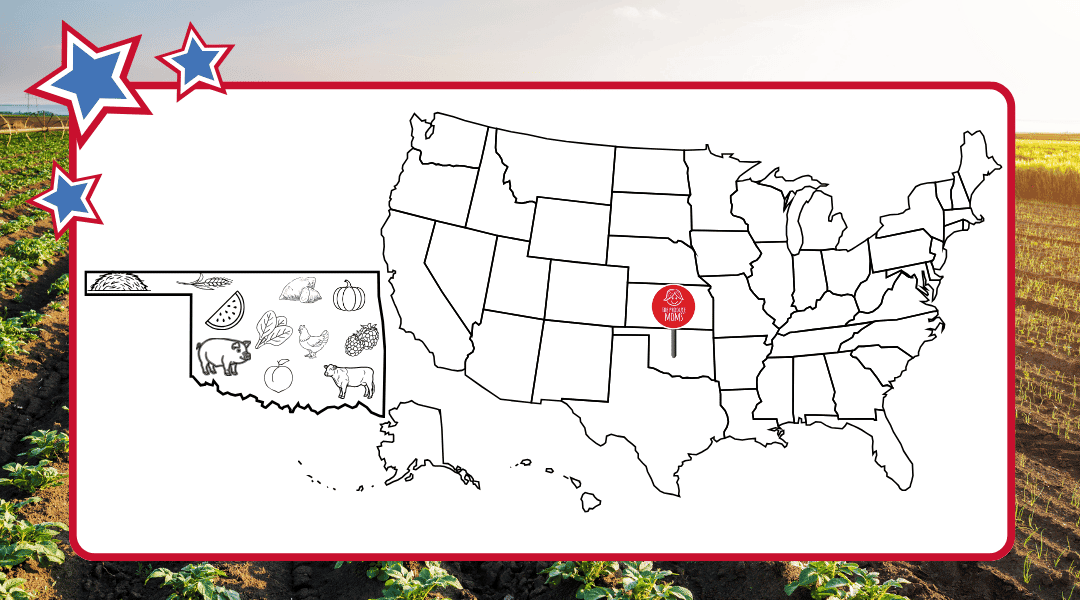
Oklahoma’s agricultural economy is a major driver of both local prosperity and national food security. It spans over 30 million acres of farmland and pasture. The state has a diverse geography. It ranges from rolling plains to timber-rich hills. This enables a wide array of production. Ranked by annual economic production value, Oklahoma’s agricultural output supplies essential food, fiber, and livestock products to markets around the globe.
Cattle and Calves
Cattle production is the undisputed heart of Oklahoma agriculture. It accounts for the vast majority of the state’s total agricultural market value (generating well over $2 billion annually). There are roughly 5.4 million head of cattle in Oklahoma. It consistently ranks 2nd in the nation for the number of beef cows and 4th for total cattle and calves. Ranching supports local feedlots, livestock auctions, and rural meat processing facilities, while supplying beef processing plants across North America.
Hogs and Pigs
Pork production represents Oklahoma’s second-largest livestock enterprise. It contributes around $800 million to $900 million in annual market value. Concentrated heavily in the Panhandle and western regions, swine farming supports processing infrastructure and feed grain demand locally. Nationally, Oklahoma ranks among the top 10 pork-producing states. It is also a key supplier for international pork exports. Oklahoma exports hundreds of millions of dollars worth of pork products each year, with roughly 1 out of every 50 jobs in the state tied to the pork supply chain.
Hay
Hay generates nearly $600 million annually. It is a vital forage crop that directly underpins Oklahoma’s massive livestock sector. While much of the alfalfa and grass hay grown in the state is fed to local cattle herds, high-quality bales are also sold and transported nationwide to support dairy herds, equine facilities, and ranching operations in neighboring states.
Oklahoma routinely ranks in the top 10 states nationally for hay production. It produces over 5 million tons of forage in strong harvest years.
Broilers (Poultry)
The broiler industry generates over $500 million in annual value. Locally, poultry farming employs tens of thousands of workers across processing plants, feed mills, and family-owned contract farms. On a national scale, Oklahoma helps meet the steadily rising demand for chicken products across grocery chains and food service providers. Oklahoma broiler operations produce over 1 billion pounds of chicken meat annually!
Winter Wheat
Winter wheat is Oklahoma’s signature crop. It adds roughly $400 million to $500 million annually to the state’s crop sector. Grown predominantly in central and western Oklahoma, it serves a unique dual purpose: livestock graze on the green wheat pastures during late autumn and winter before the crop is allowed to grow and harvest as grain in early summer. Oklahoma routinely ranks 2nd or 3rd in the U.S. for winter wheat production, supplying domestic flour mills and international bakeries.
Fruits and Vegetables from Oklahoma
Oklahoma is internationally renowned for its massive livestock operations and rolling wheat fields. However, the state’s diverse climates and rich soils also support a thriving fruit and vegetable industry. From the sunny Panhandle down to the eastern river valleys, specialty crop producers take advantage of Oklahoma’s long growing season, warm summer heat, and fertile river bottoms. Fruits and vegetables make up a smaller footprint compared to broadacre grain and pastureland. They play an outsized role in regional food security, high-value farm income, agritourism, and local farm-to-table supply chains across the state.
Top Fruits
- Watermelon: Watermelon is Oklahoma’s premier fruit crop in terms of commercial acreage, cash receipts, and total economic contribution. It is grown heavily in southern and central counties. Watermelon generates millions of dollars annually for state growers and fuels vibrant regional agritourism festivals every August.
- Peaches: Peaches are Oklahoma’s leading tree fruit crop. It is widely cultivated in eastern and central regions. Orchard growers rely on hot summer weather to develop rich sugars in the fruit, catering to both commercial grocery markets and direct-to-consumer roadside farm stands. Along with apples, peaches are considered the tree fruit best adapted to Oklahoma’s climate and soil.
- Blackberries: Berry production, led prominently by blackberries, represents a rapidly expanding sector of small-fruit farming in Oklahoma. Backed by breeding breakthroughs from neighboring agricultural universities, thornless blackberry varieties thrive in Oklahoma’s conditions. It is a lucrative crop for small-scale family farms, pick-your-own operations, and local farmers’ markets. Oklahoma is home to over 400 berry farms.
Top Vegetables
- Sweet Potatoes: Sweet potatoes thrive in Oklahoma’s sandy loam soils and warm climate. It serves as one of the state’s most resilient and commercially significant root crops. Primarily produced in eastern and southern agricultural pockets, sweet potatoes store well over the winter months. This offers local growers steady income long after the summer harvest ends.Sweet potatoes are a staple in Oklahoma’s specialty crop programs due to their high nutritional value (packed with beta-carotene) and strong demand in both regional grocery distribution networks and local farm-to-school initiatives.
- Pumpkins & Winter Squash: Pumpkins and hard-shelled winter squashes are crucial commercial vegetable crops in Oklahoma. They serve dual roles in the food market and the booming autumn agritourism industry. U-pick pumpkin patches, fall corn mazes, and roadside markets draw thousands of families each year, generating critical agritourism revenue for rural farm communities.
- Spinach & Leafy Greens: Cool-season leafy greens,most notably spinach, along with turnip greens, collards, and kalem, form the cornerstone of Oklahoma’s spring and fall vegetable production. Grown in the fertile river valleys, local greens supply fresh wholesale distributors as well as commercial canning and freezing processors. Spinach that overwinters in Oklahoma fields tends to be naturally sweeter because cold temperatures cause the plants to convert stored starches into natural sugars. Leafy greens are often harvested in early spring before summer heat sets in, providing growers with crucial early-season cash flow.
Visit our Produce Directory and learn how to Select, Store and Serve these fruits & vegetables.
About 50 States of Agriculture
In celebration of 250 years of the United States, The Produce Moms is proud to present 50 States of Agriculture. This is an educational and free resource that celebrates the bounty of America. We utilized USDA and State Department of Agriculture data (Oklahoma) for the content in this series.
Agriculture is the foundation of freedom. Food security is national security. This content series is a celebration of United States culture and the hard-working farmers who feed, fuel & clothe our nation and the world.
Visit another state from our 50 States of Agriculture.