Montana Agriculture

Sep 16, 2026

This post may contain affiliate links. Please read our disclosure policy.
Montana’s agricultural story begins long before its iconic ranches and golden wheat fields dominated the landscape. For centuries, Native American nations relied on the rich ecosystems of the Northern Plains to sustain their communities. The state’s modern agricultural boom took root in the mid-19th century. It was driven by the gold rush that brought hungry miners into the territory.
Early entrepreneurs quickly realized that driving cattle into Montana’s lush river valleys was just as profitable as mining. The region’s native prairie grasses, like buffalo grass and blue grama, cured naturally in the dry air. It offered nutritious winter forage for livestock and laid the foundation for Big Sky Country’s legendary open-range cattle industry.
The turn of the 20th century transformed the state’s landscape again, through the Homestead Acts. This lured hundreds of thousands of hopeful farm families to the region. Promised land and bountiful yields, settlers plowed up millions of acres of virgin sod to grow grain.
However, the harsh realities of the Great Plains soon set in. Extreme weather, erratic rainfall, and the devastating Dust Bowl era forced a major agricultural movement: dryland farming adaptation. Farmers learned to work with Montana’s semi-arid climate by pioneering strip-farming and summer fallowing. These techniques are designed to capture soil moisture and prevent topsoil from blowing away. Out of these hard-earned lessons, north-central Montana emerged as the famous “Golden Triangle.” It’s a region renowned worldwide for producing top-tier bread-making wheat and malting barley.
Today, agriculture remains Montana’s leading industry. It spans roughly 58 million acres of farmland and ranchland. While cattle and wheat still generate the majority of the state’s agricultural revenue, modern Montana farming is surprisingly diverse.
The state has become a national leader in pulse crops. Montana also stands near the top nationally in certified organic wheat production and honey. By combining time-tested dryland techniques with modern sustainable practices, Montana’s agricultural community continues to feed families around the world while preserving the rugged big-sky heritage that started it all.
About the Montana Department of Agriculture
The Montana Department of Agriculture (MDA) serves as a key guardian and advocate for the state’s primary economic driver. It operates with a core mission “to protect producers and consumers, and to enhance and develop agriculture and allied industries.”
The department works to keep Big Sky Country’s agricultural sector strong, safe, and competitive.Through its regulatory responsibilities, the agency inspects commodities, manages pest and weed threats, and protects soil and water quality to ensure high-quality standards for goods grown in Montana. Simultaneously, it advocates for farmers and ranchers by promoting local produce, opening doors to new domestic and international markets, and providing essential educational resources.
To drive growth across the state, the department oversees dozens of programs and major initiatives focused on modernization and business expansion. They are led by their Director and several boards. Key initiatives center around value-added agriculture. This helps local producers process raw goods like wheat, pulse crops, and meat into higher-value products right inside Montana rather than shipping raw materials out of state.
Through network efforts like the state’s Food & Agricultural Development Centers, local producers receive financial grants, technical support, and market development tools to scale their businesses. The MDA also manages specialized commodity research councils for pulses, grain, and specialty crops, ensuring that Montana remains an agile global competitor while preserving the land for future generations of agricultural families.
Learn more at https://agr.mt.gov/.
Top 5 Agricultural Commodities in Montana
Montana’s agriculture is driven by a diverse mix of livestock and crops suited to the state’s vast plains and semi-arid climate. Agriculture generates billions of dollars in annual revenue across roughly 58 million acres of farmland and ranchland. It serves as the backbone of the Big Sky state’s economy. From feeds that sustain livestock across the country to grains exported around the world, Montana’s agricultural production plays a critical role in feeding both local communities and global populations.
Cattle and Calves
Livestock is king in Montana. Cattle and calves consistently rank as the state’s top agricultural commodity by cash receipts. Montana is home to over 2 million cattle. This means cattle outnumber the state’s human population roughly two to one.The industry supports thousands of multigenerational family ranches and supplies high-quality beef genetics and feeder cattle to feedlots and consumers across the United States.
Wheat (Winter, Spring, & Durum)
Wheat is Montana’s most valuable harvested crop. It consistently places the state among the top three wheat producers in the nation. Montana grows three distinct classes of wheat: hard red winter wheat, hard red spring wheat, and durum wheat.Nationally, Montana spring wheat is prized by commercial bakeries for its exceptionally high protein content, which gives bread its structure and rise. The state’s semiarid “Golden Triangle” region produces world-famous durum wheat. Millers use it as the primary ingredient to make high-end semolina flour for pasta.
Hay and Forage
While consumers rarely buy hay at the grocery store, it is a vital backbone of the state’s agricultural economy. Montana producers harvest millions of tons of alfalfa and mixed grass hay annually. Locally, hay is essential for sustaining the state’s massive cattle herd during harsh, snow-filled winters. Nationally, high-grade Montana alfalfa is shipped across state lines to feed dairy herds and horses. Alfalfa hay does double duty. As a legume, it naturally fixes nitrogen back into the soil, acting as a natural fertilizer for future crop rotations.
Barley
Montana routinely trades the top spot nationally with Idaho for barley production. The state produces both feed barley for livestock and premium malting barley. Nationally, Montana malting barley is a cornerstone ingredient for major commercial breweries and craft microbreweries across North America. Locally, it fuels a thriving domestic craft beer industry.
Pulse Crops (Lentils, Dry Peas, & Chickpeas)
Over the last two decades, pulse crops have experienced a gigantic rise in Montana. It has established the state as a dominant national player. Montana ranks #1 in the United States for lentil and dry edible pea production. These crops have transformed local crop rotations. It provides farmers with a profitable alternative to summer fallowing while naturally enriching the soil. Nationally and globally, Montana pulses supply the plant-based protein market, food assistance programs, and consumer pantry staples.
Fruits and Vegetables from Montana
While Montana is world-renowned for broad-acre commodities like cattle and wheat, its unique microclimates and fertile soils support a surprisingly vibrant fruit and specialty vegetable industry. The state’s extreme temperature swings, sunny summer days, and cool mountain nights create high sugar content and rich flavors in fresh produce. Concentrated largely in sheltered western valleys and irrigated river basins, Montana’s fruit orchards and commercial vegetable farms provide crucial crop diversity, driving high-value niche markets that strengthen local food security and fuel regional tourism.
Top Fruits
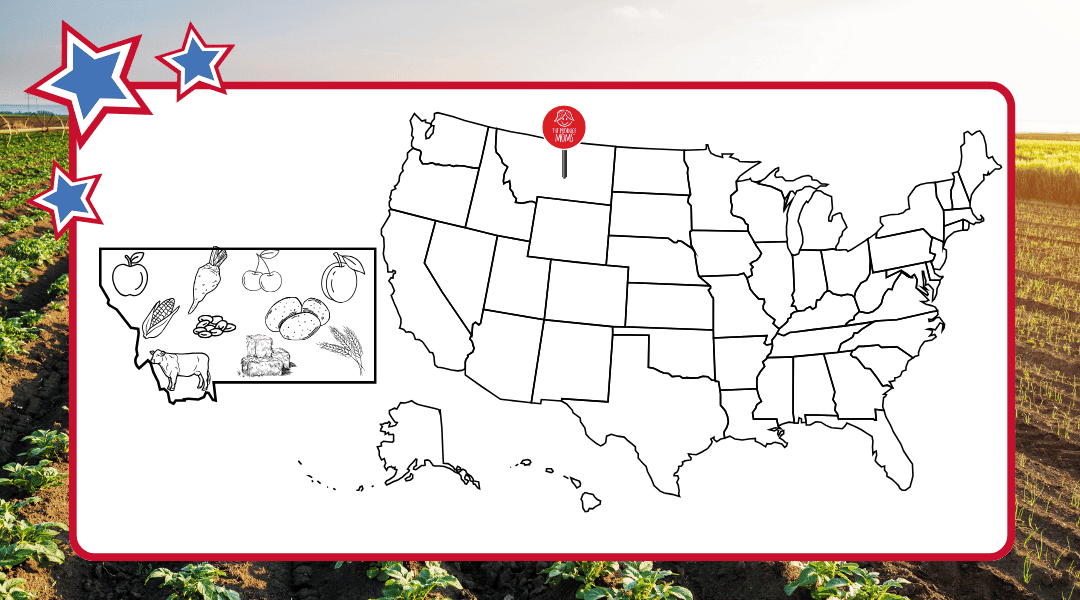
- Sweet Cherries: Montana growers harvest around 2 million pounds of sweet cherries. Because of the cool northern climate, Montana sweet cherries ripen later than those in Washington or California, entering the national market in late July and August when domestic supplies are otherwise low. The annual summer harvest brings millions of dollars into local agritourism through roadside stands, U-pick orchards, and processing for jams and syrups.
- Apples: Montana’s commercial apple history dates back to the late 1800s, where settlers planted large orchards to supply fruit to mining camps. Today, growers across western Montana produce cold-hardy varieties. While smaller in scale than neighboring Washington, Montana’s apple industry supports craft cideries, fresh farm stands, and heritage preservation initiatives
- Plums and Prunes: Farmers grow them alongside apples and cherries in the western valleys. The cold-tolerant stone fruits like plums thrive in Montana’s rich valley soils. Plums play an essential role in local fruit diversification, supplying regional farmers’ markets and specialty food producers.
Top Vegetables
- Seed Potatoes: Montana is a premier supplier of high-grade seed potatoes for commercial potato growers across the United States and international markets. The state’s high elevation, cold winters, and isolated mountain valleys serve as a natural barrier against plant diseases and pests, making Montana seed potatoes highly sought after by major French fry and potato chip manufacturers. It produces roughly 10,000 acres of certified seed potatoes annually.
- Sugar Beets: Montana consistently ranks among the top 10 sugar beet-producing states in the nation. It harvests over 1 million tons of beets in strong production years. While botanically grown for root sugar extraction rather than fresh dinner tables, sugar beets are one of Montana’s top commercial vegetable crops by cash value. They generate tens of millions of dollars in crop revenue and feed local processing plants that supply refined sugar across the country.
- Sweet Corn: Montana sweet corn is a staple of local summer agriculture. Farmers sell a majority of it fresh directly to consumers through farm stands, regional grocery chains, and annual town festivals, making it one of the state’s highest-margin direct-to-consumer crops.
Visit our Produce Directory and learn how to Select, Store and Serve these fruits & vegetables.
About 50 States of Agriculture
In celebration of 250 years of the United States, The Produce Moms is proud to present 50 States of Agriculture. This is an educational and free resource that celebrates the bounty of America. We utilized USDA and State Department of Agriculture data (Montana) for the content in this series.
Agriculture is the foundation of freedom. Food security is national security. This content series is a celebration of United States culture and the hard-working farmers who feed, fuel & clothe our nation and the world.
Visit another state from our 50 States of Agriculture.