Maine Agriculture

Aug 21, 2026

This post may contain affiliate links. Please read our disclosure policy.
Maine’s farming story is deeply rooted in its rugged landscapes, short growing seasons, and nutrient-dense, glacial soil. In the 19th and early 20th centuries, agriculture dominated the state’s economy. Aroostook County famously emerged as one of the nation’s premier potato hubs. Beyond white potatoes, early Maine farmers cleared forests to cultivate hay, apples, and grain. They also established dairy herds across the central and southern valleys.
The rocky soil required grit and adaptation, prompting a strong culture of self-sufficiency and local resourcefulness that remains a defining characteristic of Pine Tree State agriculture today.
As modern technology shifted national food production toward massive industrial farms in the West, Maine smoothly carved out a distinct identity focused on specialty crops and local supply chains. Today, Maine produces virtually 99% of the nation’s commercially harvested wild blueberries. It is a native crop that thrives in the acidic barrens of Down East Maine.
According to recent USDA data, Maine is home to roughly 7,000 farms spanning 1.2 million acres, generating over $870 million in annual product value. A massive movement in modern Maine agriculture is the push toward organic practices, farm-to-table distribution, and diversification. There are over 400 certified organic farms operating within the state, and nearly 20% of all agricultural sales are made directly to local consumers, regional restaurants, and school food programs. It is one of the highest direct-to-consumer rates in the country.
Coupled with a booming agritourism sector and sustainable aquaculture along the coastline, Maine’s modern food system balances rich heritage with forward-thinking stewardship.
About the Maine Department of Agriculture, Conservation & Forestry
About the Maine Department of Agriculture, Conservation & Forestry
At the Maine Department of Agriculture, Conservation and Forestry (DACF), they care deeply about the natural spaces and working lands that make Maine feel like home. From local farms and lush woodlands to scenic state parks and open outdoors, it serves as a welcoming hub of support for the state’s rich natural resources. The DACF if led by a Commissioner, plus various boards & commissions.
They bring a thoughtful, team-oriented approach to land planning, conservation, and local business growth. They ensure that communities thrive alongside the environments that sustain them. Their mission spans protecting Maine’s 18 million acres of breathtaking forests, caring for over 700,000 acres of public parklands, and using sound science to guide wise, sustainable decision-making for future generations.
Maine’s vibrant food system springs directly from its unique landscape. It is 3,500 miles of winding Atlantic coastline to 1.3 million acres of fertile farmland.
Through the Real Maine program, they connect folks near and far with the passionate people behind the products. By telling their stories and sharing authentic farm experiences to help nourish a local food economy. They want to lift up communities, honor our climate goals, and enhance the quiet, beautiful quality of life of Maine.
Learn more at https://www.maine.gov/dacf/.
Top 5 Agricultural Commodities in Maine
Maine’s unique climate, acidic glacial soils, and vast coastline give rise to a diverse agricultural economy. The Pine Tree State balances large-scale production with a flourishing local food web. While Maine is famous for its rocky shores and ocean catches, its land-based agriculture yields essential crops and animal products that feed regional communities and anchor distinct national markets.
Potatoes
Potatoes are Maine’s top agricultural commodity by value, generating over $250 million annually. They support regional processing plants, seed production, and generations of farm families. Maine consistently ranks among the top potato-producing states in the country. It supplies table stock, seed potatoes, and processed goods (like french fries and potato chips) to East Coast markets.
Wild Blueberries
Grown on acidic barrens across Down East Maine, wild blueberries generate tens of millions in economic value. They also represent a cornerstone of cultural heritage, agritourism, and seasonal farm work. Maine produces virtually 99% of the commercially harvested wild blueberries in the United States. Unlike highbush cultivated blueberries, wild blueberries are native, smaller, and lower in water content. They are prized nationally for their intense flavor and high antioxidant density.
Milk and Dairy Products
Maine’s dairy industry serves as the backbone of its agricultural landscape, keeping over 500,000 acres of farmland open and working. Milk generates well over $100 million annually. It supports local fluid milk processors and a booming craft artisan cheese movement. Maine’s dairy farms feed into the broader New England milk pool, supplying essential fresh dairy products to major metropolitan centers throughout the Northeast. Maine dairy cows produce over 540 million pounds of milk every year.
Poultry and Eggs
Egg production is a major driver of Maine’s livestock sector. It is concentrated in central and southern Maine. Egg farms generate substantial cash receipts and supply local grocery chains, bakeries, and school food systems. Maine is the largest producer of brown shell eggs in New England. They ship millions of eggs daily to neighboring East Coast states. Maine laying hens produce upwards of 1 billion eggs annually, making brown eggs a key player in the regional food chain.
Maple Syrup
Maine ranks 3rd nationwide in maple syrup production (behind Vermont and New York). It produces over 500,000 gallons during strong harvest years. Tapping sugar maples is Maine’s first spring harvest. It provides crucial early-season income for woodlot owners, supports rural tourism, and anchors value-added food processing.
Fruits and Vegetables from Maine
Maine is widely recognized for its vast forests and iconic coastal fisheries. However, its farm economy relies heavily on specialized fruit and vegetable production. Driven by a mix of long-standing commercial harvesting and a thriving local farm-to-table movement, Maine’s top crops contribute hundreds of millions of dollars to the state’s economy each year while maintaining a vital presence in regional and national food markets.
Top Fruits
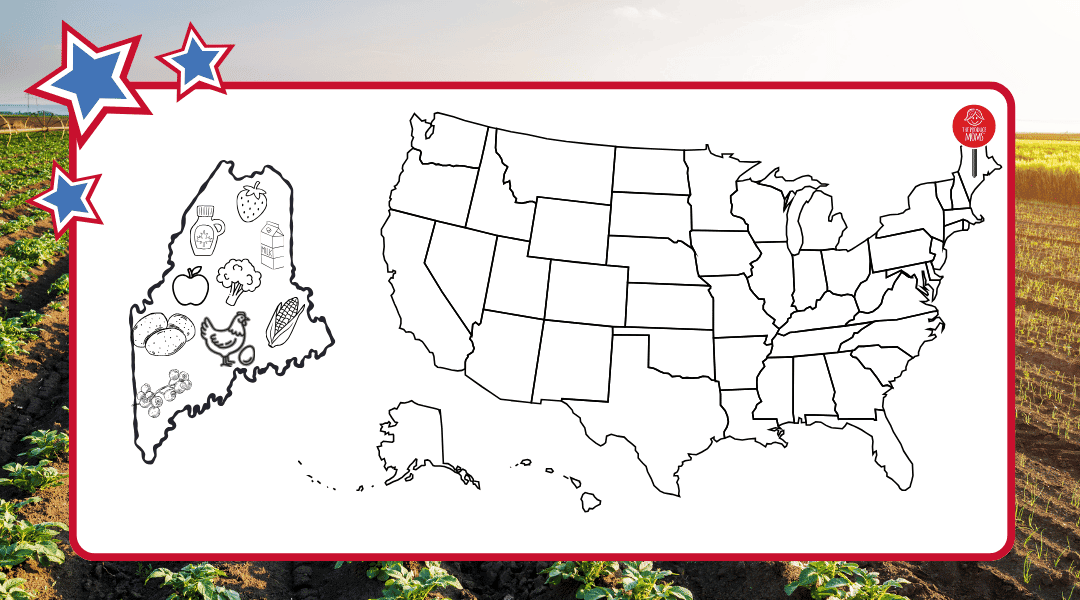
- Wild Blueberries: Wild blueberries are Maine’s iconic native fruit, They thrive across the acidic barrens of Down East Maine. It yields tens of millions of dollars annually from a berry prized for its high antioxidant levels and intense flavor.
- Apples: Apples serve as the cornerstone of Maine’s tree fruit industry. They generate nearly $18 million each year. The crop feeds a bustling autumn tourism season centered on pick-your-own orchards, regional grocery distribution, and a booming craft hard cider market.
- Strawberries: Strawberries represent the official start of Maine’s summer harvest. They are a crucial revenue generator for diversified small farms. While smaller in total commercial acreage than blueberries, strawberries drive significant direct-to-consumer sales through farm stands, pick-your-own fields, and local farmers’ markets.
Top Vegetables
- Potatoes: Potatoes are Maine’s single most valuable agricultural commodity overall, generating over $250 million annually. Maine’s potato harvest is so deeply ingrained in local culture that several public school districts in northern Aroostook County still schedule an official three-week “Potato Harvest Break” every autumn. Dating back generations, schools pause classes in late September so students can help local farming families harvest the crop before the ground freezes. While modern machinery does most of the heavy lifting today, the tradition lives on as a proud symbol of community, hard work, and Maine’s agricultural heritage!
- Sweet Corn: Sweet corn is a high-profile seasonal vegetable that anchors Maine’s late-summer farm economy. Fresh-picked sweet corn is a staple at roadside farm stands and community markets. It provides a vital cash flow boost for local vegetable growers during peak tourist season.
- Broccoli: Broccoli thrives in the cool summer climate of northern Maine. The mild temperatures prevent the crop from bolting early. This favorable weather allows Maine growers to serve as major commercial suppliers of fresh, high-quality broccoli for grocery chains along the entire Eastern Seaboard.
Visit our Produce Directory and learn how to Select, Store and Serve these fruits & vegetables.
About 50 States of Agriculture
In celebration of 250 years of the United States, The Produce Moms is proud to present 50 States of Agriculture. This is an educational and free resource that celebrates the bounty of America. We utilized USDA and State Department of Agriculture data (Maine) for the content in this series.
Agriculture is the foundation of freedom. Food security is national security. This content series is a celebration of United States culture and the hard-working farmers who feed, fuel & clothe our nation and the world.
Visit another state from our 50 States of Agriculture.