Utah Agriculture

Nov 16, 2026

This post may contain affiliate links. Please read our disclosure policy.
Utah’s agricultural story begins in the mid-19th century when Mormon pioneers arrived in the arid Great Basin. Faced with tough, dry soil, early settlers led a major movement in American farming history by pioneering large-scale modern irrigation. By diverting mountain streams and building canals, they transformed desert ground into fertile fields to support growing communities.
In these early decades, farming was all about self-sufficiency. Families raised small herds of dairy cows and chickens, while experimenting with everything from sugar beets and grapes to cotton and silkworms.
As transportation improved, Utah shifted from local survival to a thriving commercial market. Farmers adopted dry-farming techniques, learning to capture and retain soil moisture. This expanded farmed land across the state from around 1.3 million acres in the late 1800s to millions of acres today. Ranching exploded during this era, with sheep and cattle grazing across vast public range lands. The state also became famous for specialized crops.
Today, Utah’s agricultural sector generates billions of dollars in market value. Livestock takes center stage. Because so much of the state’s agricultural identity is built around livestock, forage crops dominate the land. Alfalfa and hay account for nearly three-fifths of all harvested cropland in Utah. Although urban expansion along the Wasatch Front has reduced traditional farm acres, local production remains strong.
Modern agriculture in Utah balances deep-seated heritage with contemporary sustainability. Facing ongoing droughts and rapid population growth, today’s farmers and ranchers rely on high-tech water conservation tools, automated drip systems,and water-efficient crop science to stretch every drop. Despite the arid landscape and shrinking farm spaces, agriculture remains a vital pillar of Utah’s economy, culture, and food security.
About the Utah Department of Agriculture and Food
The Utah Department of Agriculture and Food (UDAF) serves as the primary state regulatory and promotional agency dedicated to supporting Utah’s agricultural economy and safeguarding the public food supply. The department’s mission centers on promoting the healthy growth of Utah agriculture, conserving vital natural resources, encouraging economic opportunities for producers, and ensuring a safe, wholesome food supply for everyday consumers.
By bridging the gap between local producers and the community, UDAF strives to protect the state’s agricultural heritage while adapting to modern environmental and market demands. The Office of the Commissioner is the executive office within the Department and ensures all divisions work to meet statutory responsibilities.
To fulfill its mission, UDAF manages dozens of state-mandated programs across several core divisions. Its main functions include inspecting retail food establishments, processing plants, and livestock operations to enforce safety standards, monitor animal health, and prevent disease outbreaks. The agency also regulates pesticide use, oversees plant health and invasive species management, and inspects commercial weights and measures for consumer fairness. Additionally, UDAF actively drives agricultural conservation. such as water optimization. They also expand markets for local growers through initiatives like the “Utah’s Own” branding program.
Learn more at https://ag.utah.gov/.
Top 5 Agricultural Commodities in Utah
Utah’s agricultural economy is a vital force that bridges rural communities and urban centers. It contributes well over $2 billion annually in direct farm sales and generates billions more through economic ripple effects. Despite the state’s arid climate, high altitude, and rugged geography, Utah farmers and ranchers have adapted advanced irrigation techniques and specialized livestock management. Livestock and animal products make up nearly three-quarters of the state’s total agricultural revenue, while high-value crops thrive in irrigated valleys.
Cattle & Calves
Cattle operations are the single largest agricultural commodity in Utah. They account for hundreds of millions of dollars in farm receipts each year. Cattle operations are the single largest agricultural commodity in Utah, accounting for hundreds of millions of dollars in farm receipts each year. Utah contributes high-quality beef to regional and national supply chains. Its ranches often supply feeder cattle to midwestern grain feedlots as well as national meat processing facilities.
Dairy Products (Milk)
Milk production is the second-highest earning agricultural segment in Utah. Yearly Utah brings in nearly $450 million and $550 million. Local dairies supply fresh fluid milk to regional grocers and support major processing facilities that produce local artisan cheeses, ice creams, and yogurts.
Hay & Alfalfa
Hay (specifically alfalfa hay) is Utah’s top harvested crop. It occupies over half of all cultivated cropland in the state. Alfalfa serves as the foundational feed source for Utah’s beef cattle and dairy herds. High-altitude growing conditions produce nutrient-dense forage that is ideal for milk production. Utah ranks among the top 11 states nationally for alfalfa production.
Hogs & Pigs
Pork production represents a major share of Utah’s livestock economy, primarily concentrated in rural southern and central counties. Large-scale commercial hog operations generate significant tax revenue and employment in rural communities,supporting feed suppliers, transportation, and veterinary services. Utah’s pork producers export pork nationwide and to foreign markets, positioning the state as a key supplier in the Western region
Poultry & Eggs
Egg production has grown steadily, generating over $400 million in sales in high-demand years. Poultry farms concentrated in central and northern Utah provide eggs to western supermarket chains, while urban-edge nurseries supply landscape plants, trees, and turf to Utah’s fast-growing residential construction sector. Commercial egg operations contribute significantly to the Intermountain West’s regional food security.
Fruits and Vegetables from Utah
Although Utah’s agricultural sector is predominantly recognized for its vast livestock ranches and forage crops, the state’s orchard and vegetable farms form a vital segment of its local food system. Utah’s distinct microclimates allow farmers to produce specialty fruits and veggies. While fruits and vegetables represent a smaller total acreage compared to field grains, they deliver outsized economic value per acre. They support local farmers’ markets, regional processing facilities, and key national supply networks.
Top Fruits
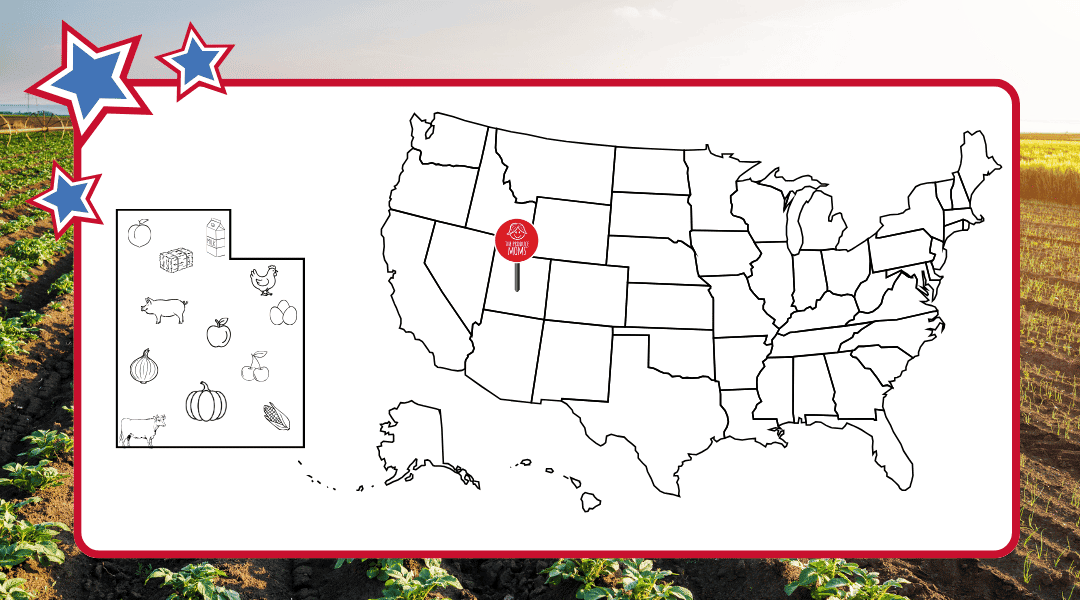
- Tart Cherries: Utah is a powerhouse in national fruit production, consistently ranking #2 in the entire United States (behind Michigan) for tart cherry production. The state harvests between 25 and 50+ million pounds of tart cherries in strong yield years. It generates several million dollars in annual farm-gate value depending on market pricing.
- Peaches: Utah orchards produce millions of pounds of fresh peaches annually, spanning over 1,000 cultivated acres. They are a staple of the intermountain regional fresh-fruit market and support local farm stands, agritourism, and regional supermarket distribution networks.
- Apples: Apples have around 1,100 to 1,300 acres dedicated to cultivation. Annual production typically reaches 15 to 23 million pounds.
Top Vegetables
- Dry Onions: Dry onions represent Utah’s primary commercial open-field vegetable crop. Utah growers yield tens of thousands of tons of yellow, red, and white storage onions annually. Utah dry onions are cured and packaged for long-distance transport, integrating local farms into the national commercial grocery and restaurant supply chain.
- Sweet Corn: Sweet corn is one of Utah’s most widely cultivated fresh produce crops by acreage, filling thousands of acres across the state’s irrigated valleys. It serves as a major source of summer seasonal income for diversified family farms and fuels roadside stands and regional retail grocers across the Intermountain West.
- Pumpkins: Pumpkins play a dual role in the state’s agriculture. They provide valuable rotational crop utility for soil health. They also generate substantial revenue through autumn agritourism (fall festivals, corn mazes, and pumpkin patches) along the urban-rural fringe.
Visit our Produce Directory and learn how to Select, Store and Serve these fruits & vegetables.
About 50 States of Agriculture
In celebration of 250 years of the United States, The Produce Moms is proud to present 50 States of Agriculture. This is an educational and free resource that celebrates the bounty of America. We utilized USDA and State Department of Agriculture data (Utah) for the content in this series.
Agriculture is the foundation of freedom. Food security is national security. This content series is a celebration of United States culture and the hard-working farmers who feed, fuel & clothe our nation and the world.
Visit another state from our 50 States of Agriculture.