Rhode Island Agriculture

Nov 02, 2026
This post may contain affiliate links. Please read our disclosure policy.
Rhode Island may cover the smallest geographic area in the nation, but its rich agricultural legacy plays a big role in its identity. Indigenous tribes first cultivated crops such as corn, beans, and squash before European settlement. During the 17th and 18th centuries, colonial farmers expanded this land use into large-scale estates.
Farmers in this coastal area raised high-quality dairy cattle, sheep, and world-renowned Narragansett Pacer horses. They exported wool and dairy products across North America and the Caribbean. Rhode Island also left a lasting mark on American poultry production by developing the iconic Rhode Island Red chicken breed in 1854. This helped transform poultry raising into a major national industry.
As the Industrial Revolution reshaped New England throughout the 19th and early 20th centuries, many workers shifted away from traditional livestock and grain farming toward mill work. Local farmers responded by adapting their focus to feed growing urban populations.
Agriculture transitioned heavily toward fresh milk, poultry, orchard fruits, and turfgrass production. While total farmland declined as cities and suburbs expanded, smaller family-operated farms stepped in to meet regional demand for fresh food.
Today, agriculture in the Ocean State thrives by focusing on high-value products and direct-to-consumer sales. Farmland covers roughly 10% of the state’s total land. It spans about 60,000 acres across around 1,000 active farms.
Modern Rhode Island farmers also lead the region in farm-to-table initiatives. Over a quarter of the state’s farms sell products directly to consumers through farm stands, farmers’ markets, and community-supported agriculture (CSA) programs. Coastal waters play an equally vital role, with a bustling aquaculture industry harvesting millions of oysters and clams each year.
About the Rhode Island Department of Environmental Management
The Rhode Island Department of Environmental Management (DEM) operates through several bureaus to protect the state’s natural resources. Within the Natural Resources Bureau, the Division of Agriculture and Forest Environment plays a vital role in supporting the state’s green economy. Its primary mission is to sustain, promote, and enhance Rhode Island’s agricultural viability and forest health today and for future generations.
To achieve this mission, the division manages a wide range of programs that help local farms thrive. Staff oversee agricultural business development, administer grant opportunities like the Local Agriculture and Seafood Act (LASA) grants, and manage consumer-facing initiatives like the popular “RI Grown” marketing campaign. They also protect the food supply and environment by providing nursery licensing, organic certification, pesticide regulation, produce safety education, and animal health monitoring.
At the same time, the division cares for Rhode Island’s woodlands and natural spaces. Teams manage wildfire prevention,oversee urban and community forestry programs, protect core forests, and monitor tree health against invasive pests like the spotted lanternfly and emerald ash borer. By balancing active support for local farmers with dedicated land and forest stewardship, the division ensures that Rhode Island’s agricultural and natural heritage remains strong.
Learn more at https://dem.ri.gov/natural-resources-bureau/agriculture-and-forest-environment/agriculture
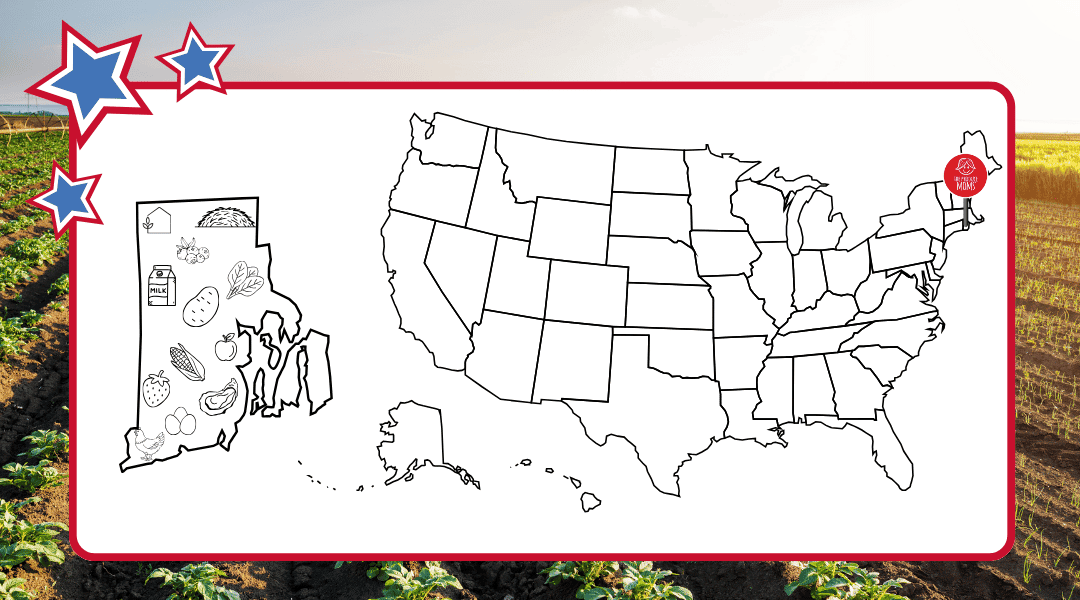
Top 5 Agricultural Commodities in Rhode Island
Despite its compact geographic size, Rhode Island boasts a remarkably diverse and vibrant agricultural economy. The state’s small footprint has led local producers to specialize, focusing on high-value, direct-to-market commodities rather than massive acreage. Rhode Island’s agricultural sector generates over $90 million in market value annually. The state has 1,000-plus farms playing a crucial role in regional food security, land conservation, and coastal economic stability.
Greenhouse & Nursery Products
This dominates the state’s crop sales. Local nurseries produce high-end ornamental plants, turfgrass, trees, and floriculture crops that fuel landscaping and urban development across the broader Northeast. While this commodity primarily stays regional due to shipping limitations for live plants, Rhode Island’s sod and turfgrass farms play a major role in supplying athletic fields, golf courses, and commercial properties throughout New England. Greenhouse and nursery products generate more than half of Rhode Island’s total crop market value. It is the financial backbone of Ocean State agriculture.
Seafood & Aquaculture
Mostly farmed shellfish like eastern oysters represent another major giant of the state’s agricultural profile. Local shellfishermen and coastal farmers harvest millions of high-quality oysters and hard clams each year. Nationally, Rhode Island oysters are highly prized in raw bars from Boston to New York and beyond. This cements the state’s reputation as a premium seafood hub. Rhode Island aquaculturists raise and harvest over 8 million oysters annually across roughly 60 active aquaculture operations. It has turned local marine waters into one of the most profitable growing areas per acre in the nation.
Dairy Products & Milk
Dairy products and milk also remain a cornerstone of Rhode Island’s agricultural history and current output. While the overall number of traditional dairy farms has consolidated over time, local dairies supply fresh fluid milk, specialty cheeses, and small-batch ice creams directly to surrounding communities and regional markets. On a national level, Rhode Island dairy contributes to the tightly integrated New England milk pool. This ensures regional grocery supply chains stay stocked during peak demand seasons.
Poultry & Egg
It is anchored by a rich heritage that directly shaped the national poultry industry. Local egg producers supply fresh eggs to nearby restaurants, farmers’ markets, and institutional buyers. It helps strengthen local food resilience. Nationally, Rhode Island’s biggest agricultural claim to fame is the Rhode Island Red chicken, developed in Little Compton in 1854. This hardy, world-famous breed revolutionized poultry farming across the United States. It serves as the baseline for dual-purpose egg and meat production. Plus, it remains the official state bird today.
Hay & Forage Crops
Though often overlooked by consumers, hay and forage crops serve as the vital backbone supporting Rhode Island’s livestock, dairy, and equestrian industries. Farmers across the state harvest thousands of tons of alfalfa and mixed grass hay annually. It is valued at over $2 million. Locally, hay production keeps coastal fields active and open. Plus, it preserves historic agricultural land that might otherwise face residential development. Nationally, while Rhode Island hay is consumed locally within New England, its high quality helps support the region’s elite equine sector, supplying stables, riding academies, and horse farms throughout the Northeast.
Fruits and Vegetables from Rhode Island
Rhode Island’s compact size and maritime climate shape a unique and thriving fruit and vegetable sector. Local farmers focus on fresh, high-demand produce rather than massive monocultures. While large commercial farms dominate the American Midwest, Ocean State growers make a significant regional impact. They suppy farm stands, farmers’ markets, and local grocery stores with premium seasonal harvests. Together, specialized fruit orchards and fresh market vegetable operations contribute millions of dollars to the state’s agricultural economy. They also help preserve open green spaces and power the vibrant local agritourism movement.
Top Fruits
- Apples: Apples stand undisputed as the leading fruit crop in Rhode Island. They thrive in the state’s temperate coastal climate and rolling hills. Orchards span hundreds of bearing acres. Beyond wholesale and farm-stand sales, apples serve as the primary engine for Rhode Island’s autumn agritourism
- Strawberries: Strawberries represent the crown jewel of Rhode Island’s early summer harvest. They kick off the local agritourism season every June. Local berry farms cultivate acres of sweet, sun-ripened berries that sell out almost immediately at farm stands and through direct-to-consumer pick-your-own operations. Because fresh strawberries have a very short shelf life, Rhode Island’s growers hold a distinct advantage over out-of-state competitors. They deliver vine-ripened fruit straight from the field to local consumers within hours of picking.
- Blueberries: Local berry growers cultivate both highbush and lowbush varieties. Blueberry patches provide crucial summer farm revenue and support local biodiversity by welcoming pollinators. On an economic level, blueberries heavily boost the state’s direct-market agricultural sales.
Top Vegetables
- Sweet Corn: Sweet corn reigns as the most widely grown and economically significant vegetable crop in Rhode Island. It occupies hundreds of acres across the state. Because sweet corn loses its sugar content rapidly after harvest, local growers provide an unbeatable freshness advantage over produce shipped from distant states. Sweet corn is a staple at roadside stands and local farmers’ markets throughout July and August. Sweet corn consistently accounts for a major share of Rhode Island’s vegetable acreage. And it serves as a reliable cornerstone of summer farm revenue.
- Potatoes: Potatoes hold a deep-rooted historical and modern status in Rhode Island agriculture. Local farmers harvest substantial yields of chipping and table-stock potatoes each autumn. Today, potato farming remains one of the few large-scale row-crop operations still active in the state.
- Market Greens & Salad Crops: This rise is driven heavily by the rising demand for fresh, locally sourced food. Grown extensively in both open fields and protected hoop houses or greenhouses, leafy greens allow local farmers to extend the growing season from early spring well into late autumn. These crops feed the farm-to-table culinary scene. Economically, market greens provide high financial returns per square foot. This makes them an essential cash crop for small and mid-sized family farms navigating high land costs in the Ocean State.
Visit our Produce Directory and learn how to Select, Store and Serve these fruits & vegetables.
About 50 States of Agriculture
In celebration of 250 years of the United States, The Produce Moms is proud to present 50 States of Agriculture. This is an educational and free resource that celebrates the bounty of America. We utilized USDA and State Department of Agriculture data (Rhode Island) for the content in this series.
Agriculture is the foundation of freedom. Food security is national security. This content series is a celebration of United States culture and the hard-working farmers who feed, fuel & clothe our nation and the world.
Visit another state from our 50 States of Agriculture.