Nebraska Agriculture

Sep 21, 2026

This post may contain affiliate links. Please read our disclosure policy.
Like many states Indigenous nations nurtured Nebraska’s fertile soil long before European settlers arrived. They grew corn, beans, and squash along the river valleys. The passage of the Homestead Act of 1862 transformed the territory into a major farming frontier. Hundreds of thousands of families moved west to stake claims. They plowed up the tough native prairie sod to build farms. These early agricultural roots also sparked political history. When severe droughts, high railroad freight rates, and falling crop prices hit in the late 19th century, frustrated local farmers helped form the national Populist Movement to demand fair economic reforms.
Throughout the 20th century, innovation reshaped how Nebraskans worked the land. The mid-century invention of center-pivot irrigation allowed producers to tap into the massive Ogallala Aquifer beneath their feet. They turned dry western plains into lush crop fields.
Even when severe economic strain hit during the 1980s Farm Crisis, the state adapted. Nebraskans continuously embraced modern technology, efficient machinery, and soil conservation techniques to build a resilient food production system.
Today, agriculture powers Nebraska’s economy and feeds millions across the globe. Agriculture accounts for roughly one out of every four jobs in the state. Farmers and ranchers manage over 44 million acres. This covers nearly 90 percent of the state’s total land area. Known fittingly as the “Cornhusker State,” Nebraska consistently ranks among the top national producers of beef, corn, soybeans, and pork, while also serving as a major hub for green energy. It is the second-largest producer of ethanol in the United States.
About the Nebraska Department of Agriculture
The Nebraska Department of Agriculture (NDA) serves a dual purpose: encouraging and promoting the state’s agriculture industry through advocacy and education while uniformly enforcing regulatory statutes that protect consumers and resources. Driven by its core mission “to regulate industries as prescribed by statute, and to encourage and promote the interest of agriculture through advocacy and education,” the department works to help local farmers and ranchers remain profitable while ensuring safety, fairness, and opportunity across the state’s agricultural system.
To carry out its responsibilities, the NDA structures its work around three main focus areas:
- Ag Promotion and Development
- Animal and Plant Health Protection
- Food Safety and Consumer Protection.
Through agricultural promotion, the department expands domestic and international trade. They also support specialty crop growers and invest in youth outreach like the Nebraska Agricultural Youth Institute. Its health protection division monitors livestock for disease, certifies nursery stock, tracks invasive weeds, and oversees safe pesticide application.
Beyond supporting producers directly, the department plays a daily role in protecting everyday consumers across Nebraska. NDA staff, led by their Director, inspect dairy farms, retail food establishments, and mobile food vendors. They also operate certified laboratories to test feed, fertilizer, and food products. The agency also enforces weights and measures standards, so consumers get what they pay for at the grocery store and the gas station.
Learn more at https://nda.nebraska.gov/.
Top 5 Agricultural Commodities in Nebraska
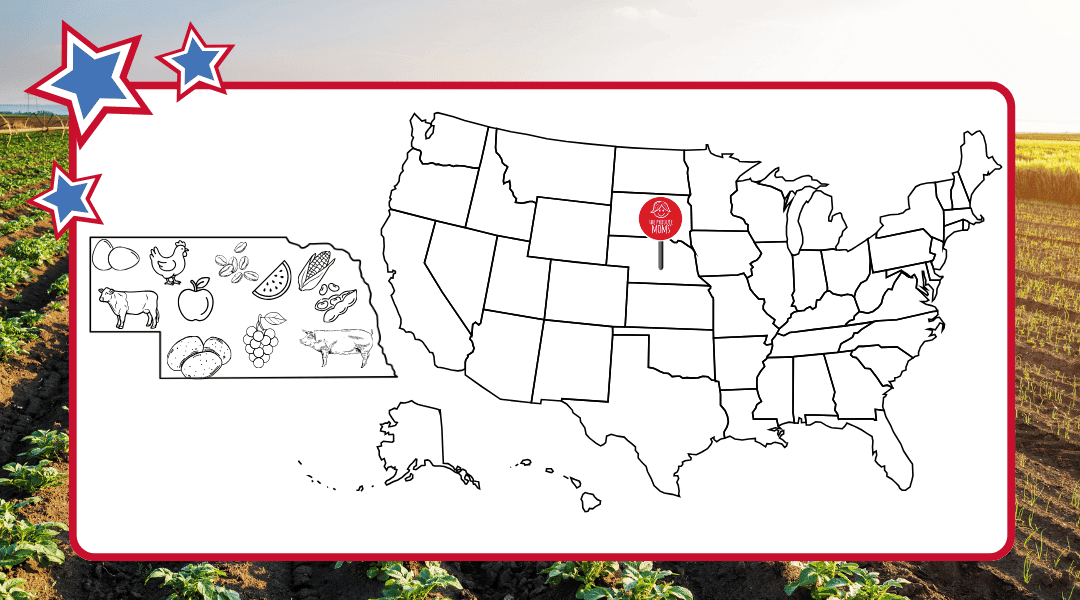
Known as the “Cornhusker State,” Nebraska is a central pillar of the United States agricultural heartland. It has over 44 million acres of farmland and rangeland. These acres span roughly 90% of the state’s total land area. Agriculture serves as Nebraska’s primary economic engine. It generates over $30 billion annually in farm commodities and billions more in global exports.
Cattles and Calves
Beef production is the undisputed leader of Nebraska agriculture. It represents over 40% of the state’s total agricultural market receipts. Cattle ranching dominates the Sandhills region, where vast, sub-irrigated grass ranges provide ideal conditions for grazing. Processing plants across the state employ thousands of residents in rural and urban communities alike. Nebraska consistently ranks #1 in commercial cattle slaughter and beef/veal exports. It ranks #2 in total cattle and calves on feed nationwide. It provides a substantial portion of the nation’s premium beef supply.
Corn
Corn is Nebraska’s largest crop commodity by both acreage and financial revenue. It drives both crop farming and livestock feeding. Corn fuels Nebraska’s livestock industry as feed while powering its biofuel sector. Nearly 35% of the state’s corn crop is converted into ethanol at Nebraska’s 24 operational biofuel plants, generating local jobs and renewable fuel. Nebraska ranks 3rd nationally in corn production, harvesting over 1.7 to 1.8 billion bushels of grain annually.
Soybeans
Soybeans rank as the state’s second-most valuable cash crop. It is grown primarily in crop rotation with corn to maintain soil health and nitrogen levels. Nebraska ranks among the top 5 states for soybean production and export value. It sends billions of dollars worth of soybeans to international markets such as China, Mexico, and Japan. In recent years, Nebraska has harvested over 300 million bushels of soybeans.
Hogs and Pigs
Pork production is a vital segment of Nebraska’s livestock sector. It is integrated closely with local grain production. Nebraska ranks 6th nationally in both hog inventory (over 3.6 million head) and commercial hog slaughter. It is a major contributor to the U.S. pork supply chain. Nebraska swine farmers utilize local corn and soybean meal to feed their livestock, creating a direct feedback loop between crop and livestock producers. Pork packing facilities provide thousands of processing jobs statewide.
Poultry and Eggs
While historically dominated by dairy and hay, Nebraska’s poultry sector, particularly broiler chickens and egg production, has grown rapidly to claim a top 5 commodity spot in sales volume. The state’s broiler industry expanded dramatically, growing from 6.7 million birds in 2017 to nearly 91 million head in recent census tallies. Nebraska also ranks among the top egg-producing states in the Midwest. Regional expansion in poultry processing has attracted major investments in Eastern Nebraska. This brings contract farming opportunities to local crop farmers. Dairy operations also maintain a steady economic baseline. It produces millions of pounds of milk annually.
Fruits and Vegetables from Nebraska
While Nebraska is globally famous for field crops like corn and soybeans, its diverse climate and extensive irrigation systems support a thriving specialty crop industry. Fruits and vegetables make up a vibrant sector of Nebraska’s local agricultural economy. It helps feed regional markets, drives agritourism, and contributes to national food chains.
Top Fruits
- Apples: Apples are Nebraska’s premier tree fruit commodity. Concentrated heavily along the Missouri River valley in southeastern Nebraska, apple orchards drive millions of dollars in agritourism. The state produces popular commercial varieties and supports fresh markets, cider production, and seasonal autumn festivals.
- Grapes (Wine Grapes): Nebraska’s viticulture industry has expanded steadily. It is powered by cold-hardy hybrid grape cultivars that thrive in Midwest winters. The state hosts over 30 farm wineries, making grapes a major driver of local tourism, rural hospitality, and value-added agricultural income.
- Watermelons & Melons: They are grown predominantly in the sandy soils of central and western Nebraska. Watermelons and muskmelons (cantaloupes) flourish under bright summer sun with targeted drip irrigation. They supply local farm stands, grocery stores, and farmers’ markets across the state throughout late summer.
Top Vegetables
- Potatoes: Potatoes are Nebraska’s most economically valuable vegetable crop by acreage and volume. The Panhandle and central regions produce vast quantities of both fresh-market potatoes and processing potatoes destined to become commercial potato chips and frozen products nationwide. Nebraska consistently ranks among the top potato-producing states in the U.S.
- Dry Edible Beans (Pinto, Great Northern, Navy): Botanically a pulse crop, dry edible beans are classified under vegetable specialty crops and represent one of Nebraska’s biggest agricultural flexes. Nebraska ranks #1 nationally in Great Northern bean production and #2 nationally in total dry bean production, supplying major national food brands and international export markets.
- Sweet Corn: Unlike field corn meant for livestock or ethanol, sweet corn is grown across Nebraska specifically for direct human consumption. It is a staple of local direct-to-consumer farming, powering summer roadside stands and farm shares (CSAs) while anchoring community summer festivals statewide.
Visit our Produce Directory and learn how to Select, Store and Serve these fruits & vegetables.
About 50 States of Agriculture
In celebration of 250 years of the United States, The Produce Moms is proud to present 50 States of Agriculture. This is an educational and free resource that celebrates the bounty of America. We utilized USDA and State Department of Agriculture data (Nebraska) for the content in this series.
Agriculture is the foundation of freedom. Food security is national security. This content series is a celebration of United States culture and the hard-working farmers who feed, fuel & clothe our nation and the world.
Visit another state from our 50 States of Agriculture.