Kansas Agriculture

Aug 07, 2026

This post may contain affiliate links. Please read our disclosure policy.
Long before Kansas earned its title as the “Wheat State,” its agricultural identity was shaped by open prairie and sweeping change. Indigenous communities originally cultivated crops like corn and squash along river valleys. However, the state’s modern farming story truly accelerated in the late 19th century.
A defining turning point arrived in the 1870s. Russian Mennonite immigrants brought Turkey Red winter wheat seeds to the region. This hardy grain thrived in the unpredictable Plains climate. This laid the foundation for Kansas to become an agricultural powerhouse. By the 1930s, however, over-plowing and severe drought triggered the devastating Dust Bowl. This forced a complete revolution in land stewardship. This crisis gave birth to modern soil conservation practices, including crop rotation and terrace farming. This saved the land and reshaped American farming forever.
Today, agriculture remains the heartbeat of the Kansas economy, driving over $80 billion in annual economic impact. Farmland covers nearly 90% of the state’s total land area, roughly 45 million acres dedicated to crops and livestock.
Rather than relying solely on traditional methods, modern Kansas farms balance deep-rooted traditions with high-tech innovation. Satellite-guided tractors, precision irrigation, and soil sensors allow today’s growers to produce more food with fewer resources. This helps to ensure the state remains a vital source of food for communities around the world.
About the Kansas Department of Agriculture
As America’s first state department of agriculture, established in 1872, the Kansas Department of Agriculture (KDA) serves as a dedicated advocate and regulatory body for the state’s vital agricultural sector.
The agency supports the entire continuum of Kansas agriculture, from crop producers and livestock ranchers to food processors, agribusinesses, and local farmers markets. The department is led and overseen by an appointed Secretary.
KDA balances its dual mission of industry advocacy and regulatory oversight through several core functions:
- Economic Development & Growth: Promotes Kansas agricultural products domestically and internationally, recruits new agribusinesses to the state, and assists existing operations with expansion and succession planning.
- Regulatory & Consumer Protection: Administers statutory programs covering food safety, meat and poultry inspection, grain warehousing, pesticide use, and the accuracy of commercial weights and measures.
- Water Resources & Environmental Stewardship: Manages state water rights through the Division of Water Resources, ensuring fair distribution while promoting conservation and soil health initiatives.
- Animal Health & Biosecurity: Oversees livestock health programs, disease surveillance, and trace-back capabilities to safeguard the state’s multi-billion-dollar livestock industry.
They prioritize clear communication and education over compliance hurdles. KDA also ensures businesses understand applicable state laws while actively working to minimize unnecessary regulatory burdens, keeping Kansas agriculture competitive and resilient.
Learn more at https://www.agriculture.ks.gov/.
Top 5 Agricultural Commodities in Kansas
Kansas generates around $23 billion in agricultural cash receipts annually. This accounts for nearly 5% of total U.S. agricultural production. The state’s massive expanses of prairie and fertile topsoil power a strong farming and ranching industry.
Cattle and Calves
Cattle production dominates Kansas agriculture. It generates roughly 60% ($14+ billion) of the state’s total agricultural cash receipts. It anchors rural economies across the state from massive feedlot operations to processing plants. Kansas consistently ranks #3 nationally in total cattle inventory. It is a premier supplier of beef to grocery stores, restaurants, and export markets globally.
Corn
Corn is Kansas’s top cash crop. It generates nearly $3 billion annually. Corn serves as the primary feed fuel for the state’s vast livestock herds and feeds an extensive network of ethanol bio-refineries. Kansas consistently ranks among the top 10 corn-producing states, yielding over 900 million bushels per year.
Wheat
Deeply tied to Kansas culture and history, winter wheat is planted in the autumn, dormant during winter, and harvested in early summer. Kansas leads the entire United States in hard red winter wheat production, growing over 20–25% of the nation’s winter wheat crop. The state’s wheat production earned it two nicknames – “Wheat State” or the “Breadbasket of the World.”
Soybeans
Soybeans generate around $1.5 billion annually. This makes them a crucial rotation crop for Kansas producers. It is grown mostly in eastern and central Kansas where rainfall is higher. They help provide high-protein meals for livestock feed and oil for processing. Kansas contributes significantly to U.S. soybean exports.
Grain Sorghum (Milo)
While not the leader in total cash receipts, Kansas is the undisputed national leader in grain sorghum production. Kansas grows over 50% to 60% of all grain sorghum produced in the entire United States. Grain sorghum is exceptionally drought-tolerant, which makes it an essential crop for drier western Kansas acres.
Fruits and Vegetables from Kansas
Beyond the endless horizons of golden wheat and row crops, Kansas nurtures a vibrant specialty agriculture sector. It supplies fresh produce directly to local communities. From historic orchards and river-valley vineyards to high-tunnel vegetable farms, the state’s fruits and vegetables anchor a growing network of farmers markets, farm-to-table restaurants, and agritourism destinations.
Top Fruits
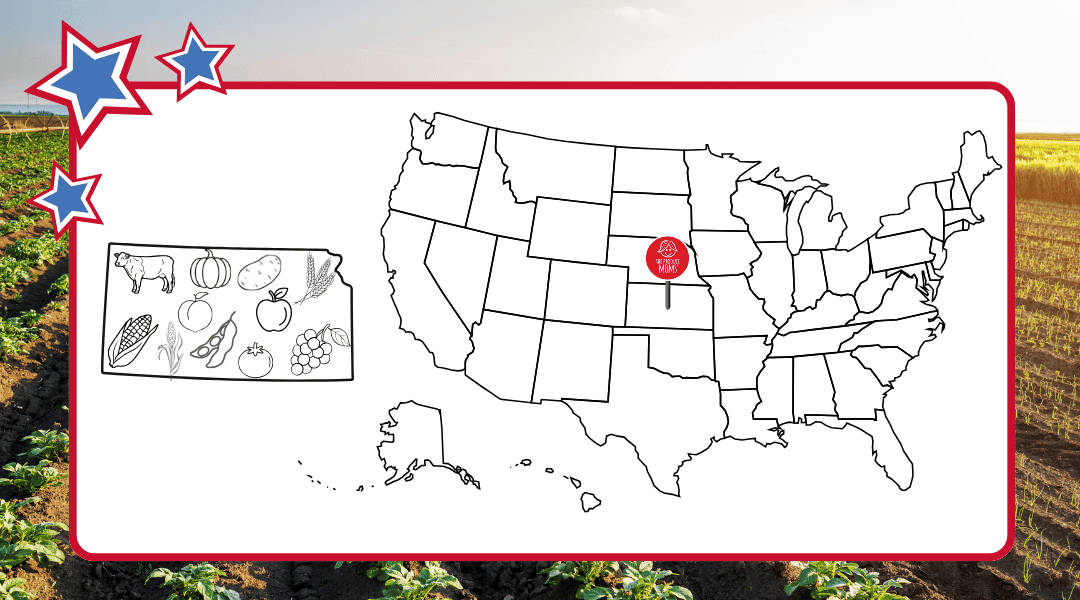
- Apples: Apples are the most widely grown tree fruit in Kansas. It is backed by a rich historical tradition and a thriving modern agritourism industry. Orchards are concentrated heavily in eastern and south-central Kansas.
- Peaches: While peaches account for a smaller total acreage than major row crops, they serve as a high-value anchor for local specialty agriculture across Kansas. Commercial orchards, historically concentrated around river basins and south-central towns, generate significant revenue through direct-to-consumer farm stands, pick-your-own tourism, and regional grocery partnerships. Additionally, these orchards diversify farm income while bolstering local rural economies through seasonal employment and seasonal agritourism events.
- Wine Grapes: Driven by a booming local viticulture industry, grapes have become one of Kansas’s most commercially valuable fruit crops. Kansas is home to dozens of commercial wineries and hundreds of vineyard acres. Farm wineries contribute millions to state tourism, hospitality, and rural business diversification.
Top Vegetables
- Potatoes & Sweet Potatoes: Potatoes and sweet potatoes are among the highest-volume root crops produced in Kansas soil. Commercial potato farming thrives in areas with light, sandy soils and irrigation availability. While red and white potatoes supply commercial markets, sweet potatoes are experiencing a resurgence on small-to-midsize farms due to surging consumer health demand.
- Pumpkins & Winter Squash: Pumpkins represent one of the most profitable specialty crops per acre for Kansas produce growers. Driven by fall agritourism, pumpkin patches across Kansas generate substantial revenue. Pumpkins thrive in Kansas’s hot summer sun and well-drained soils, though growers monitor carefully for pests like squash bugs.
- Tomatoes: Tomatoes are the single most popular vegetable crop grown by market gardeners, commercial produce growers, and high-tunnel operators across Kansas. To extend the relatively short Plains growing season and protect crops from extreme summer heat and hail, many Kansas growers utilize high tunnels (unheated greenhouses).
Visit our Produce Directory and learn how to Select, Store and Serve these fruits & vegetables.
About 50 States of Agriculture
In celebration of 250 years of the United States, The Produce Moms is proud to present 50 States of Agriculture. This is an educational and free resource that celebrates the bounty of America. We utilized USDA and State Department of Agriculture data (Kansas) for the content in this series.
Agriculture is the foundation of freedom. Food security is national security. This content series is a celebration of United States culture and the hard-working farmers who feed, fuel & clothe our nation and the world.
Visit another state from our 50 States of Agriculture.