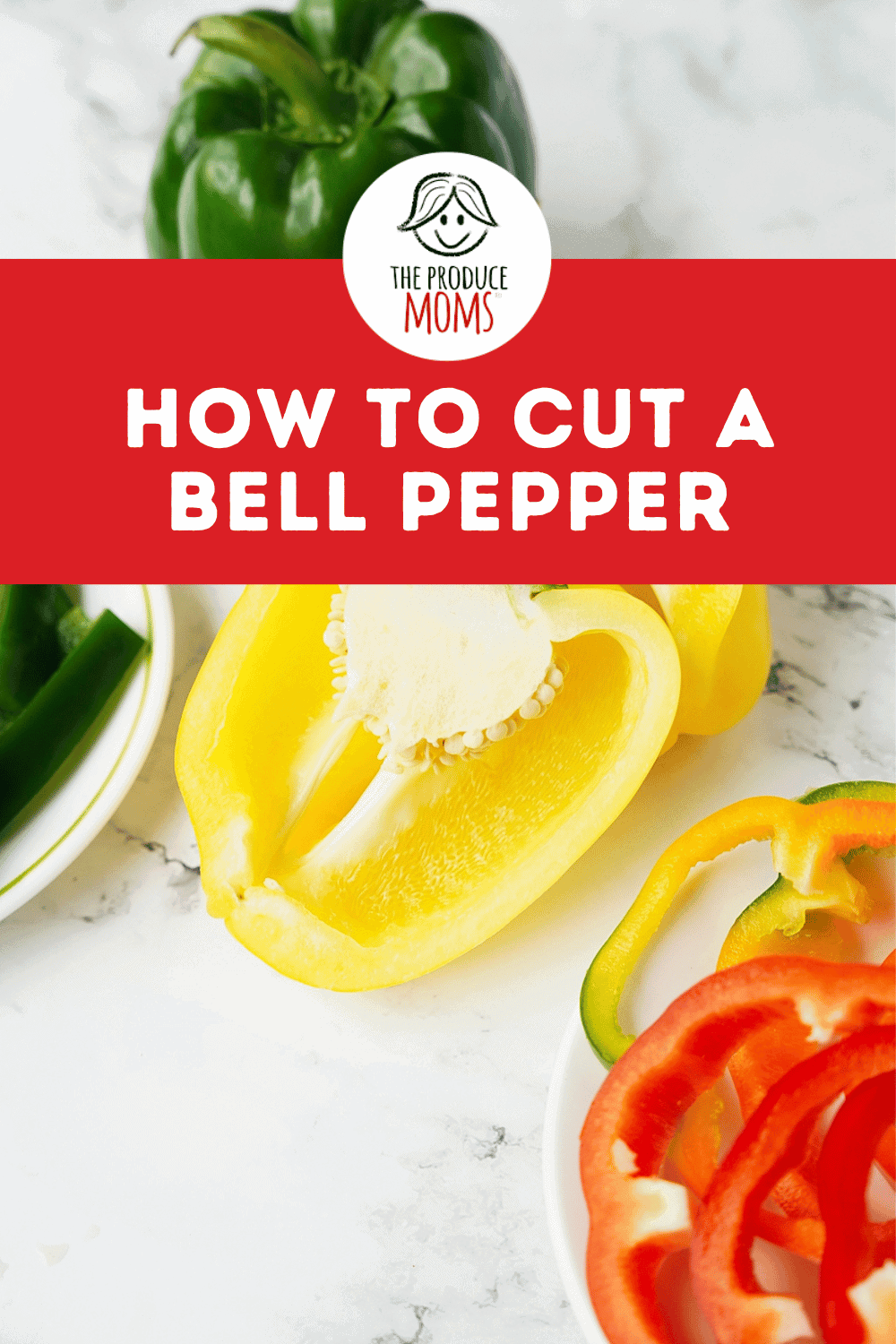
How To Cut a Bell Pepper

Mar 19, 2026
This post may contain affiliate links. Please read our disclosure policy.
Whether you’re prepping for a weeknight stir-fry or a colorful veggie tray, knowing how to cut a bell pepper efficiently is a foundational kitchen skill. At The Produce Moms, we’re all about making fresh produce easy and accessible.
In this guide, we’ll show you our favorite “no-mess” method to remove the seeds, plus how to dice, slice, and create perfect pepper rings.
Bell Pepper Prep Frequently Asked Questions
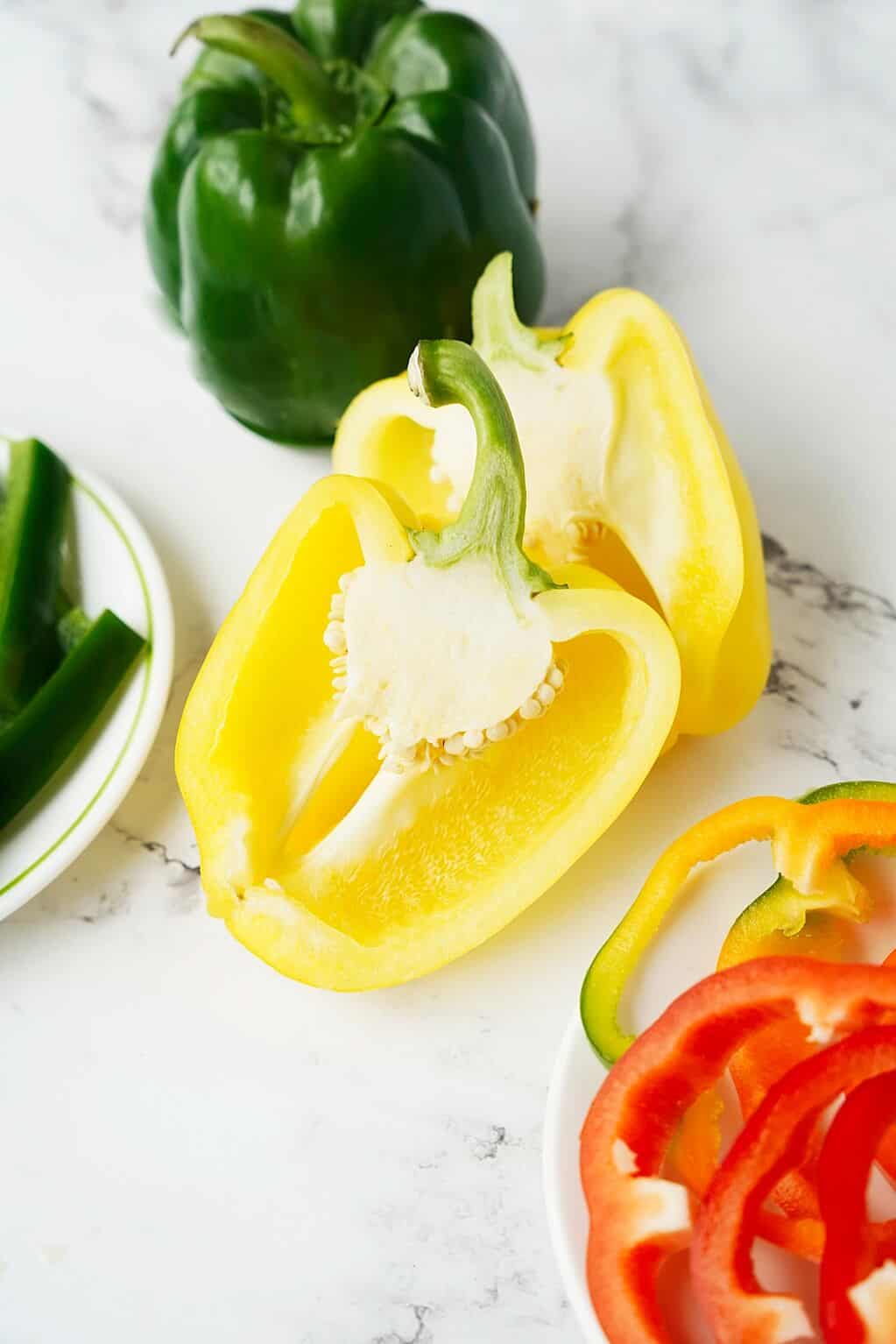
Do you need to remove the white membrane?
While the white ribs (pith) are edible, they can be slightly bitter and have a spongy texture. For the best flavor and presentation, we recommend trimming them away.
How do I store cut bell peppers?
Store sliced or diced peppers in an airtight container in the refrigerator for up to 5-7 days. To keep them extra crisp, place a damp paper towel at the bottom of the container.
Can you freeze cut peppers?
Yes! Bell peppers freeze beautifully. Flash-freeze diced peppers on a baking sheet for an hour before transferring them to a freezer bag. They can stay fresh for up to 6 months, perfect for tossing into hot dishes like chili or soup!
The Secret to a Seed-Free Cutting Board
The biggest complaint about cutting peppers? Seeds everywhere! To avoid the mess, the key is to cut the “walls” away from the core rather than cutting through the center.
Here’s what you’ll need to cut a bell pepper:
- Water
- Clean cloth or paper towel
- Bell pepper
- Chef’s knife
- Cutting board
- Paring knife (optional)
Cutting a Bell Pepper: The Standard Method (Step-by-Step)
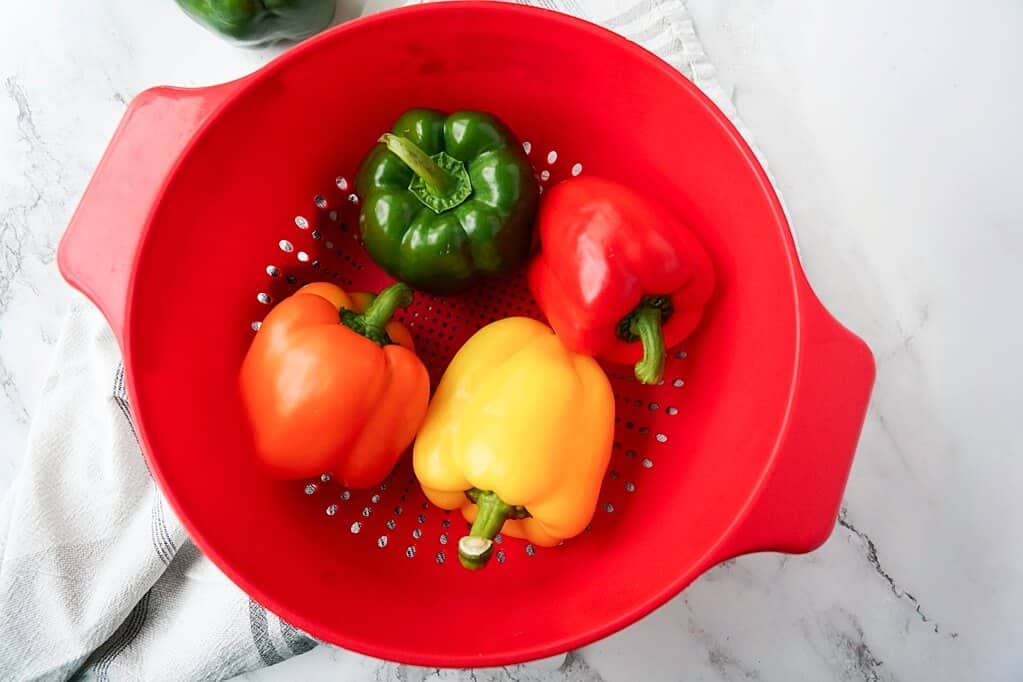
Step 1: Begin by washing and drying the bell pepper.
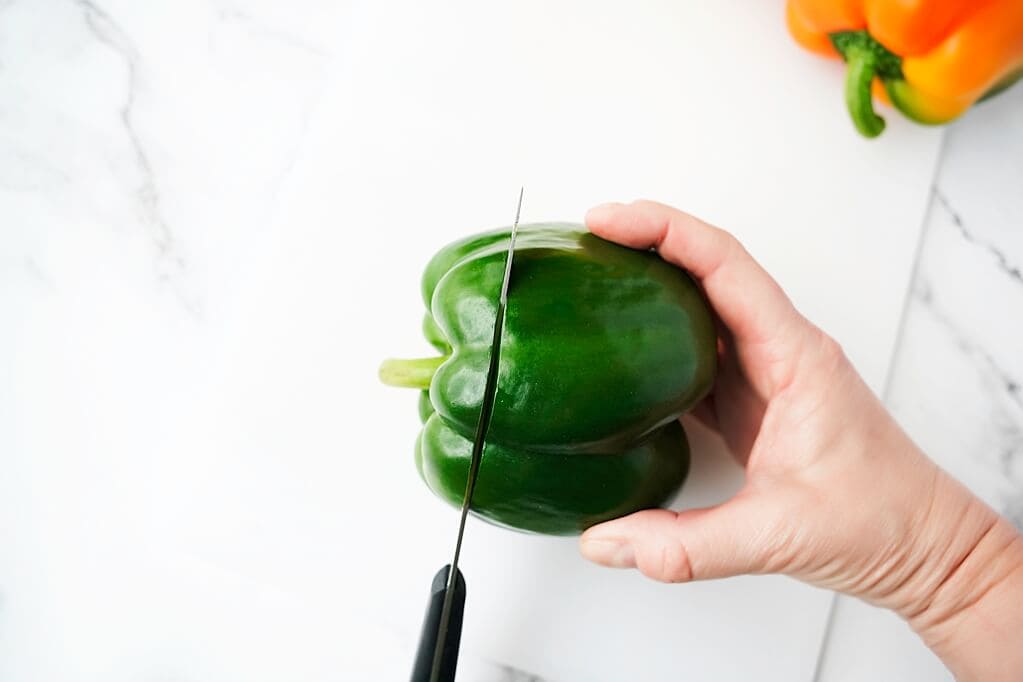
Step 2: In the center of the cutting board, lay the pepper on its side with the stem facing your knife-wielding hand. Cut off the top of the bell pepper just below the curve under the stem and expose the rib and seeds inside the pepper.
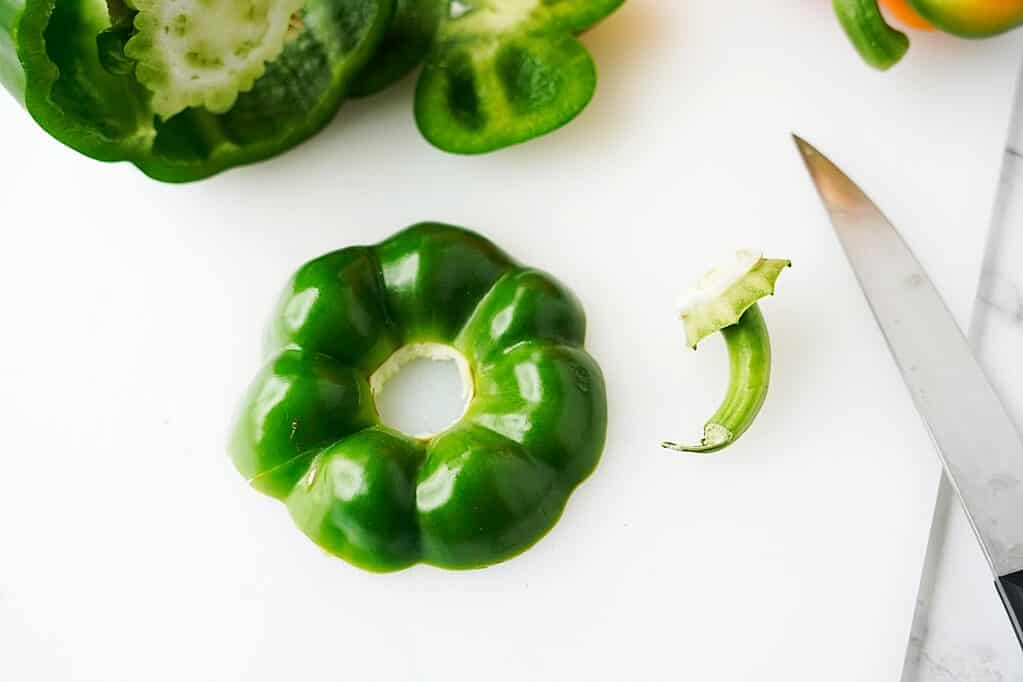
Step 3: Pop the stem out of the top portion and discard it. Set the leftover pepper aside to be cut up later. Slice off the other end of the pepper, just below where it curves, and set it aside.
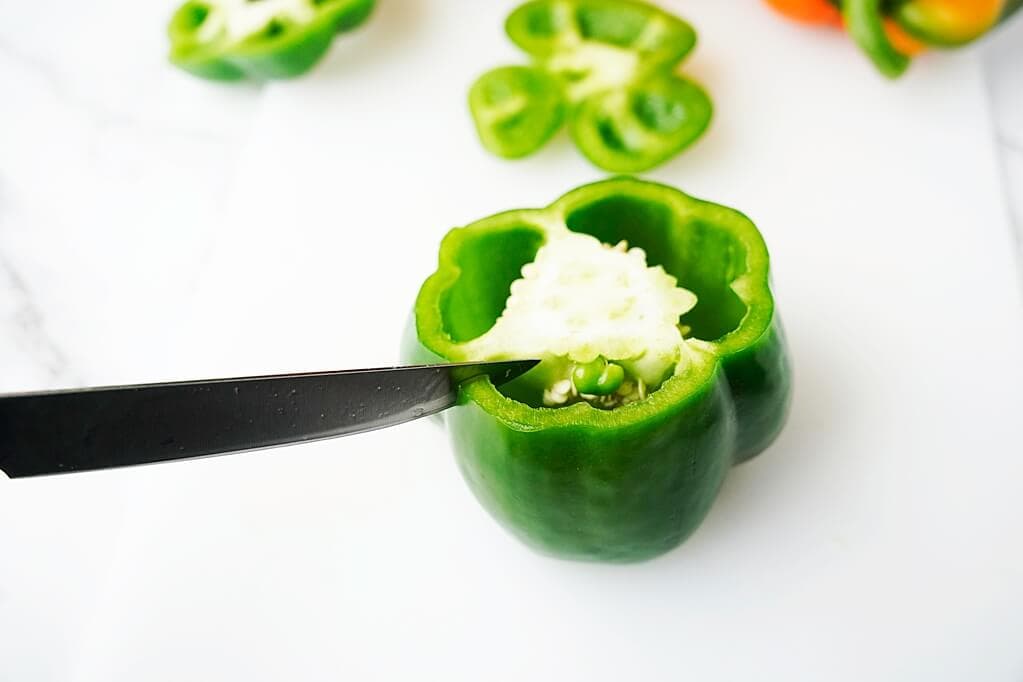
Step 4: Set the pepper upright on one end and use the tip of your blade to make one vertical slice on the side closest to you to open the pepper. Turn the pepper on its side and cut along the inside, removing the seeds and thin, whitish ribs. If the ribs do not come out easily, use a pairing knife to remove them.
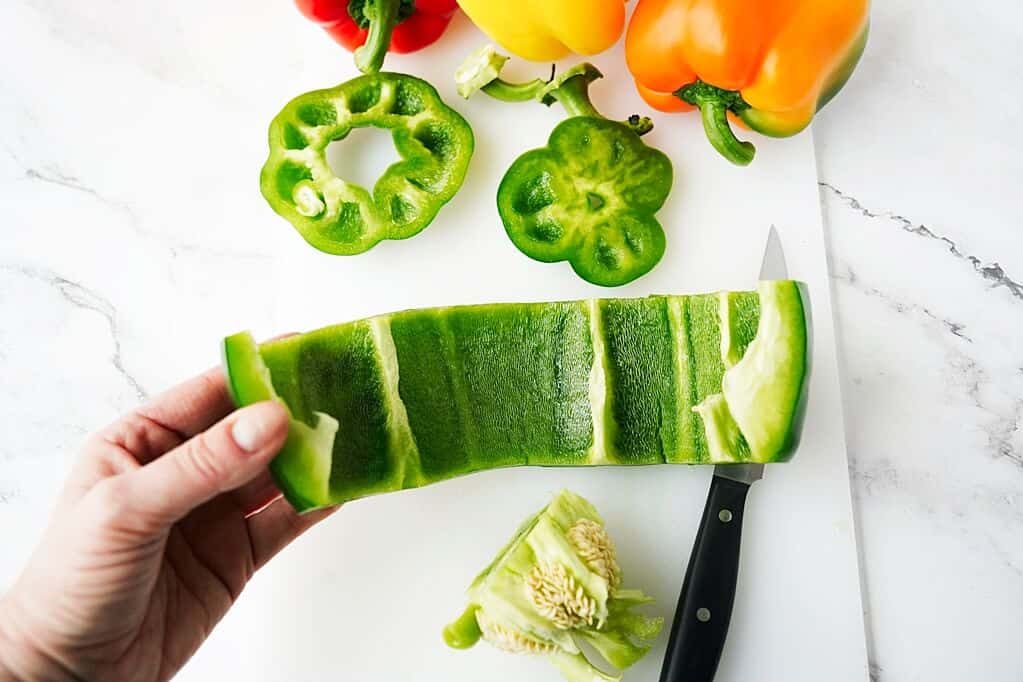
Step 5: Finally, flatten the now clean pepper skin-side down onto the cutting board. You can now slice it anyway you want.
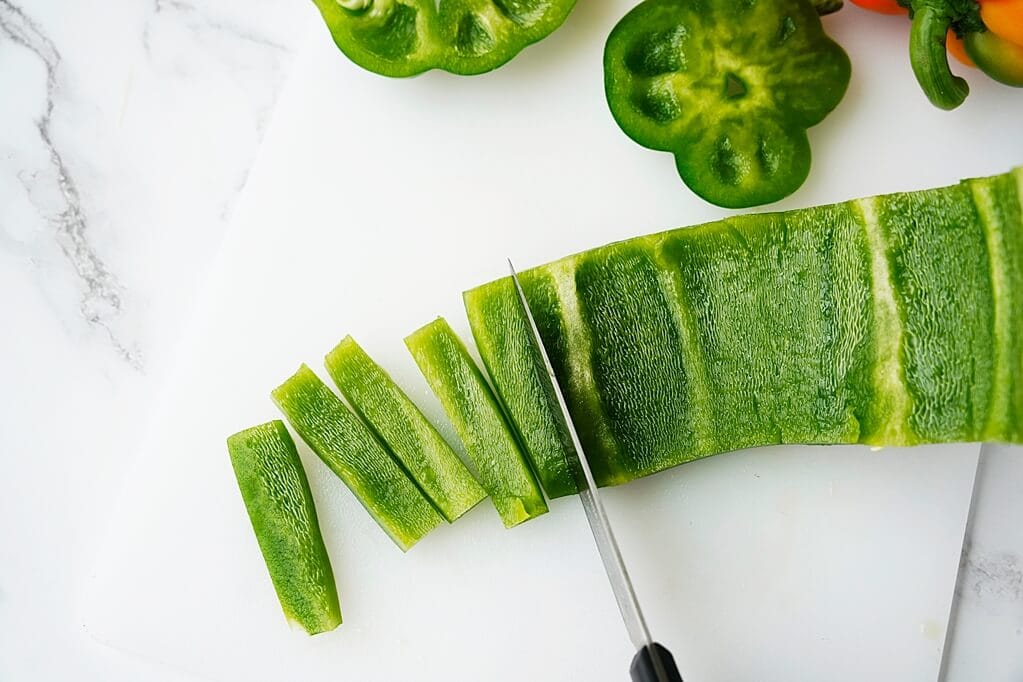
Step 6: Cut into sticks. If you need to dice, stack a few sticks and cut into desired size.
How To Cut Pepper Rings
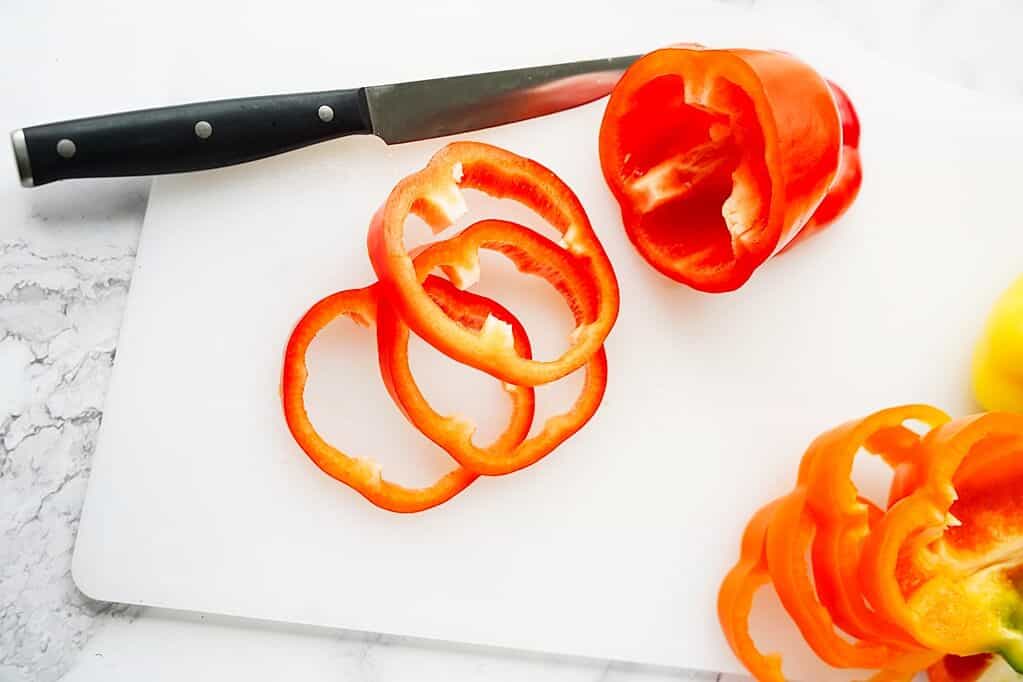
The best choice for burgers, sandwiches, or “egg-in-a-hole” breakfasts.
- Instead of unrolling the pepper, trim the top and bottom.
- Use a spoon to scoop out the seeds and white membranes from the center.
- Lay the hollow pepper on its side and slice crosswise into rings.
Prepping for Stuffed Peppers
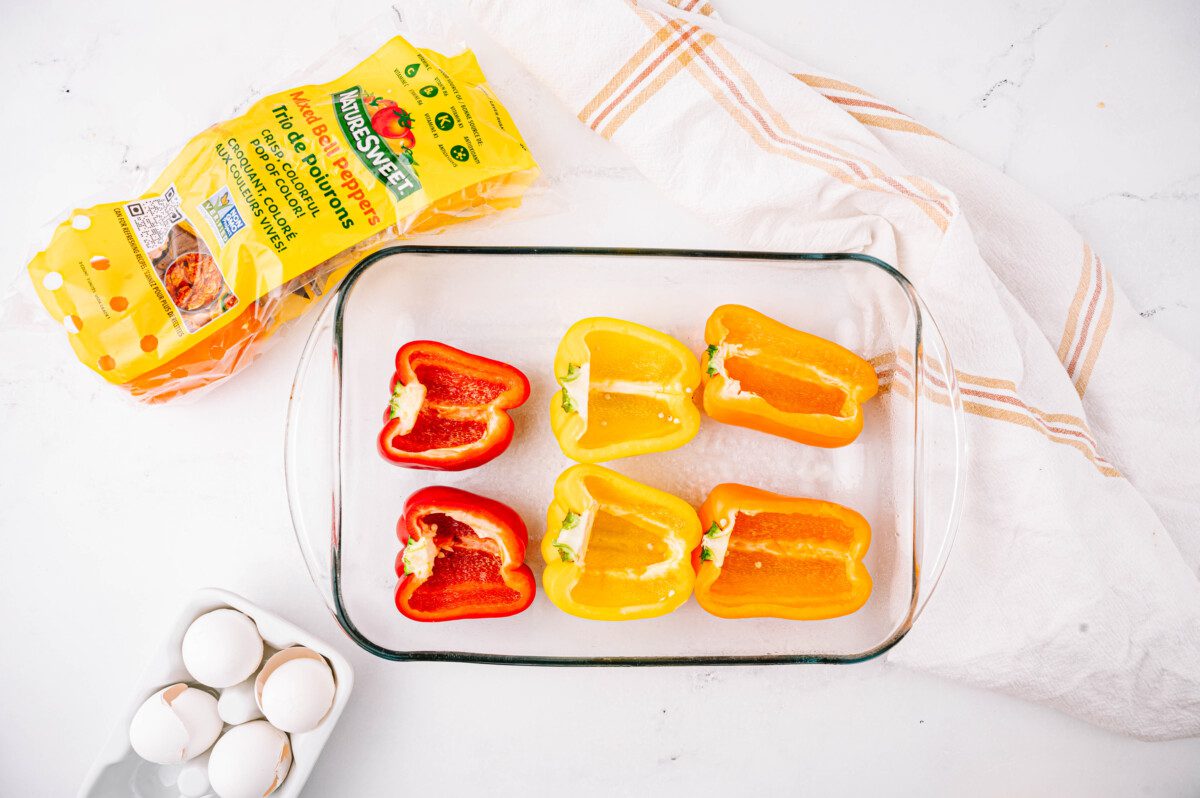
- Cut the top off (about 1/2 inch down).
- Remove the seeds and ribs with a spoon, leaving the “bowl” of the pepper intact.
- Dice the edible parts of the “lid” to include in your stuffing mixture!
Ways To Enjoy Bell Peppers
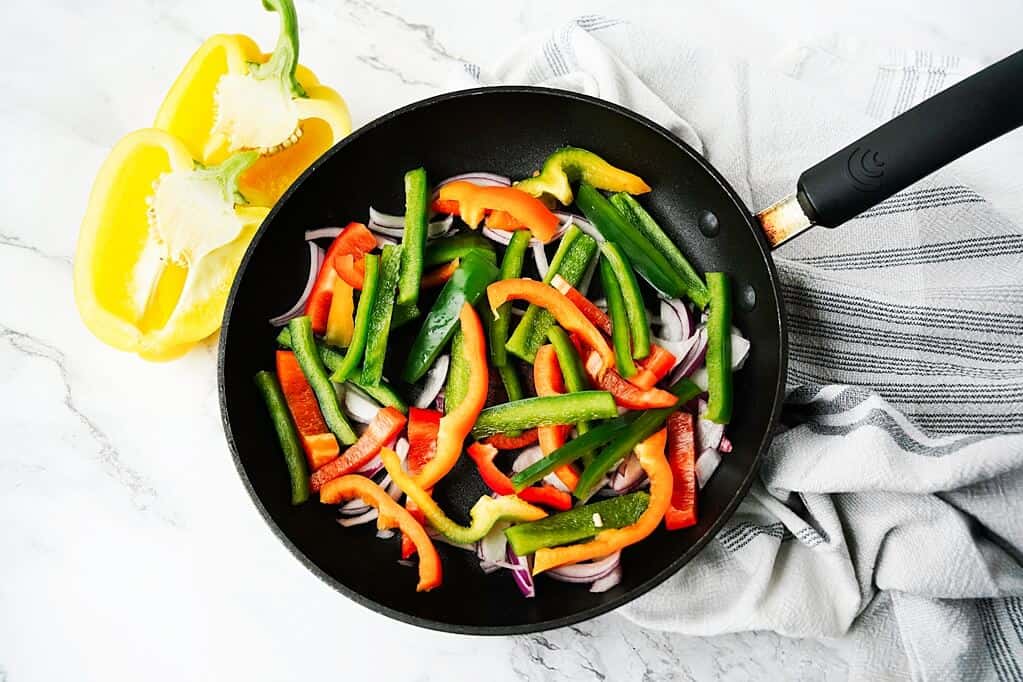
Bell peppers are the “MVPs” of the produce aisle because they’re just as good raw and crunchy as they are charred and smoky.
Raw & Crunchy
Since bell peppers are packed with Vitamin C, eating them raw preserves those heat-sensitive nutrients.
- The Ultimate Dipper: Slice them into wide “scoops” for hummus, guacamole, or homemade ranch.
- The “Bell Pepper Boat”: Use peppers or large halves as a low-carb vessel for potato salad, chicken salad, or pimento cheese.
- Chopped Salads: Fine-dice them into a “cowboy caviar” with black beans, corn, and lime juice.
Quick & Easy Sautéed
- Fajita Night: Sauté with onions, cumin, and chili powder for a 10-minute dinner. Try our Green Papaya Fajita recipe.
- The “Holy Trinity”: Follow the Cajun lead and sauté diced peppers with celery and onions as a base for gumbo or jambalaya.
- Breakfast Scrambles: Toss diced peppers into omelets, frittatas, or a classic Denver scramble.
- Sheet Pan Meals: Roast sliced peppers alongside sausages or chicken thighs for a one-pan cleanup. Try our Sheet Pan Smoky Lime Chicken Fajitas recipe.
Slow-Roasted & Sweet
Cooking peppers long and slow brings out their natural sugars.
- Classic Stuffed Peppers: Fill them with ground turkey, rice, and tomato sauce, then bake until tender. Or enjoy breakfast stuffed peppers.
- Roasted Red Pepper Pasta: Char the skins, peel them, and blend the flesh with garlic and cream for a vibrant pink pasta sauce.
- Homemade Antipasto: Marinate roasted strips in olive oil, garlic, and herbs to serve on a charcuterie board.
Unexpected & Fun
- Pepper “Egg-in-a-Hole”: Lay a thick pepper ring in a skillet and crack an egg into the center for a colorful, low-carb breakfast. We made a special Shamrock egg recipe on our IG page.
- Pickled Peppers: Quick-pickle slices in vinegar, sugar, and salt for a tangy topping on tacos or pizza.
- The “TikTok Sandwich”: Use two halves of a large bell pepper as the “bread” for a sandwich, filling the middle with deli meats and cream cheese. This is similar to our Apple, Ham and Cheese Breadless Sandwich recipe.
- Air Fried Pepper Chips: Toss thin slices in a little oil and sea salt, then air fry until the edges are crispy and caramelized.
The Produce Moms Tip
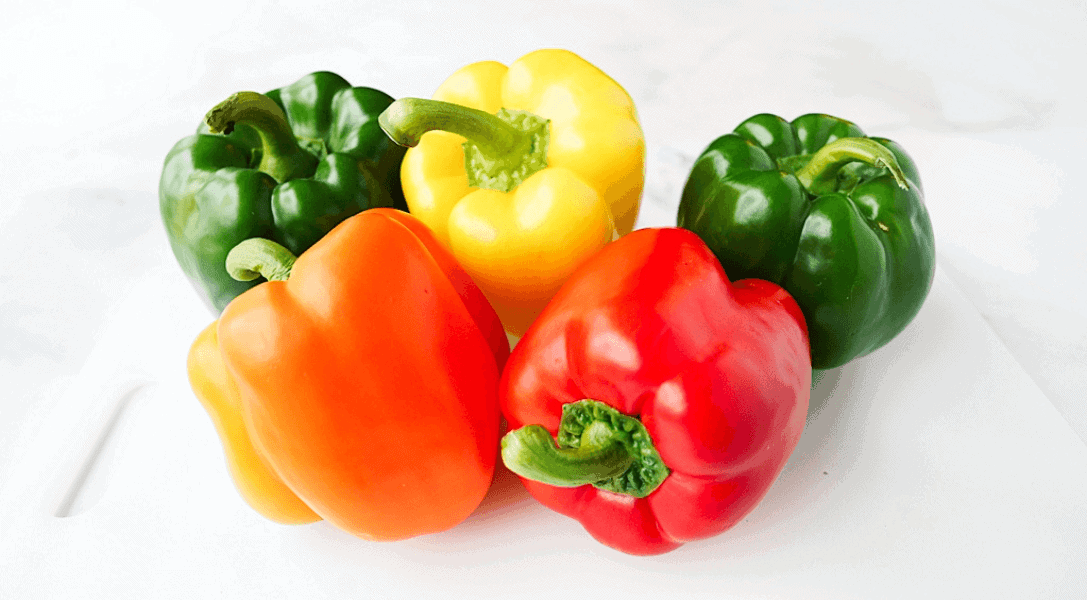
Does Color Matter?
- Green: Harvested early; slightly bitter and grassy. Best for savory dishes like chili.
- Red: Fully ripe; the sweetest and highest in Vitamin C. Best for roasting or eating raw.
- Orange/Yellow: Mild and fruity. Best for adding “pop” to salads and stir-fries.
No matter how you choose to enjoy them, bell peppers are a powerhouse ingredient that brings both vibrant color and essential nutrients to your plate. By mastering a few simple cutting techniques, you can cut down on prep time and open up a world of culinary possibilities.
Looking for more inspiration? Check us out on Pinterest or Instagram, and join our community of Produce Moms!