Oregon Agriculture

Oct 29, 2026

This post may contain affiliate links. Please read our disclosure policy.
Oregon’s rich agricultural story began in the mid-19th century. It began when early settlers traveled the Oregon Trail to claim fertile farmland in the Willamette Valley. These pioneer families quickly discovered that the region’s mild, wet climate and nutrient-dense soil yielded exceptional wheat, orchards, and livestock.
As regional trade expanded, growers transitioned from basic survival farming into specialized production. Over time, farmers across the state built an agricultural economy centered around family operations. Today, family members still own and manage roughly 97% of Oregon’s farms. This keeps deep historical roots alive across generations.
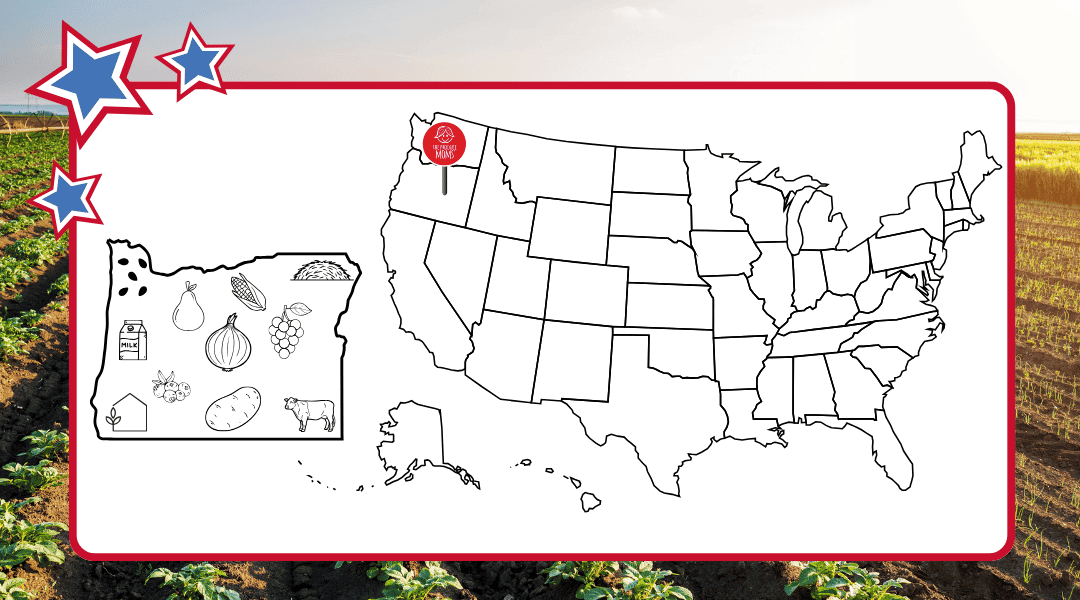
Modern Oregon stands out as a national leader in diverse, high-value crop production. The state produces over 220 distinct agricultural commodities. It generates around $5 billion to $6.7 billion in total market sales annually. Oregon farmers grow virtually 99% of the nation’s hazelnuts and lead the entire country in producing grass seed, Christmas trees,marionberries, and storage onions.
In recent decades, major movements toward sustainability and local food systems have reshaped Oregon’s farming landscape. Oregon ranks near the top of the nation for certified organic farm acreage. Farmers actively embrace eco-friendly soil management and water conservation. The state also boasts one of the highest proportions of female farm operators in the country, with women comprising 44% of all Oregon producers.
Through vibrant farmers markets, sustainable vineyard practices, and direct-to-consumer sales, Oregon agriculture continues to bridge the gap between rural producers and everyday shoppers.
About the Oregon Department of Agriculture
The Oregon Department of Agriculture (ODA) works to direct, protect, and promote agriculture while ensuring the sustainable use of the state’s natural resources. Its core mission focuses on supporting economic development within the industry, safeguarding consumer health, and maintaining food safety across local markets. By championing both traditional farming operations and emerging agricultural sectors, the agency strives to keep Oregon’s rural economy vibrant and competitive on a global scale.
To fulfill this mission, the agency oversees a wide array of critical responsibilities. They are led by an appointed Director. ODA manages food safety programs,conducts local inspections, and runs the state meat inspection program to ensure safe meat and poultry products for consumers. Additionally, the department regulates animal health and livestock identification, enforces pesticide and fertilizer guidelines, protects natural resources through water quality and soil health initiatives, and manages insect pest prevention and noxious weed control to shield crops from invasive threats.
Learn more at https://www.oregon.gov/oda/pages/default.aspx.
Top 5 Agricultural Commodities in Oregon
Oregon’s distinct microclimates, fertile soil, and diverse geography allow farmers across the state to cultivate more than 220 different commodities. Agriculture serves as a major driver of the state’s economy. It generates billions in crop sales and supports over half a million jobs across the supply chain. Nationally, Oregon stands out as a critical supplier of several high-value crops,leading the country in specialized production while feeding domestic and global markets.
Greenhouse & Nursery Stock
Nursery and greenhouse products consistently rank as Oregon’s most valuable agricultural commodity. It generates nearly $1.2 billion annually. Oregon is often referred to as the “Nursery State.” Oregon nurseries ship trees, shrubs, ornamental plants, and flowering starts across North America. It is a powerhouse in wholesale horticulture. Locally, the industry supplies massive commercial operations and small landscaping businesses alike.
Cattle & Calves
Ranching is a central economic pillar in Central and Eastern Oregon. It is where vast rangelands provide ideal grazing conditions. Oregon cattle ranchers supply high-quality beef to regional processing centers, national grocers, and international markets. It typically generates around $985 million per year. Ranching operations also sustain rural economies by supporting feed suppliers, veterinary services,and local transportation networks. Livestock grazing occurs in every single county in Oregon, with over half of the state’s total agricultural land dedicated to pasture and rangeland for cattle and calves.
Hay (Alfalfa & Grass Hay)
While consumers rarely purchase hay directly, it serves as the foundational fuel for livestock production. Oregon bring in about $714 million a year. Locally, Oregon farmers grow premium alfalfa and mixed grass hay to feed the state’s cattle herds and dairy cows. Beyond state lines, Oregon hay is a significant export product. It is shipped regularly to Asian markets like Japan and South Korea to feed foreign livestock operations.
Grass Seed
Oregon dominates the global turf and forage seed market. It produces the vast majority of the ryegrass, tall fescue, and bluegrass seeds used nationwide. The Willamette Valley’s unique climate allows growers to produce pristine seed that supplies professional sports turf, residential lawns, public parks, and agricultural pastures across the globe. It generates nearly $639 million annually.
Milk & Dairy Products
Dairy operations, located predominantly along the Oregon coast and throughout the Willamette Valley, power robust regional processing facilities. Oregon milk supplies iconic regional brands and farmer-owned cooperatives that manufacture award-winning cheeses, butter, ice cream, and fluid milk distributed across the entire United States. Oregon dairy cows are among the most productive in the nation, benefitting from lush coastal pastures and high-grade locally grown forage that keep milk yields consistently high.
Fruits and Vegetables from Oregon
Oregon’s unique geographic diversity creates ideal growing conditions for a wide range of produce. Fresh fruits and vegetables account for hundreds of millions of dollars in total agricultural sales annually. It fuels both fresh produce markets and large-scale food processing operations. Together,these specialty crops bolster Oregon’s economy and solidify its national reputation as a top-tier provider of premium, cool-climate produce.
Top Fruits
- Wine Grapes: Wine grapes represent Oregon’s highest-value fruit crop. They generate anywhere from $250 Million to $348 Million annually. The state’s Willamette Valley and surrounding regions are globally celebrated for producing world-class Pinot Noir. Beyond raw agricultural sales, the wine industry drives billions of dollars in eco-tourism, hospitality, and craft beverage production across the state.
- Blueberries: Oregon consistently ranks among the top blueberry-producing states in the nation. It yields over 150 million pounds of cultivated berries in strong crop years. The crop serves dual markets: fresh berries stock grocery store shelves across North America, while processed berries supply freezing, drying, and bakery industries worldwide.
- Pears: Oregon’s pear orchards make the state one of the country’s leading commercial pear suppliers. It generates between $90 – $128 million annually. Oregon growers specialize in fresh-market varieties like Anjou, Bartlett, and Bosc, supplying high-end gift basket retailers and global grocery distributors.
Top Vegetables
- Potatoes: Potatoes are Oregon’s most valuable vegetable commodity. The state produces over 2.6 billion pounds annually. The economic value ranges from $260 Million to $309 Million annually. A vast majority of the harvest goes toward frozen potato processing (such as French fries and hash browns) that supplies major national food chains and foreign export markets.
- Storage Onions: Oregon ranks as a premier national producer of dry storage onions. These durable onions store exceptionally well, ensuring a steady supply of fresh onions to national supermarkets and commercial food preparers throughout the fall and winter months.
- Sweet Corn: Oregon ranks among the nation’s leaders in sweet corn cultivated specifically for processing, feeding large regional canning and flash-freezing facilities that distribute vegetable products across the United States.
Visit our Produce Directory and learn how to Select, Store and Serve these fruits & vegetables.
About 50 States of Agriculture
In celebration of 250 years of the United States, The Produce Moms is proud to present 50 States of Agriculture. This is an educational and free resource that celebrates the bounty of America. We utilized USDA and State Department of Agriculture data (Oregon) for the content in this series.
Agriculture is the foundation of freedom. Food security is national security. This content series is a celebration of United States culture and the hard-working farmers who feed, fuel & clothe our nation and the world.
Visit another state from our 50 States of Agriculture.