North Dakota Agriculture

Oct 19, 2026
This post may contain affiliate links. Please read our disclosure policy.
North Dakota’s agricultural roots run deep. Like many other states, Native American tribes were the region’s first farmers. They cultivated corn, beans, and squash along the fertile Missouri River valley. The late 19th century brought a dramatic shift with the expansion of the railroad and the rise of “bonanza farms” (massive, highly mechanized wheat operations spanning thousands of acres).
These giant farming enterprises proved that the Northern Plains could produce immense quantities of grain. This drew waves of homesteaders to settle the vast prairie. Over time, these mega-farms gave way to family-owned operations. This helped establish agriculture as the foundation of North Dakota’s economy and cultural identity.
Throughout the 20th century, North Dakota farmers adapted to economic shocks and environmental crises. This shaped modern sustainable farming practices. The devastating dust storms and severe droughts of the 1930s forced producers to rethink how they treated the land. Farmers embraced soil conservation techniques, shelterbelt tree plantings, and crop rotation to protect the fragile topsoil.
In the post-World War II era, rapid advancements in tractors, fertilizers, and seed technology allowed farmers to grow far more food with less manual labor. It was driven by a spirit of innovation and community resilience, local growers formed powerful cooperatives to market their crops fairly, secure better prices, and survive unpredictable market swings.
Today, North Dakota stands as a powerhouse in American agriculture, combining cutting-edge technology with time-tested stewardship. Farming and ranching utilizes nearly 39 million acres across more than 26,000 family farms and ranches. This is roughly 90% of the state’s total land area.
Modern producers use satellite GPS tracking, soil sensors, and precision equipment to raise crops efficiently while preserving water and soil health. From rich river valleys to the rolling high plains, North Dakota’s agricultural heritage continues to feed families across the globe.
About the North Dakota Department of Agriculture
The North Dakota Department of Agriculture (NDDA) acts as a vital backbone for the state’s leading industry. It operates under the clear mission to serve, advocate, protect, and promote agriculture to benefit everyone. It’s led by the state Agriculture Commissioner.
The department focuses on fostering a healthy economic, environmental, and social climate for North Dakota’s farming and ranching communities. By embracing research, innovation, and trade expansion, the agency works to safeguard the livelihood of agricultural producers while connecting local commodities to domestic and international markets.
To uphold its mission, the department carries out a wide array of regulatory, administrative, and economic development responsibilities. Its core duties include overseeing plant and animal health industries, enforcing pesticide and fertilizer safety regulations, and licensing grain warehouses and livestock dealers to ensure fair commercial practices.
The agency also manages vital programs like the “Pride of Dakota” brand to promote locally grown and manufactured products, provides mediation services to resolve agricultural disputes, and assists producers with environmental stewardship initiatives. Through these combined efforts, the North Dakota Department of Agriculture protects consumer interests, ensures environmental safety, and supports the growth of the state’s farm economy.
Learn more at https://www.ndda.nd.gov/.
Top 5 Agricultural Commodities in North Dakota
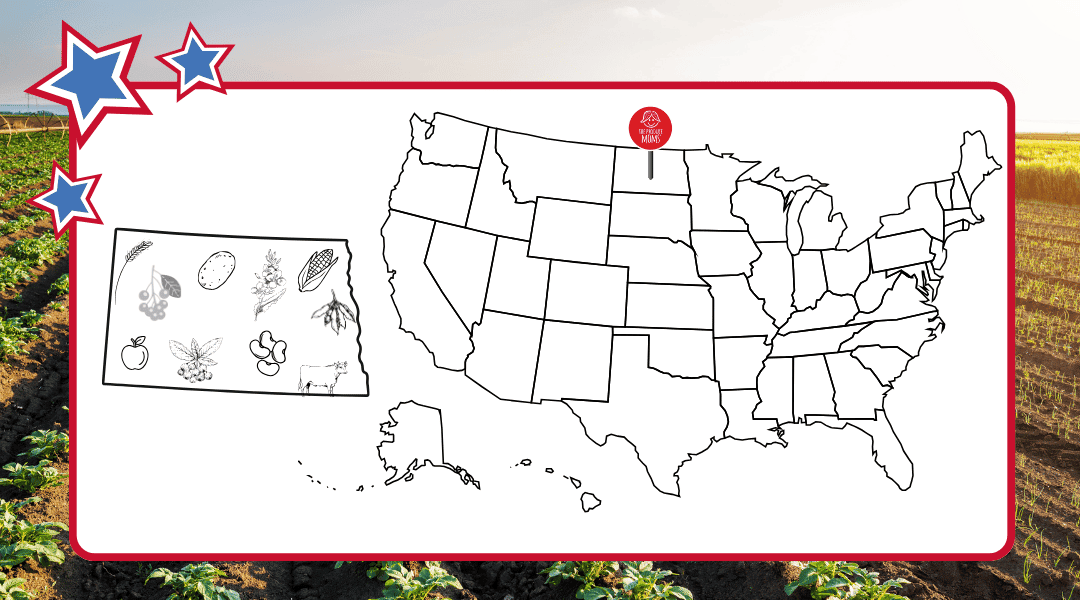
North Dakota’s expansive prairies and rich soils make it a central powerhouse of American agriculture. It utilizes nearly 90 percent of its total land area for farming and ranching. The Peace Garden State produces an impressive variety of crops that feed, clothe, and fuel communities across the country and around the globe. While the state excels in growing specialty crops like flaxseed and dry edible beans, its agricultural economy relies heavily on five core commodities. These top five staples not only form the backbone of North Dakota’s local rural communities, but they also play a critical role in supplying national and international food markets.
Spring Wheat
Spring wheat is a staple of North Dakota agriculture. It thrives in the cool climate and rich northern soils. North Dakota consistently leads the nation in spring wheat production. It accounts for roughly half of the entire U.S. harvest each year. North Dakota generates billions of dollars annually for the state economy and ensures a steady supply of premium flour for commercial bakeries nationwide.High in protein and gluten content, this hard wheat is ideal for milling into high-quality flour used for artisan bread, bagels, and rolls. Locally, wheat farming drives farm income and supports local grain elevators and transportation networks across the state. Nationally, North Dakota’s spring wheat plays an essential role in the U.S. food supply chain and serves as a major export commodity to international markets.
Soybeans
In recent decades, soybeans have rapidly risen to become one of North Dakota’s top crops by acreage and cash receipts. It is driven by improved seed genetics and strong global demand. Soybean farming has expanded from the southeastern corner across much of the state. Locally, the crop supports livestock feed suppliers and processing plants. Nationally, North Dakota contributes a significant portion of the country’s soybean crop, supporting key industries like renewable diesel fuel, animal feed, and export trade, particularly to Asian markets.
Corn (Grain)
As short-season hybrids have advanced, corn has become a dominant pillar of North Dakota agriculture. The state grows corn for both grain sales and livestock silage. Locally, corn fuels a robust bioeconomy, feeding local ethanol plants that generate renewable fuel, livestock feed (distillers grains), and industrial products. Nationally, North Dakota’s corn harvest helps meet the immense demand for livestock feed, corn syrup, ethanol production, and grain exports handled by major rail corridors.
Canola
North Dakota is the indisputable canola capital of the United States. It produces over 80 percent of the entire national supply. Canola thrives in the cooler northern prairie regions, where its bright yellow fields bloom every summer. Locally, canola crushing facilities process the seeds into canola oil and protein-rich canola meal for livestock. Nationally, North Dakota’s production provides American consumers with a heart-healthy cooking oil known for its low saturated fat content, while also supplying ingredients for food manufacturing and biodiesel production.
Cattle & Calves
Ranching forms an essential half of North Dakota’s agricultural landscape, particularly in the rolling hills and badlands of the western half of the state. With well over one million head of cattle, cattle and calves represent the state’s largest livestock sector. Locally, ranching preserves natural grasslands, sustains rural communities, and anchors regional livestock auctions and processing facilities. Nationally, North Dakota cattle ranchers supply high-quality beef and feeder cattle to feedlots and meat packers across the Midwest. They help satisfy the nation’s high demand for beef products.
Fruits and Vegetables from North Dakota
While North Dakota is globally famous for its vast fields of wheat, canola, and sunflowers, specialty crops play a dynamic role in diversifying the state’s agricultural landscape. The state’s short growing season, long daylight hours, and fertile soils create unique conditions that produce exceptional flavor, nutrient density, and seed quality. Supported by extensive irrigation along the Missouri River and dedicated university research,these top fruits and vegetables contribute millions of dollars to the state’s economy, expand specialty crop markets, and keep North Dakota agriculture resilient.
Top Fruits
- Apples: Apples are the most widely cultivated commercial and orchard tree fruit in North Dakota. Thanks to cold-hardy rootstocks developed by cold-climate breeding programs (such as North Dakota State University and the University of Minnesota), cold-tolerant varieties thrive in the northern climate. Orchard acreage has expanded through pick-your-own agritourism, cider production, and local farm-to-table sales.
- Juneberries: Juneberries, also known as Saskatoon berries, are a native shrub fruit deeply rooted in North Dakota’s cultural and natural history. Resembling blueberries in appearance but carrying a unique, sweet nut-like flavor. Juneberries are one of the state’s signature commercial fruit crops. North Dakota is one of the few U.S. states with a commercial Juneberry industry.
- Chokecherries: The chokecherry is officially designated as North Dakota’s State Fruit. Growing abundantly in wild thickets, shelterbelts, and managed orchards, these dark red berries produce a tart juice that transforms into prized jellies, syrups, and wines. While often harvested wild, chokecherries are cultivated in conservation plantings and commercial orchards across the state. They are essential for windbreak soil protection as well as wildlife habitat.
Top Vegetables
- Dry Edible Beans (Pinto, Navy, and Black Beans): North Dakota is a powerhouse in dry edible bean production. It routinely ranks first in U.S. production. The state produces roughly one-third to one-half of all dry beans grown nationwide. It leads the country specifically in pinto beans and navy beans. Dry edible beans are grown across hundreds of thousands of acres. It generates hundreds of millions of dollars in cash receipts annually. They are also a crucial rotation crop that restores nitrogen to the soil naturally.
- Potatoes: Potatoes are one of North Dakota’s most valuable vegetable crops. They are particularly in the fertile Red River Valley. The state ranks among the top 5 to 6 potato producers in the nation. They are used in fresh market table potatoes, processing potatoes (for French fries and chips), and certified seed potatoes. North Dakota produces around 2 billion pounds of potatoes annually across roughly 70,000 to 80,000 acres
- Sweet Corn: While giant field corn dominates commodity agriculture, sweet corn is the premier fresh vegetable grown for direct human consumption in North Dakota. Raised both commercially under irrigation and in local market gardens, it flourishes during the warm northern summer days. Sweet corn plays a central role in local agricultural economies through roadside stands, farmers markets, and community-supported agriculture programs.
Visit our Produce Directory and learn how to Select, Store and Serve these fruits & vegetables.
About 50 States of Agriculture
In celebration of 250 years of the United States, The Produce Moms is proud to present 50 States of Agriculture. This is an educational and free resource that celebrates the bounty of America. We utilized USDA and State Department of Agriculture data (North Dakota) for the content in this series.
Agriculture is the foundation of freedom. Food security is national security. This content series is a celebration of United States culture and the hard-working farmers who feed, fuel & clothe our nation and the world.
Visit another state from our 50 States of Agriculture.