New Jersey Agriculture

Oct 05, 2026

This post may contain affiliate links. Please read our disclosure policy.
New Jersey earned its nickname as the “Garden State” through rich soil and bountiful harvests. Native Lenape communities first cultivated squash, beans, and corn in the fertile river valleys. This established a deep tradition of land stewardship.
By the 18th and 19th centuries, European settlers expanded these practices. They transformed the region into a crucial breadbasket for growing metropolitan hubs like Philadelphia and New York. Local farmers shipped fresh produce, grains, and livestock down winding rivers and early rail lines. They supplied millions of urban consumers with fresh food every day.
As cities expanded during the 20th century, New Jersey agriculture pivoted from massive grain operations to high-value specialty crops. Farmers quickly mastered truck farming. They grew fresh fruits and vegetables to ship directly to nearby city markets.
Major agricultural movements gained traction across the state, including groundbreaking research in plant breeding at Rutgers University. This yiielded legendary crops like the famous Jersey tomato and pioneer work in highbush blueberry cultivation. State officials also launched the iconic “Jersey Fresh” campaign in 1984, the first state-sponsored agricultural branding program in the nation, which encouraged residents to buy locally grown produce.
Today, agriculture remains a powerhouse industry in New Jersey, generating over $1.5 billion annually across nearly 10,000 active farms that cover roughly 750,000 acres.
Modern growers combine centuries-old traditions with cutting-edge innovations, embracing urban farming, indoor hydroponics, and aggressive farmland preservation programs to safeguard hundreds of thousands of agricultural acres for future generations.
About the New Jersey Department of Agriculture
The New Jersey Department of Agriculture (NJDA) was established in 1916. It works closely with local producers, communities, and consumers to guide and support the state’s multi-billion-dollar farming ecosystem.
The NJDA is dedicated to empowering local producers and protecting natural surroundings. The agency centers its mission on promoting, protecting, and serving the Garden State’s diverse agriculture and agribusiness industries. They are led by a Secretary of Agriculture. Through strategic initiatives and regulatory oversight, the department acts as a vital bridge connecting rural farmland with surrounding suburban and urban communities.
To fulfill its mission, the department handles a wide range of state programs that extend well beyond traditional crop farming. Its work spans several key areas:
- Public Nutrition & Food Distribution: Manages statewide programs that provide meals to schoolchildren, as well as supplying federal food resources to emergency pantries and soup kitchens.
- Land & Resource Stewardship: Focuses on conserving soil and water, while actively protecting productive farmland from urban development to preserve it for future agricultural use.
- Economic Development & Marketing: Expands domestic and international export opportunities for fresh produce, processed goods, and commercial fisheries, while building visibility through regional branding initiatives.
- Agricultural Education & Health: Oversees animal and plant health inspections, diagnostic services, and agriculture-based youth educational programs, including the New Jersey State FFA Association.
Learn more at https://www.nj.gov/agriculture/.
Top 5 Agricultural Commodities in New Jersey
Despite being the most densely populated state in the nation, New Jersey holds a vital position in American agriculture.Its unique climate. New Jersey blends rich coastal soil, temperate seasons, and proximity to major port hubs which allows local farms to generate over $1.5 billion annually. Rather than competing with Midwestern states in vast staple crop production, the Garden State maximizes its agricultural footprint through high-value specialty commodities that supply millions of consumers along the Eastern Seaboard and abroad.
Nursery, Greenhouse, & Floriculture Products
The green industry is New Jersey’s undisputed leader in agricultural sales. It generates over $725 million annually. It beautifies suburban landscapes, restores coastal wetland environments, and supports thousands of local landscaping businesses. New Jersey consistently ranks in the top 5 nationally for floriculture and nursery stock sales. Its proximity to major transportation corridors makes it a primary regional exporter of turfgrass, shrubs, and ornamental plants across Canada and the Northeast U.S.
Vegetables & Field Greens (Bell Peppers, Eggplant, & Tomatoes)
Fresh produce forms the backbone of the state’s famous “Jersey Fresh” brand. It brings in nearly $295 million per year. Fresh vegetables power local farm stands, farm-to-table dining, and regional supermarket supply chains. New Jersey ranks #3 in the nation for eggplant and holds top-10 national spots for bell peppers, spinach, and tomatoes. The state supplies fresh produce to major Eastern Seaboard cities within 24 hours of harvesting.
Cultivated Blueberries
Blueberries are New Jersey’s top fruit crop. They yield between $50 million and $70 million annually. They are heavily concentrated in the acidic, sandy soils of the Pine Barrens. New Jersey consistently ranks top 5 in U.S. blueberry production. Fresh berries are shipped directly to Canada, Europe, and Asia, while frozen crops enter global food processing chains for cereals, baked goods, and juices.
Peaches
Fresh peaches contribute $25 million to $35 million in annual cash receipts, driven primarily by Southern New Jersey orchard hubs in Gloucester, Cumberland, and Salem counties. New Jersey holds a firm place among the top 4 peach-producing states in the U.S. (alongside California, South Carolina, and Georgia), specializing in sweet, yellow-fleshed varieties marketed fresh to grocery chains across North America.
Cranberries
Cranberry farming generates roughly $20 million to $25 million annually. They are grown in the unique wetland bogs across Burlington and Ocean counties that double as natural groundwater reservoirs. New Jersey produces tens of millions of pounds of fruit each year which ranks as #4 in the nation.
Fruits and Vegetables from New Jersey
While the state cannot compete in sheer acreage with Midwestern grain giants, its nutrient-rich soils, temperate Atlantic climate, and immediate access to major urban distribution centers allow local growers to produce tens of millions of dollars in fresh produce each year. Fresh fruits and vegetables generate a massive portion of the state’s nearly $1.5 billion in annual agricultural cash receipts, with New Jersey consistently holding top-10 national production rankings for nearly a dozen specialty crops.
Top Fruits
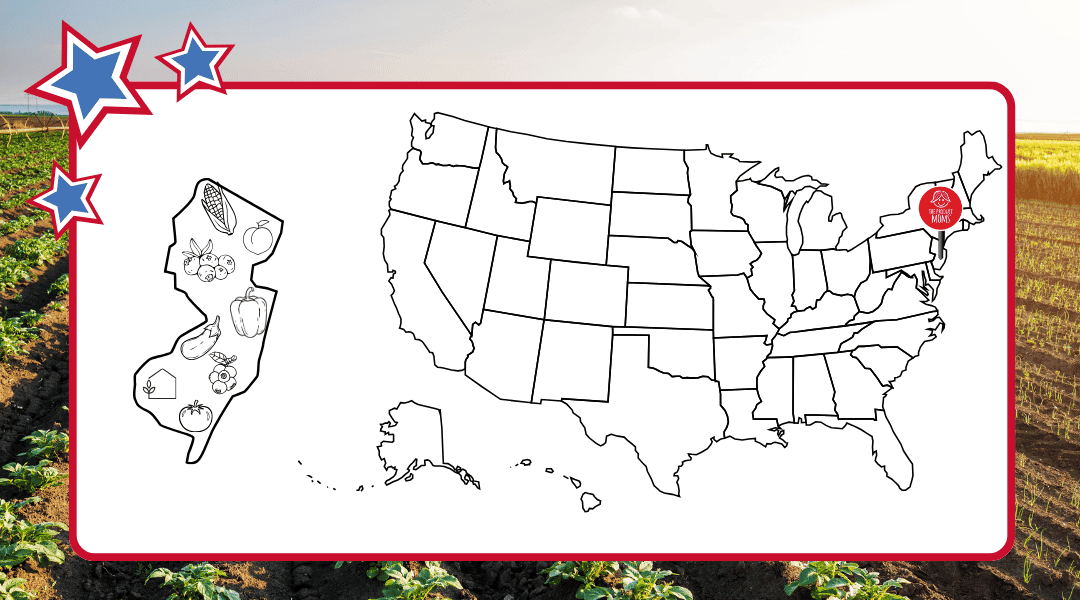
- Blueberries: Cultivated highbush blueberries are New Jersey’s official state fruit. It is the single most valuable fruit crop. It yields between $50 million and $70 million annually. The state produces roughly 40 million to 50 million pounds of blueberries each year.
- Peaches: Peaches make up the second-largest fruit crop in the state. They generate roughly $25 million to $35 million annually. New Jersey ranks among the top 4 peach producers in the nation. Southern New Jersey cultivates over 4,000 acres of peach trees. They roughly yield 30 million to 40 million pounds
- Cranberries: Cranberry farming brings in approximately $20 million to $25 million in annual cash receipts. This places New Jersey firmly as the #3 or #4 largest cranberry producer in the United States. New Jersey farmers harvest over 50 million pounds of cranberries annually across roughly 3,000 acres, with the vast majority distributed through the Ocean Spray cooperative.
Top Vegetables
- Tomatoes: Tomatoes are New Jersey’s flagship vegetable crop. It generates roughly $25 million to $30 million annually. The state consistently ranks among the top 5 to 7 states nationally for fresh-market tomato production. They are harvested on approximately 2,400 to 3,000 acres, Garden State farms produce upwards of 60 million pounds of tomatoes per year.
- Bell Peppers: Bell peppers are one of the state’s highest-grossing fresh vegetable commodities. They bring in $20 million to $30 million annually and places New Jersey in the top 3 to 5 states nationally for sweet pepper production. They are grown on over 3,500 acres concentrated in South Jersey’s fertile farm belt, the state yields tens of millions of pounds of bell peppers each season
- Sweet Corn: Sweet corn is an economic and cultural staple of New Jersey agriculture. It generates between $15 million and $22 million annually. It routinely ranks among the top 10 to 12 states nationally. Local farms harvest millions of ears of sweet corn every summer. This drives substantial roadside farm-stand sales and regional distribution.
Visit our Produce Directory and learn how to Select, Store and Serve these fruits & vegetables.
About 50 States of Agriculture
In celebration of 250 years of the United States, The Produce Moms is proud to present 50 States of Agriculture. This is an educational and free resource that celebrates the bounty of America. We utilized USDA and State Department of Agriculture data (New Jersey) for the content in this series.
Agriculture is the foundation of freedom. Food security is national security. This content series is a celebration of United States culture and the hard-working farmers who feed, fuel & clothe our nation and the world.
Visit another state from our 50 States of Agriculture.