Michigan Agriculture

Sep 01, 2026

This post may contain affiliate links. Please read our disclosure policy.
Before Michigan became world-famous for manufacturing automobiles, its nutrient-rich soils, rolling hills, and abundant water supply made it a natural haven for farming. Early Native American communities cultivated staple crops like corn, beans, and squash. As European settlers arrived in the 19th century, they cleared dense forests to plant wheat, corn, and fruit orchards along the shoreline. Farmers quickly realized that the Great Lakes, particularly Lake Michigan, created a unique microclimate that buffered against sudden frosts, giving rise to the state’s famous fruit belt.
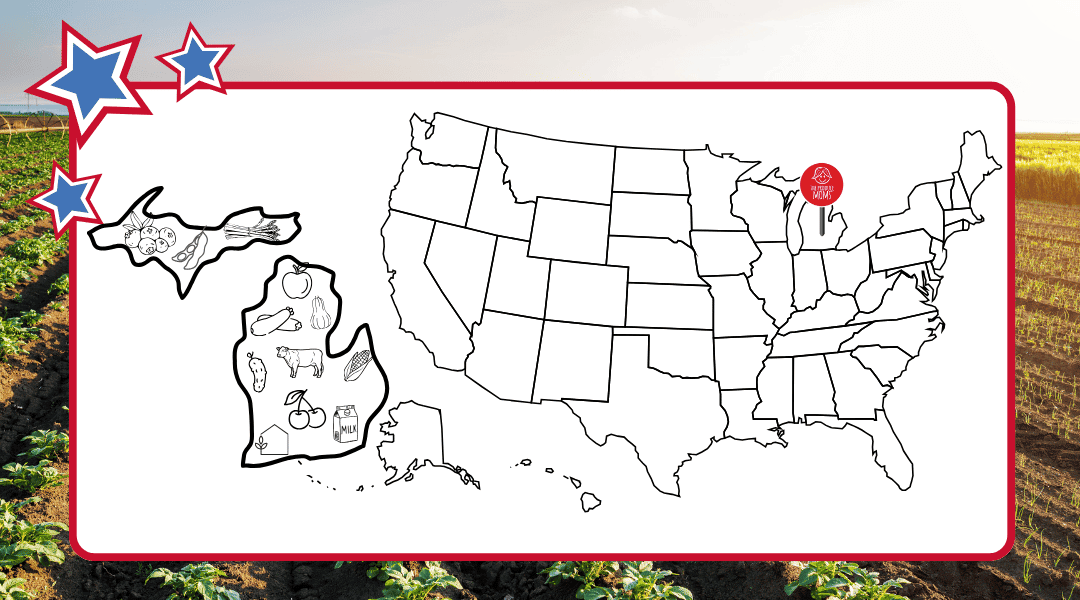
Today, Michigan boasts the second-most agriculturally diverse economy in the United States, trailing only California.Thanks to its distinct growing zones, the state produces over 300 different agricultural commodities. It generates tens of billions of dollars annually and supports roughly 17% of the state’s workforce.
In modern times, Michigan’s agricultural landscape has been shaped by powerful movements toward sustainability, farm-to-table supply chains, and high-tech food processing. Initiatives like the Michigan Agriculture Environmental Assurance Program (MAEAP) encourage farmers to proactively protect local waterways and soil health. At the same time, a thriving craft beverage movement (wines, ciders & craft beer) has paired seamlessly with agritourism. It helps bring consumers directly onto family orchards and farmstands. From historical fruit belt origins to sophisticated modern farms, Michigan remains a bedrock of American agriculture.
About the Michigan Department of Agriculture & Rural Development
The Michigan Department of Agriculture and Rural Development (MDARD) serves as the primary administrative agency dedicated to supporting, promoting, and regulating the state’s vast food and agricultural sector. MDARD works to ensure a safe food supply, protect human and animal health, advance environmental stewardship, and drive economic growth across Michigan’s rural communities. From safeguarding state waterways to expanding export opportunities for local growers, the department strikes a balance between essential regulatory oversight and proactive business development.
Behind the scenes, MDARD touches the daily lives of everyday consumers through a broad spectrum of programs and services. The agency conducts regular inspections of food establishments and dairy facilities, manages plant health and invasive pest programs, monitors weights and measures at gas pumps and grocery scales, and oversees consumer protection standards.
Additionally, MDARD leads vital sustainability initiatives like the Michigan Agriculture Environmental Assurance Program (MAEAP) and administers grants that empower local food systems, craft beverage producers, and regional farm infrastructure. Through these comprehensive efforts, the department, led by an appointed Director, helps keep Michigan’s agricultural economy vibrant, secure, and resilient for future generations.
Learn more at https://www.michigan.gov/mdard.
Top 5 Agricultural Commodities in Michigan
Farming in Michigan is defined by incredible diversity, driven by rich glaciated soils and a unique microclimate shaped by the surrounding Great Lakes. While the state is famous for specialty crops like tart cherries and blueberries, its agricultural economy is anchored by massive powerhouse sectors that generate billions of dollars annually. Ranking as the second-most agriculturally diverse state in the nation, Michigan’s agricultural commodities feed local communities,supply national grocery supply chains, and power industrial manufacturing across North America.
Dairy Products & Milk
Dairy stands firmly as Michigan’s top agricultural commodity. It generates over $2.7 billion in cash receipts annually. The state’s roughly 430,000 dairy cows produce more than 12 billion pounds of milk each year. Locally, dairy farms support robust regional processing plants that produce fluid milk, cheeses, ice cream, and butter. Nationally, Michigan is a powerhouse of efficiency. It frequently ranks number one in the United States for the highest average milk production per cow. Michigan produces over 27,000 pounds of milk per cow annually thanks to exceptional herd management and nutrient-rich feed.
Corn
Corn covers around two million acres of Michigan farmland. It is the state’s leading crop by value. Corn brings in roughly $1.4 billion annually. The vast majority of this production goes toward grain and silage to supply local livestock feed and regional ethanol processing plants. This keeps local energy and livestock sectors running smoothly. On the national scale, Michigan-grown corn flows into interstate grain distribution networks. It helps f uel the wider U.S. food, feed, and bio-energy supply chains.
Soybeans
Soybeans are a critical row crop planted across more than two million acres. It generates over $1 billion in annual receipts. Locally, soybeans play a vital role in soil health through crop rotation alongside corn and wheat. It also provides crucial meal for regional livestock and oil for food processors. Nationally and internationally, Michigan soybeans are a major export driver. It is shipped across the country and overseas to support global demand for plant-based oils, animal feed, and industrial products.
Cattle & Calves
Beef and cattle production accounts for nearly $900 million in annual cash receipt. It represents a cornerstone of Michigan’s livestock sector. Local cattle operations feed into regional processing networks. This provides fresh, high-quality beef to Midwest markets and supports rural farm economies. Nationally, Michigan contributes significantly to the beef supply chain through both cow-calf operations and feedlots. This sector benefits from the state’s plentiful grain supply to finish cattle efficiently.
Floriculture & Greenhouse Crops
Michigan’s greenhouse and floriculture industry ranks among the top three in the entire nation. It brings in around $700 million annually. There are hundreds of commercial operations in Michigan, and it leads the country in the production of popular bedding plants like begonias, geraniums, petunias, and impatiens. Locally, this sector powers vibrant independent nurseries and garden centers. Nationally, Michigan-grown flowers supply major retail chains, landscaping markets, and home improvement stores across the U.S. every spring.
Fruits and Vegetables from Michigan
Michigan’s geographic placement along the Great Lakes provides a unique natural climate for growing specialty crops.Lake-effect weather softens extreme temperatures, shielding tender blossoms from late spring frosts and keeping soils moist throughout hot summer months. Because of this specialized microclimate, Michigan has earned a national reputation as a powerhouse for fruit and vegetable production.
Top Fruits
- Apples: Apples are Michigan’s largest and most valuable fruit crop. It generates over $300 million to $350 million annually in value. The state consistently ranks 3rd in the nation for overall apple production (behind Washington and New York). Michigan harvests more than 1 billion pounds of apples each year across nearly 15 million commercial trees.
- Tart Cherries: Michigan is the undisputed “Tart Cherry Capital of the World.” It grows roughly 60% to 75% of the total U.S. tart cherry crop in any given year. Montmorency tart cherries are the primary variety harvested, producing anywhere from 150 million to 200 million pounds annually depending on weather conditions.
- Blueberries: Michigan ranks among the top 3 states nationally for highbush blueberry production. It harvests around 70 million to 100 million pounds of blueberries every summer. Blueberries contribute over $130 million directly to Michigan’s agricultural economy. This supports dozens of family-owned packing facilities and processors. Michigan blueberry farms cover roughly 20,000 acres, with many bushes remaining productive for over 50 years.
Top Vegetables
- Pickling Cucumbers: Michigan is the #1 producer of pickling cucumbers in the entire United States. Michigan farmers harvest over 200,000 tons of pickling cucumbers annually on roughly 30,000 acres of cropland. This single crop generates over $50 million in direct farm value and fueling large-scale processing facilities across the state.
- Asparagus: Michigan ranks #1 or #2 nationally (alternating with California) for commercial asparagus production. It harvests approximately 20 million to 25 million pounds of asparagus each spring across 9,500 acres.
- Winter & Summer Squash: Michigan leads the nation in processing squash and ranks 1st in the U.S. for total squash production, which includes acorn, butternut, spaghetti, and yellow summer squash. Farmers harvest over 100 million pounds of squash annually. Michigan squash is vital to national food manufacturing, serving as a primary ingredient in commercial baby foods, frozen meal purees, and pre-cut fresh vegetable mixes nationwide.
Visit our Produce Directory and learn how to Select, Store and Serve these fruits & vegetables.
About 50 States of Agriculture
In celebration of 250 years of the United States, The Produce Moms is proud to present 50 States of Agriculture. This is an educational and free resource that celebrates the bounty of America. We utilized USDA and State Department of Agriculture data (Michigan) for the content in this series.
Agriculture is the foundation of freedom. Food security is national security. This content series is a celebration of United States culture and the hard-working farmers who feed, fuel & clothe our nation and the world.
Visit another state from our 50 States of Agriculture.