Arizona Agriculture

Jun 24, 2026, Updated Jul 16, 2026

This post may contain affiliate links. Please read our disclosure policy.
Long before it became a state, Arizona’s dry desert landscapes were home to some of the most ingenious farmers in history. Thousands of years ago, the Hohokam people hand-dug hundreds of miles of irrigation canals. This massive network allowed them to grow corn, beans, and squash in the middle of a desert. When Spanish missionaries and later American settlers arrived, they built directly on top of these ancient pathways. By the late 1800s and early 1900s, agriculture became one of the state’s iconic “Five Cs” (alongside copper, cattle, climate, and citrus), anchoring Arizona’s economy and identity.
As modern engineering advanced, Arizona farming truly took off. The completion of the Theodore Roosevelt Dam in 1911 guaranteed a steady water supply. It transformed regions like Yuma and Maricopa into agricultural powerhouses.
Today, Arizona plays a vital role in putting food on grocery store shelves nationwide, especially when it gets cold. In fact, the city of Yuma is often called the “Winter Salad Bowl of the Nation.” During the winter months, the area provides around 90% of all the leafy greens consumed in the United States.
Looking forward, Arizona’s agricultural story is all about doing more with less. Because water is a precious resource in the Southwest, today’s farmers are using incredibly smart technology to protect the environment. Many use computerized drip irrigation, which delivers exact droplets of water directly to a plant’s roots so none is wasted. Others rely on laser-guided leveling to ensure fields are perfectly flat, keeping water from pooling or running off. It is a beautiful blend of ancient tradition and modern science.
About the Arizona Department of Agriculture (AZDA)
The mission is simple: to protect the health and safety of Arizona consumers, advance and support Arizona agriculture, and safeguard commerce. They are responsible for supporting farming, ranching and agribusiness in Arizona by protecting plants and animals, issuing agriculture and environmental licenses, inspecting farming practices and overseeing commerce standards and measurement devices.
Whether you are strolling through a grocery store or visiting a local farm, AZDA touches your daily life in dozens of helpful ways.
Here is a glimpse into how they care for Arizona:
- Keeping Your Food Safe and Fresh: From the leafy greens in your salad to the milk in your fridge, AZDA carefully inspects and certifies meat, dairy, eggs, fruits, and vegetables so your family can eat with peace of mind.
- Protecting Our Nature and Animals: Just like we get checkups, AZDA watches over our state’s plants and livestock. They work hard to prevent the spread of pests and diseases, keeping our beautiful desert ecosystem and local ranches healthy.
- Ensuring Fairness at the Checkout: Ever wonder if a gallon of gas or a pound of apples is exactly what you are paying for? AZDA regularly tests commercial scales and scanners so that both shoppers and shopkeepers get a fair, honest deal.
- Caring for the Earth: Through friendly education and training, they help farmers use pesticides safely, keep our air cleaner, and practice sustainable farming that protects the land for future generations.
- Supporting Local Growers: Beyond rules and regulations, AZDA acts as a helpful partner to our agricultural community. They run state-of-the-art testing labs, offer hands-on guidance, and distribute grants to help local farms and ranches flourish.
Ultimately, AZDA is all about connection. Blending science, care, and community support to make sure Arizona remains a safe, bountiful, and wonderful place to call home.
Learn more at https://agriculture.az.gov/
Top 5 Agricultural Commodities in Arizona
Arizona’s top five agricultural commodities serve as a multi-billion dollar economic engine. It heavily influences both local communities and national food security.
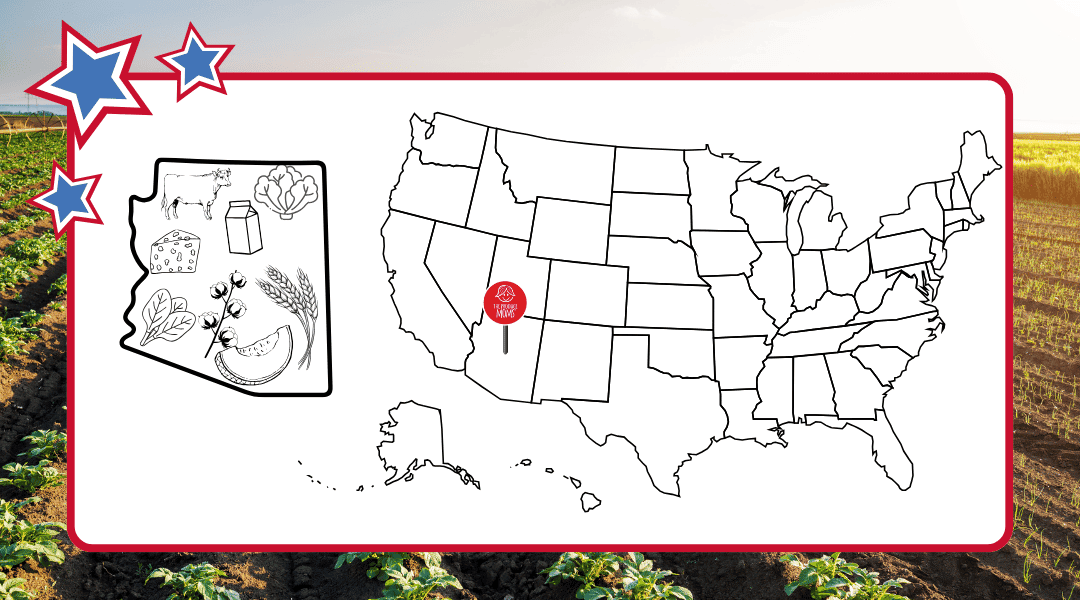
Cattle and Calves
The cattle and calves industry is a massive pillar of Arizona agriculture. It brings in over a billion dollars annually to support local, rural communities and families. Because cattle can graze on vast desert and mountain rangelands unsuitable for growing crops, ranchers are able to turn tough desert plants into high-quality protein. This thriving industry not only helps feed millions of people across the country, but it also creates thousands of local jobs in everything from animal care to transportation.
Dairy Products
They are a massive powerhouse for Arizona agriculture. It ranks as one of the state’s very top sources of farming income. Local dairy farms support thousands of jobs and pump billions of dollars into the economy while keeping grocery store shelves stocked with fresh milk, cheese, and yogurt.
Lettuce
Lettuce is a true superstar for Arizona agriculture. During the chilly winter months, the sun-drenched fields of Yuma provide about 90% of all the leafy greens consumed across the entire United States. This incredible output ensures that families nationwide can enjoy fresh, healthy salads all winter long, making Arizona a vital piece of America’s food security. Lettuce brings in nearly a billion dollars each year and keeps thousands of local people employed.
Cotton
Cotton remains a vital crop that brings hundreds of millions of dollars into the state’s economy each year. Local farmers specialize in growing extra-long staple Pima cotton, which is world-renowned for its incredible softness and strength, supporting both local rural communities and global textile markets. And a little fun fact… Arizona farmers are so efficient that a single acre of cotton can grow enough fiber to produce over 1,200 pairs of jeans or up to 4,300 t-shirts!
Hay
Hay is a vital backbone for the state’s massive dairy and beef cattle industries by providing a reliable, high-quality food supply for livestock. Thanks to the desert’s endless sunshine, local farmers can harvest hay up to a dozen times a year, yielding premium varieties. This constant demand pumps hundreds of millions of dollars into rural communities each year, making hay one of the state’s most valuable and essential crops.
Fruits and Vegetables from Arizona
When it comes to fresh produce, Arizona’s unique desert climate makes it a top national producer. It is driven heavily by its top three fruits and leafy greens.
Top Fruits
- Cantaloupe: Arizona ranks second in the nation for growing sweet cantaloupes. They account for more than a quarter of the entire country’s crop value.
- Honeydew: Arizona enjoys two distinct melon seasons each year. They harvest fresh honeydew in both the spring and the fall. Arizona ranks second in the entire nation for honeydew production.
- Lemons: Arizona’s groves yield incredibly juicy, high-quality citrus that is harvested through the fall and winter, playing a major role in keeping grocery stores across North America stocked with fresh fruit during the coldest months of the year.
Top Vegetables
- Head Lettuce: As the centerpiece of Arizona’s multi-billion dollar leafy greens industry, head lettuce is a massive economic driver that helps create thousands of local jobs and secures the state’s reputation as America’s winter salad bowl.
- Romaine: It has evolved into a massive powerhouse for Arizona agriculture, serving as a primary driver of the state’s billion-dollar winter produce industry.
- Spinach: It acts as a highly valuable specialty crop in Arizona. They grow nearly 200 million to 300 million pounds per year.
Visit our Produce Directory and learn how to Select, Store and Serve these fruits & vegetables.
About 50 States of Agriculture
In celebration of 250 years of the United States, The Produce Moms is proud to present 50 States of Agriculture. This is an educational and free resource that celebrates the bounty of America. We utilized USDA and State Department of Agriculture data (Arizona) for the content in this series.
Agriculture is the foundation of freedom. Food security is national security. This content series is a celebration of United States culture and the hard-working farmers who feed, fuel & clothe our nation and the world.
Visit another state from our 50 States of Agriculture.