Episode 382: Marjory Walker

Feb 11, 2026, Updated Feb 18, 2026
This post may contain affiliate links. Please read our disclosure policy.
Summary:
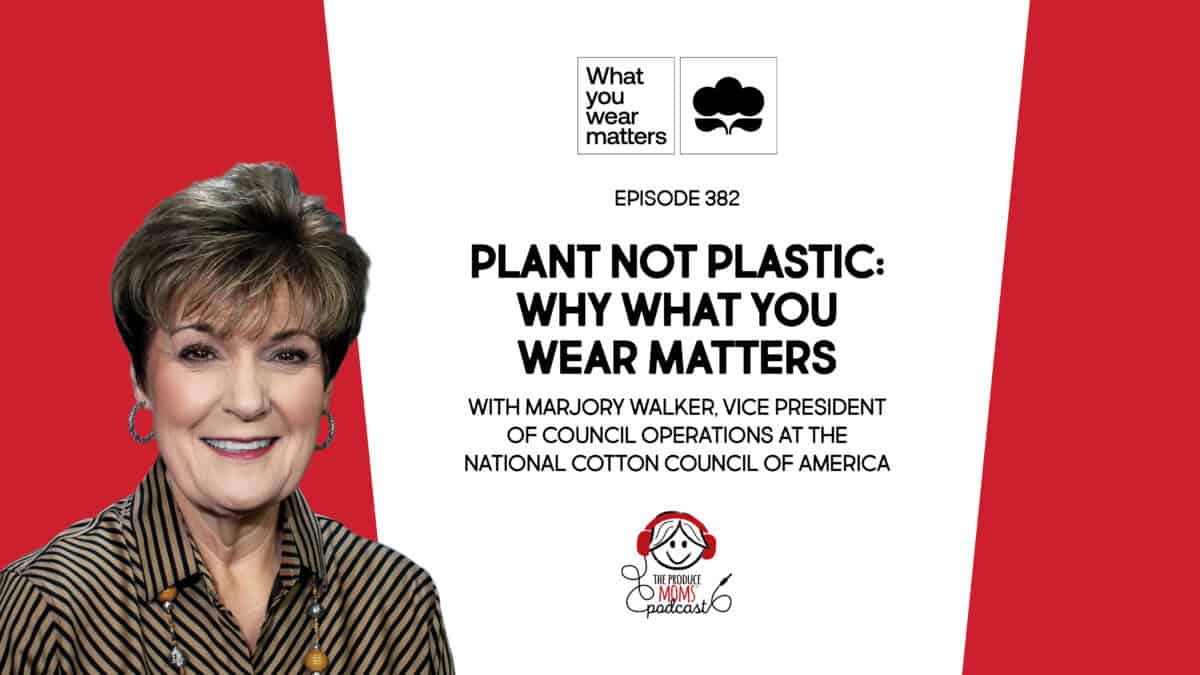
In this episode of The Produce Moms Podcast, host Lori Taylor sits down with Marjory Walker, Vice President of Council Operations at the National Cotton Council of America, to explore the often-overlooked world of fiber agriculture and why what we wear matters.
The conversation highlights cotton’s role in U.S. agriculture and global markets, explains the difference between natural and synthetic fibers, and unpacks emerging research around microplastics from synthetic clothing. Marjory introduces the Plant Not Plastic campaign, launched to help consumers understand how everyday clothing choices contribute to microplastic exposure—and how simple shifts toward higher-cotton content can make a meaningful difference.
With a realistic, mom-friendly approach, Lori and Marjory discuss yoga pants, reading clothing labels, sustainability myths around cotton, and the growing response from the fashion industry. The episode closes with a call to action for families to use their collective consumer voice to drive demand for natural fibers and support sustainable agriculture.
Takeaways:
- Cotton is a critical but often overlooked part of U.S. agriculture and daily life.
- Fiber agriculture plays a role in sustainability, health, and environmental stewardship.
Synthetic clothing is believed to be one of the largest sources of microplastics in the ocean. - Microplastics from textiles have been found in the human body, including blood and lungs.
- Natural fibers like cotton, wool, linen, hemp, and silk are plant- or animal-based—not man-made.
- Cotton microfibers biodegrade faster than synthetic fibers in water.
- Consumers are increasingly concerned about microplastics but unaware of clothing’s role.
- The Plant Not Plastic campaign focuses on education, not fear or perfectionism.
- Wearing yoga pants or blended fabrics isn’t “bad”, checking labels and choosing higher cotton content helps.
- “Feels like cotton” usually means the product is synthetic.
- Cotton is a sustainable crop and thrives in hot, arid climates with relatively low water use.
- Fashion brands are responding by increasing natural fiber content in their products.
- Small, collective consumer choices can influence retailers and manufacturers.
- Asking brands for more cotton helps drive long-term change in the marketplace.
Chapters:
00:00 Welcome to The Produce Moms Podcast
01:24 Introducing Marjory Walker and fiber agriculture
05:14 What the National Cotton Council does
05:44 The role of U.S.-grown cotton domestically and globally
09:00 Natural vs. synthetic fibers explained
11:21 Microplastics and synthetic clothing
13:45 Why the Plant Not Plastic message matters right now
15:03 Cotton vs. synthetic microfibers in water
15:47 Yoga pants, blends, and realistic consumer choices
18:31 Launch and early response to Plant Not Plastic
21:49 Fashion industry response and natural fiber innovation
25:43 Where cotton is grown in the United States
28:02 Sustainability myths and water use in cotton farming
30:12 The future of Plant Not Plastic and consumer action
31:40 Closing thoughts and call to action
Resources:
Plant Not Plastic Campaign Social Media:
Instagram: @ _plantnotplastic
TikTok: @_plantnotplastic
LinkedIn: @_PlantNotPlastic
Facebook: @Plantnotplastic
YouTube: Plant Not Plastic
Website: https://plantnotplastic.org/
Marjory Walker Social Media:
LinkedIn: @Marjory Walker